The Assembly That Changed My Daughter’s Story
When my teenage daughter Grace came home with a detention for defending her late father, something about it didn’t sit right with me. According to her teachers, she had reacted aggressively during class after another student made a careless and deeply insensitive comment about how her father, Daniel, had died. The school treated it as a simple disruption—Grace had broken classroom rules, so she was punished. But what struck me was the imbalance. The student who made the remark faced only minor consequences, while Grace carried the weight of a formal disciplinary action. When I found her at home, she was sitting quietly, clutching her father’s military dog tags, apologizing as if she had done something wrong. I sat beside her and made something very clear: she never needed to apologize for defending the memory of a man who had served with honor.
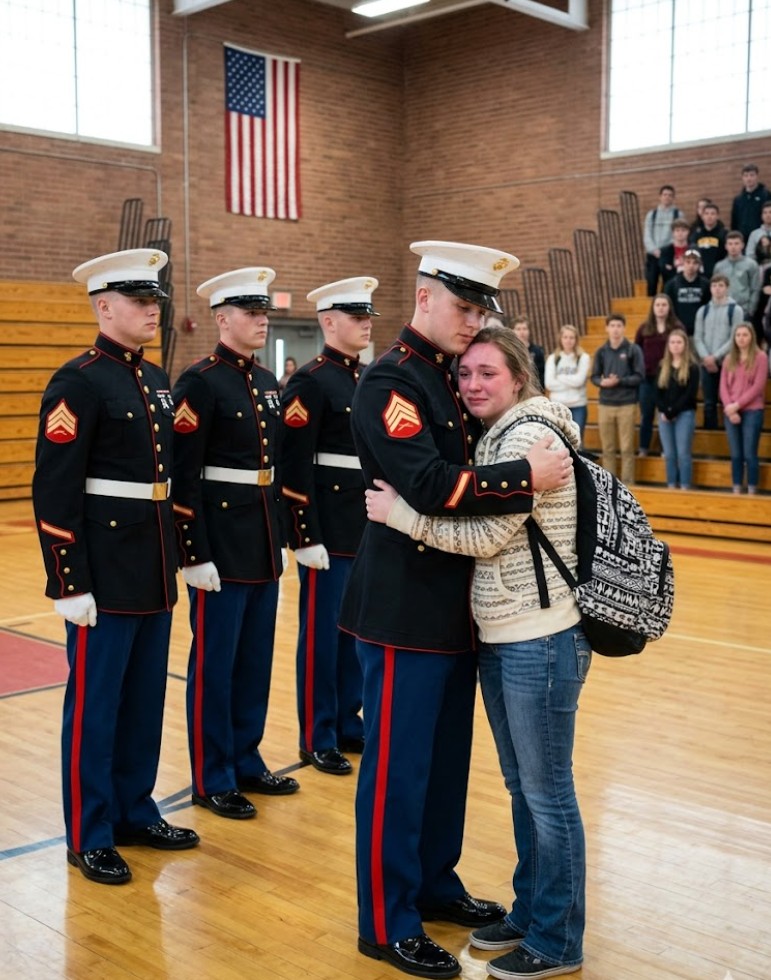
The next morning, everything shifted. I received a message from Grace asking me to come to school immediately for an emergency assembly. When I arrived, the auditorium was already full—students, teachers, staff—all watching the stage in silence. Four military officers stood at the front, their presence commanding attention in a way nothing else could. When Captain Captain Ruiz stepped forward, the room seemed to hold its breath. He explained that they were there to formally honor Staff Sergeant Daniel and to correct an administrative error that had delayed his recognition for years. What followed was something I hadn’t prepared for. Grace was called to the stage, where she was presented with a Bronze Star medal and a folded ceremonial flag. The officers spoke about her father—not just as a soldier, but as a leader and a man whose actions had left a lasting impact on those who served beside him. Before the assembly ended, the same student who had insulted him stood up and offered a public, sincere apology, not just to Grace, but to everyone in that room.
That moment brought pride, but it also raised questions we hadn’t asked before. Why had something this significant been delayed for so long? The following afternoon, Captain Ruiz came to our home with a sealed envelope. He explained that while the commendation had finally been processed, the review had also uncovered previously unexamined details about Daniel’s final mission. Inside were operational records, witness statements, and internal reports—documents that told a more complicated story than we had ever been given. As I read through them, it became clear that Daniel and others had raised serious concerns about the intelligence they were given before deployment. Those concerns had not been properly addressed. The official narrative we had been told all these years had left out the failures that contributed to what happened.
What followed was months of digging, requesting additional records, and trying to piece together a fuller picture. It wasn’t easy, and at times it felt like reopening wounds that had barely begun to heal. But it also gave us something we hadn’t had before—clarity. Later that spring, I was invited to speak at a school service recognition event. Standing in front of that audience, I chose to say what I had come to understand: honoring service members means more than celebrating their bravery—it also means being honest about the conditions they faced and the decisions that affected them. The room was silent when I finished, but then something powerful happened. Several veterans stood up, one after another, and saluted.
That journey changed more than just how others saw Daniel—it changed how Grace and I carried his memory. Instead of holding onto unanswered questions and quiet frustration, we began to understand the full depth of who he was and what he stood for. Grace started asking different kinds of questions, not out of pain, but out of curiosity and pride. And for the first time in a long time, his legacy felt complete—not hidden behind silence, but something we could finally hold onto with honesty and peace.