Rising Tensions After Immigration Enforcement Operations
Federal immigration enforcement actions in parts of Los Angeles have triggered a wave of public demonstrations, quickly evolving into a broader confrontation between local communities, state leadership, and federal authorities. According to official reports, the operations—primarily conducted by ICE in Latino neighborhoods—sparked immediate backlash, with large gatherings forming in multiple areas. While many demonstrations remained peaceful, some escalated into unrest involving property damage, looting, and a growing number of arrests. As conditions intensified, law enforcement presence increased significantly across affected neighborhoods, reflecting the scale and volatility of the situation.
In response to the unrest, President Donald Trump authorized the deployment of approximately 2,000 National Guard personnel to the region under federal authority. The decision was made rapidly and without traditional coordination with state leadership, prompting immediate criticism from California officials. Governor Gavin Newsom publicly challenged the move, arguing that it bypassed established protocols and raised concerns about federal overreach during an already sensitive public safety situation. The disagreement highlighted a deeper tension over who should control the response during domestic crises—the state managing conditions on the ground or the federal government asserting broader authority.
As the situation continued to evolve, the federal response expanded further. Additional National Guard units were mobilized, and several hundred Marines were deployed to support security operations. The involvement of active-duty military personnel in a domestic context immediately drew legal and constitutional scrutiny. Analysts pointed to long-standing restrictions under the Posse Comitatus framework, which limits the use of the military in civilian law enforcement roles. While exceptions exist under specific circumstances, the threshold for such involvement remains a subject of ongoing legal interpretation.
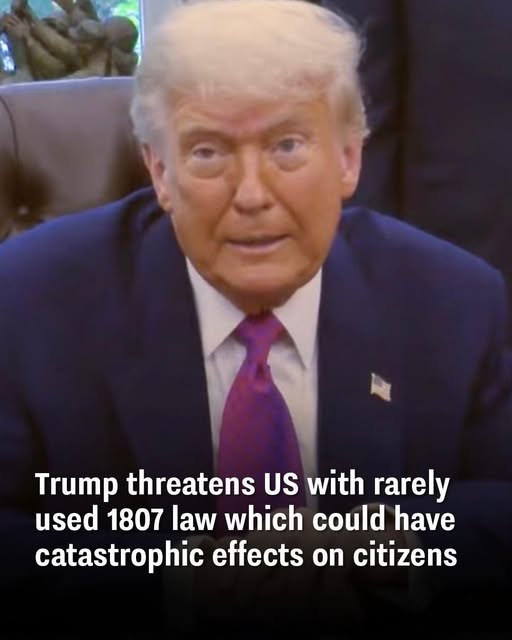
This escalation has reignited debate around the balance of power between state and federal governments. Legal experts are closely examining whether more extreme measures—such as invoking the Insurrection Act—could be considered if unrest continues. Such a step would significantly expand presidential authority, allowing for broader use of military forces within U.S. borders. However, it also raises serious questions about precedent, civil liberties, and the long-term implications of normalizing military involvement in domestic affairs.
Beyond the immediate security concerns, the situation has become part of a wider national conversation about immigration policy, public safety, and executive power. Supporters of the federal response argue that strong intervention is necessary to restore order and protect critical infrastructure. Critics, on the other hand, warn that militarizing responses to civil unrest risks escalating tensions further and undermining public trust in institutions meant to serve civilian populations.
As legal challenges emerge and political divisions deepen, the situation remains fluid. Both state and federal authorities continue to monitor developments closely, while courts and policymakers assess the constitutional boundaries being tested in real time. What happens next will likely shape not only the outcome of this specific crisis, but also the framework for how similar situations are handled in the future.