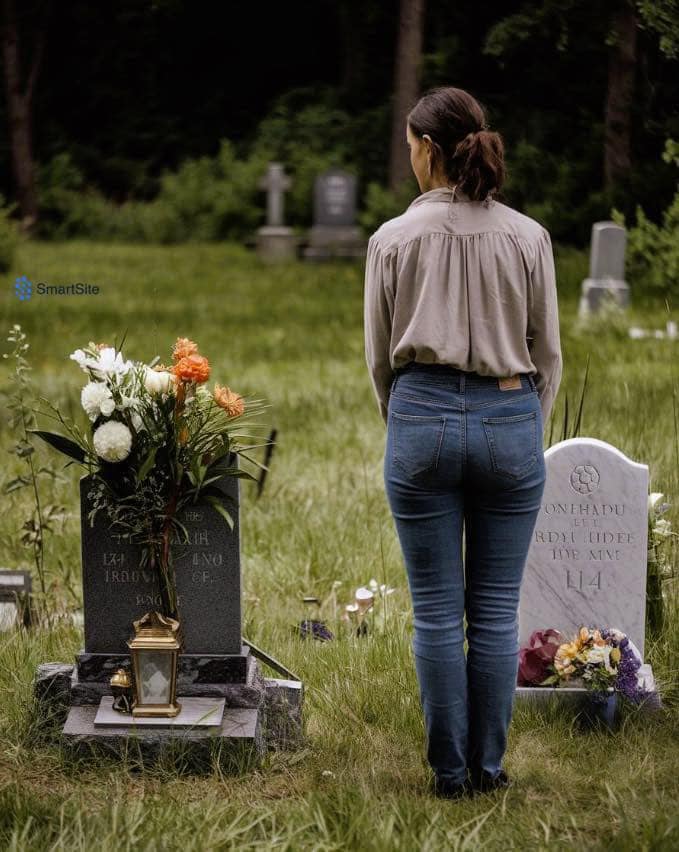
Laura’s habit of placing fresh flowers on her parents’ graves was simple, steady, and quiet. For a while, something about it began to feel off. The flowers on her father’s grave remained untouched, but the ones she left for her mother kept disappearing. At first, she brushed it aside—weather, animals, small disturbances that happen in open places. But the pattern was too precise. It wasn’t random. Someone was choosing.
One morning, she arrived early and found the answer. A woman stood by her mother’s grave, removing the previous week’s flowers and placing them in the trash. There was nothing hurried or uncertain in her movements. It was deliberate.
Laura confronted her, expecting defensiveness or denial. Instead, she was met with something else entirely. The woman introduced herself as Casey—and said she was also her mother’s daughter.
The words didn’t land easily. They rearranged something fundamental. The woman Laura had known as steady and transparent now seemed to carry a hidden part of her life that had never been spoken of. One daughter raised openly, another kept at a distance. It wasn’t just the fact of it—it was the silence around it.
Casey explained that she had been visiting for years, quietly, without acknowledgment. To her, the fresh flowers felt like an intrusion into something she had always been forced to keep hidden. What looked like hostility was, in part, the weight of being unseen.
Laura could have stayed in anger. There was enough reason for it. But as she stood there, something shifted. Whatever their mother had chosen to conceal, the result was the same for both of them in different ways—one had been given a full place, the other had not. Neither of them had been told the truth.
So Laura didn’t argue. She spoke more simply. That whatever their mother’s choices had been, continuing this quiet conflict wouldn’t bring clarity or peace. It would only extend the silence that had already done enough damage.
Casey didn’t soften immediately, but she listened. And that was enough for something to begin.
Over time, their meetings became less tense. They spoke about small things at first—memories, fragments, the different ways they had each known the same person. The picture that emerged wasn’t neat. It was layered, imperfect, and incomplete. But it was more honest than either of them had before.
They stopped visiting separately. The flowers were no longer a point of contention. They brought them together, placing them side by side without needing to measure whose presence mattered more.
Laura didn’t leave that experience with a simple resolution. Some questions remained, and likely always would. But she gained something that hadn’t existed before—a connection built not on what had been given, but on what they both chose to do with what they found.
Some truths arrive late and unsettle what felt certain. What matters then is not only what was hidden, but how we respond once it is no longer.