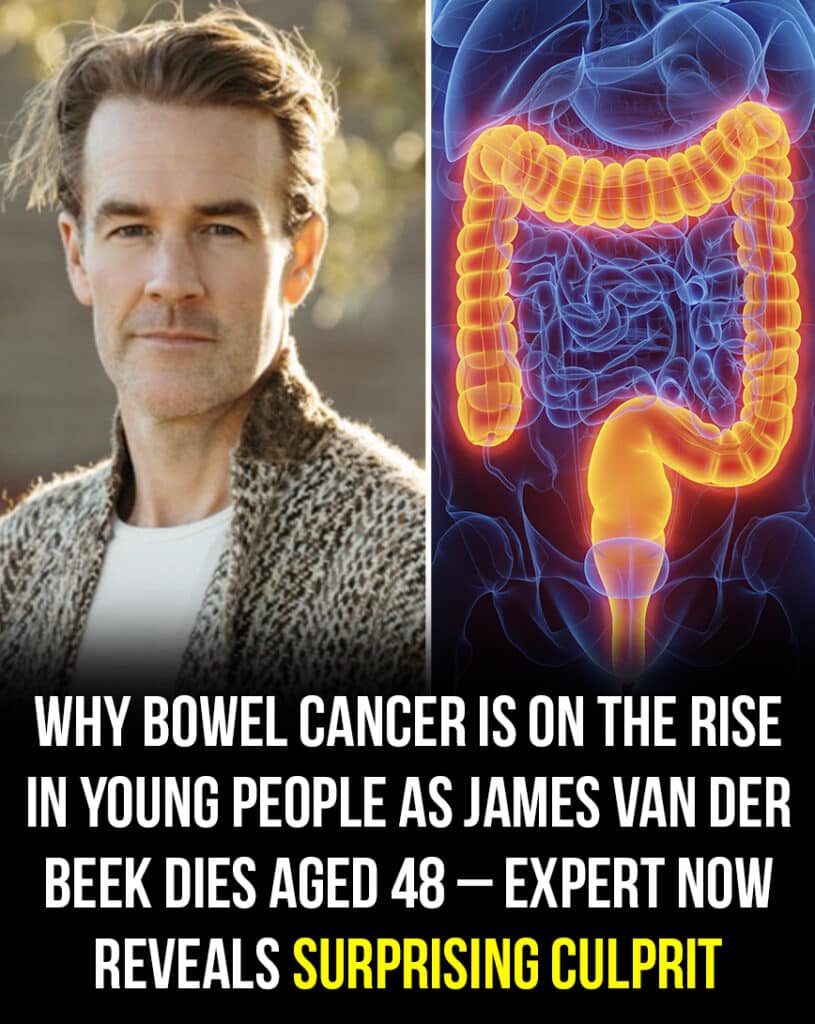
The recent rise in bowel cancer cases has drawn renewed attention to a disease many still associate with older age. That awareness deepened with the passing of actor James Van Der Beek at just 48, leaving behind his wife, Kimberly, and their six children.
His family shared that he spent his final days with courage and quiet strength. Tributes poured in from friends and fans alike — not only mourning the loss of a beloved actor, but a father whose life ended far too soon.
Van Der Beek’s diagnosis followed a routine colonoscopy in 2023, which revealed stage three colorectal cancer. By his own account, he lived well, stayed active, and felt healthy. The first signs were subtle — small changes in bowel habits he initially blamed on diet. He cut out coffee, adjusted meals, waited for improvement. When nothing changed, he sought medical advice.
It was a decision that came just in time to uncover what had been growing silently.
Other warning signs of bowel cancer can include blood in the stool, persistent abdominal pain, unexplained weight loss, deep fatigue, or unusual lumps. Doctors continue to stress that these symptoms should never be brushed aside or delayed.
Behind the rising numbers, researchers are uncovering complex causes.
One growing area of focus is the role of gut bacteria. An international study examining hundreds of colorectal tumors across multiple countries identified DNA mutations linked to a toxin produced by certain strains of E. coli. These mutations appeared far more often in younger patients — suggesting damage may begin years, even decades, before cancer is found.
Lifestyle factors remain part of the picture as well. Obesity, low physical activity, highly processed diets, and high red meat consumption are all associated with increased risk. Chronic inflammation, shifts in gut bacteria, and metabolic strain quietly shape conditions where disease can develop. Environmental exposures that disrupt hormones or damage DNA may also contribute.
There is no single cause — only layers of influence building over time.
What remains clear is the power of early detection.
When bowel cancer is found early, treatment is often highly successful. Once it spreads, the road becomes far harder. Many lives are saved simply because someone paid attention to a change in their body and acted.
Van Der Beek’s openness about his experience offers something meaningful amid loss: a reminder that health does not always announce danger loudly — and that listening early can change outcomes.
The body speaks softly before it cries out.
Not every change is serious, but every change deserves care.
Awareness, timely checks, and respect for one’s health remain among the strongest protections we have.
Sometimes courage is not only in fighting illness —
but in noticing, responding, and choosing to act before it grows unseen.