In the 1970s, few figures carried the weight of fame as effortlessly — or as quietly — as Farrah Fawcett.
Before celebrity culture became constant noise, Farrah’s presence felt luminous rather than loud. She wasn’t just admired — she was everywhere, shaping beauty standards, television history, and what it meant to be a woman navigating success in public view.
Yet beneath the poster fame and camera flashes lived a woman far more layered than the era’s glamour suggested.
She once imagined becoming a nun — drawn not by escape, but by structure and meaning. The thought passed quickly, but it revealed an early pull toward purpose beyond attention.
Fame itself often left her torn. Raised with strong family values, she spoke openly about the quiet tension between building a career and longing for ordinary life — a struggle many women recognize, though hers unfolded under spotlights.
Long before Hollywood discovered her, people did. She was voted “Most Beautiful” again and again in school, not as a novelty, but as something inevitable. Still, beauty never became her only language.
Her path into television included early appearances on shows like The Dating Game, where producers already sensed her magnetic appeal. But real stardom arrived when she became Jill Munroe on Charlie’s Angels — a role that made her one of the most recognized faces on the planet.
The now-legendary red swimsuit poster that followed wasn’t crafted by a marketing team. Farrah chose it herself, instinctively understanding timeless simplicity over spectacle. Millions agreed.
Despite becoming a beauty icon, her own routine stayed remarkably simple. She preferred minimal makeup, often styling herself — not out of rebellion, but comfort in authenticity.
Her famous feathered hair wasn’t a gimmick. It was technique, patience, and movement — a look that came to define an entire decade.
Off camera, her life carried both love and pressure. Her marriage to Lee Majors became a media event, but demanding careers eventually pulled them apart. It wasn’t scandal — just the quiet cost of ambition.
She didn’t want to remain a symbol. Leaving Charlie’s Angels at its peak shocked the industry, but she feared being trapped in glamour without growth. She wanted depth.
That desire led her to intense stage work, including replacing Susan Sarandon in Extremities, where critics finally saw the dramatic strength she’d always possessed.
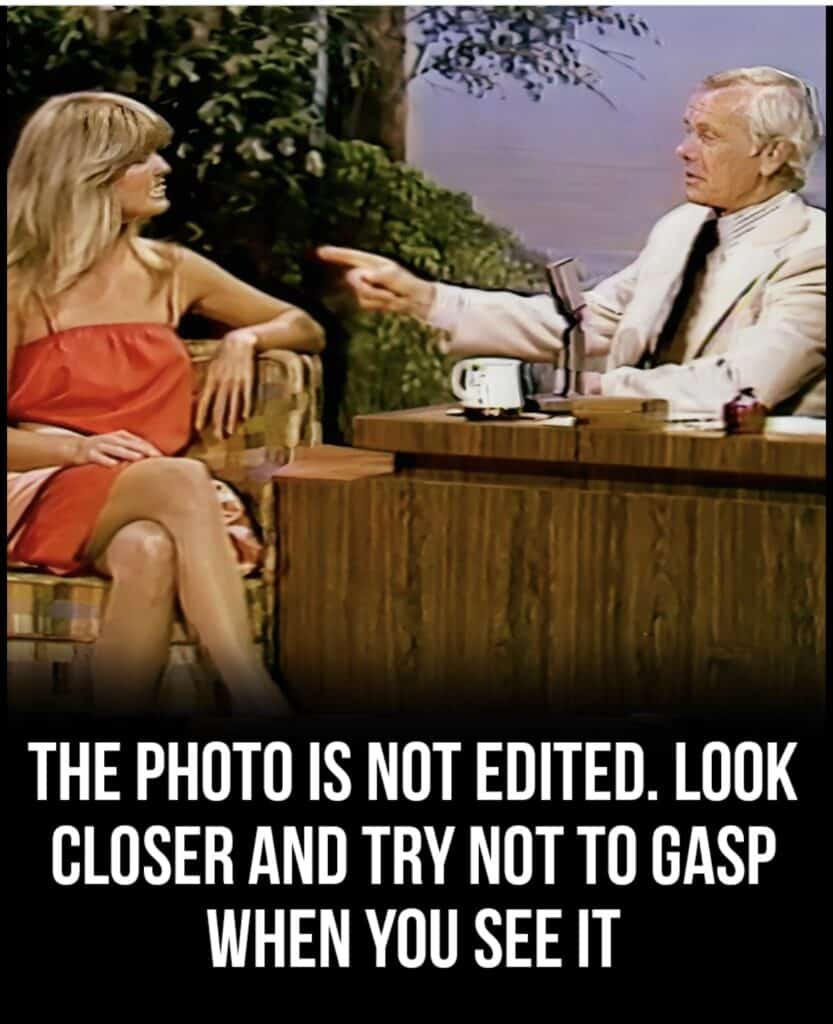
Even when gossip followed her — such as after a late-night appearance on The Tonight Show Starring Johnny Carson — those close to her described not struggle, but nerves beneath constant public expectation.
What many never knew was her devotion to fine art. Mentored by sculptor Charles Umlauf, Farrah created serious sculpture — not as hobby, but discipline. Her home became a private gallery of her own work.
And in her final years, she faced cancer not quietly, but courageously, documenting her journey so others could understand the reality of illness beyond headlines. She maintained agency, dignity, and resolve until the end.
Farrah Fawcett wasn’t simply a poster, a hairstyle, or a moment in pop culture.
She was a woman who:
• Chose growth over comfort
• Depth over easy fame
• Authenticity over image
• Strength over silence
Her beauty opened doors — but her courage kept her walking forward.
True icons don’t last because of how they looked.
They last because of how fully they lived.
Farrah’s legacy remains not in nostalgia alone, but in the quiet truth she embodied:
You can be admired — and still insist on becoming more.
And that, more than glamour, is why she’s remembered.