I truly believed I was building a stable family and a secure future with the father of my child. At thirty-one, discovering I was pregnant felt like the beginning of everything I had hoped for — love, commitment, and a life rooted in safety. Gar and I had been together nearly two years. We spoke about names, nursery colors, and the kind of home we wanted to create. On quiet Sunday mornings we planned our future in gentle detail, imagining laughter, pets, and the ordinary joys that make a family feel whole.
So when I told him over dinner, my voice trembling with happiness, he looked surprised — then pulled me into his arms and said he was ready to be a father. I believed him. I trusted that we were stepping forward together.
The change didn’t come with shouting or slammed doors. It came quietly. Slowly. In small remarks that chipped away at warmth. The way I folded laundry was wrong. A light left on was careless. Even my breathing irritated him. What once felt like partnership became constant correction.
I told myself he was stressed. He worked long hours. A baby brings responsibility. Pressure can harden people for a while, I thought. Surely the tenderness would return.
But his focus narrowed to money. Every receipt was inspected. Every choice questioned. I learned to buy the cheapest items, not because I preferred them — but because peace cost less.
When I felt dizzy or exhausted, he brushed it aside. “You’re fine.”
I was carrying a child, yet felt increasingly alone.
Part of me knew this wasn’t love. But I wanted my daughter to have both parents. I kept hoping the man I once knew would come back.
Then came the rainy Thursday.
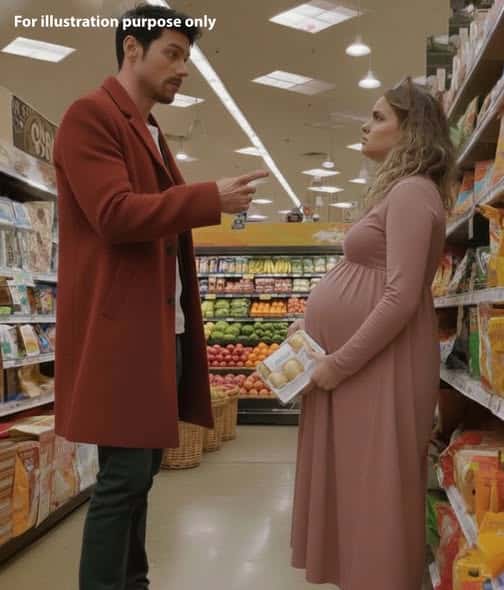
Seven months pregnant, tired to the bone, I agreed to a quick grocery run. In the bakery aisle I placed a package of whole-grain rolls in the cart — on sale, just a few dollars.
His voice rose.
“Of course you’d grab the expensive ones. Do you think money grows on trees?”
“They’re only three dollars,” I said quietly.
He scoffed.
“You probably planned this pregnancy to secure your future.”
People stared. My hands shook as I tried to put the bread back. The bag tore. The rolls spilled across the floor.
He laughed.
“If you can’t even hold bread, how are you going to hold a baby?”
The store went still.
A man stepped forward — calm, well dressed, composed. He picked up the fallen rolls, placed them back into the bag, and looked straight at Gar.
“Gar,” he said evenly, “I assumed your salary could manage three-dollar bread for the mother of your child. Should I be mistaken?”
Gar’s face drained of color.
“Mr. Griffin — I was just joking.”
“Humiliation isn’t humor,” his boss replied.
Then he turned to me, gently.
“Are you alright?”
I nodded, though my throat had closed.
He walked me to checkout and paid for the groceries. Gar left without a word.
On the drive home, Gar blamed me — said I embarrassed him.
That was when the fog lifted.
At home, I calmly asked him to pack and leave. There was no yelling. Just clarity. This was my home, and I would not raise a child in emotional harm.
He left that night.
Two months later, Mona was born. Holding her small warm body, I felt something settle inside me — peace. The kind that comes when you choose safety over fear.
Gar never reached out again.
Months later, I ran into Mr. Griffin at the same grocery store. He smiled at Mona, who answered with a bright, toothless grin. We spoke kindly. He helped me understand my rights and supported me through child support.
Friendship grew naturally. Conversations turned into coffee. Coffee into dinners. He played on the floor with Mona, building towers, laughing freely.
One evening, after she’d fallen asleep, he said quietly,
“I’d like to be part of your life — if you’ll allow it.”
There was no pressure. Only respect.
For the first time in a long while, I felt steady.
A year later, he proposed in our living room while Mona tapped a spoon against a bowl like a tiny celebration drum. I said yes.
Sometimes life shifts over something small — like a few dollars’ worth of bread.
But what it reveals is never small.
I learned that love is not control.
That stress does not excuse cruelty.
That peace is a form of wealth.
And that when you protect your dignity, you quietly make room for better things to find you.