
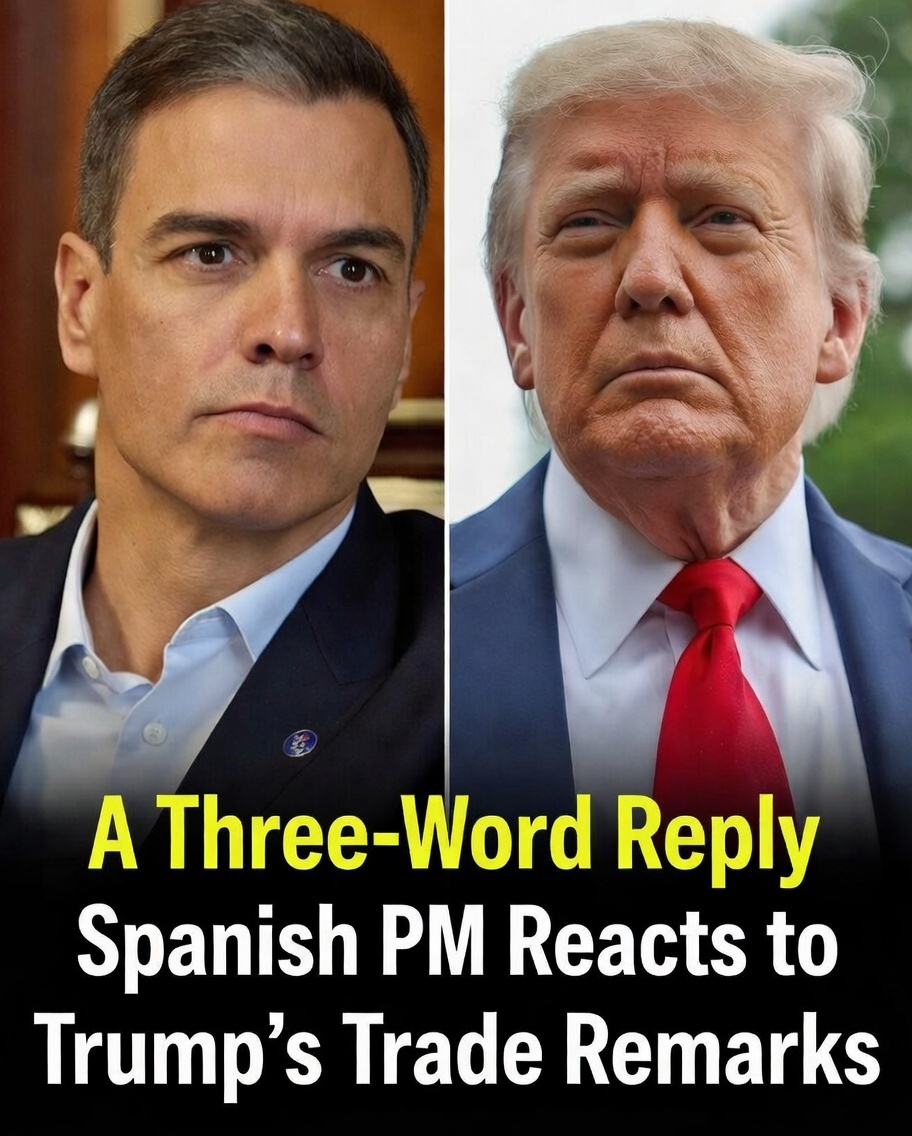
Diplomatic tensions between the United States and Spain have intensified after President Donald Trump suggested that Washington could halt trade ties with Spain — a threat that prompted a firm response from Spanish Prime Minister Pedro Sánchez.
Dispute Over Iran Strikes
The disagreement stems from Spain’s criticism of recent U.S. and Israeli military strikes against Iran. The operation, launched after nuclear negotiations reportedly collapsed, targeted senior Iranian leadership. Some reports claim that Ayatollah Ali Khamenei and other high-ranking officials were killed, though casualty figures and details remain widely debated.
While U.S. officials have defended the strikes as necessary for national and regional security, Spain’s government has openly condemned the action.
Spain’s Position
Sánchez described the operation as an “unjustified and dangerous intervention,” arguing that it risks violating international law and destabilizing the region.
Spain’s Foreign Minister José Manuel Albares stated that U.S. military bases located in Spain would not be used for operations tied to the conflict unless they fully complied with bilateral agreements and international legal standards.
Defense Minister Margarita Robles echoed that stance, emphasizing that any military cooperation must remain consistent with international law and treaty obligations.
Trump’s Warning
Speaking from the White House, Trump criticized Spain’s leadership and suggested the possibility of cutting trade ties.
He said Spain had been “terrible” in its response and indicated that Treasury officials had been asked to review economic relations between the two countries. At the same time, Trump praised the Spanish people while criticizing their government’s position.
The president also renewed pressure on NATO allies to increase defense spending to 5% of GDP, noting that Spain has not supported that target.
Spain’s Response
From the Moncloa Palace in Madrid, Sánchez rejected the criticism and reaffirmed Spain’s position.
“We will not be complicit in something that is bad for the world and contrary to our values simply out of fear of reprisals,” he said.
He framed Spain’s stance not as support for any particular government but as a commitment to international law and peace, concluding his remarks with a clear message: “No to war.”
Broader European Context
German Chancellor Friedrich Merz noted that Spain’s membership in the European Union means any trade measures involving Spain would also intersect with EU trade rules.
This adds another layer of complexity to the dispute, as unilateral trade action against an EU member could have broader diplomatic and economic consequences.
Economic Stakes
Trade between the United States and Spain is substantial. In 2025, Spain exported roughly $26 billion in goods to the U.S., including pharmaceuticals, machinery, and olive oil. Meanwhile, Spain imported around $21 billion in American goods.
Spanish officials have emphasized that any review of trade relations must respect existing international agreements, EU regulations, and the independence of private businesses operating across borders.
A Test of Alliances
The dispute highlights the delicate balance between military alliances, economic interdependence, and political values. NATO partners often cooperate closely on security matters, yet disagreements over strategy and international law can still create friction.
As diplomatic discussions continue, the situation illustrates how quickly geopolitical events can spill into economic and political arenas — testing alliances that have long been considered stable.