
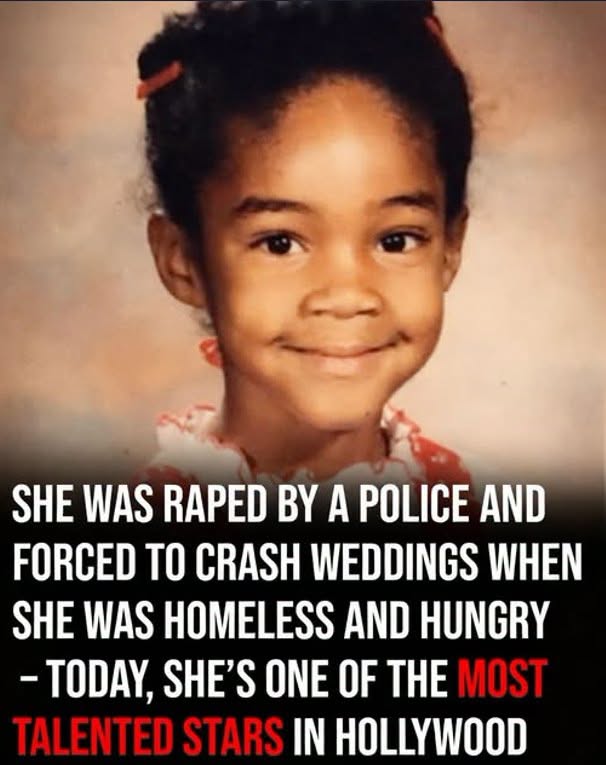
From Survival to Voice: The Life She Built From What Was Broken
Her life was never shaped by comfort or stability. It came together in fragments—moments of fear, responsibility that arrived too early, and a kind of resilience that didn’t announce itself, but refused to disappear.
She was born on December 3, 1979, in Los Angeles, into circumstances that were already fragile. Her father left when she was still very young, leaving her mother to carry everything alone. For a time, there was still structure—long hours, multiple jobs, but also effort, care, and a sense that things, though difficult, were being held together.
Then that structure gave way.
When she was nine, her mother was involved in a serious car accident that changed everything. The injuries left lasting damage, eventually developing into schizophrenia. The person who had once been steady became unpredictable, sometimes unreachable, sometimes frightening in ways a child cannot fully understand. Home stopped being a place of rest. It became something uncertain, where each day required adjustment just to get through it.
There are moments in childhood when time quietly shifts.
This was one of them.
Without being asked, she stepped into responsibility—cooking, cleaning, watching over her siblings, trying to maintain something that was already slipping beyond control. She carried it as best she could, but she was still a child, learning to survive inside a situation that gave her no clear ground.
Eventually, the system intervened.
She and her siblings were removed from the home and placed into foster care. Not together at first. Separated, sent into unfamiliar houses, surrounded by people who didn’t know them and couldn’t carry what they had already lived through. The transition was abrupt, without gentleness, and it left its mark in ways that lasted far beyond those years.
She carried her belongings in trash bags.
It wasn’t just practical—it was symbolic. A quiet message that nothing about her life was settled, that everything could be moved, rearranged, or taken without warning.
In those years, she felt what many in that position feel.
Invisible.
Unwanted.
Temporary.
School didn’t offer much relief. Focus was difficult when survival took most of her attention. Socially, she became an easy target—misunderstood, sometimes mocked, often dismissed. But instead of withdrawing completely, she found something that gave her a measure of control.
She learned how to make people laugh.
It wasn’t just entertainment—it was protection. If she could shape the room, she could shift how she was seen. Laughter created distance between her and whatever might hurt her next. It didn’t erase anything, but it gave her space to stand.
Over time, that instinct became something more defined.
A social worker noticed it—not as disruption, but as potential. Instead of punishment, she was offered a chance to step into it more deliberately. A comedy camp, simple in concept, but significant in effect.
For the first time, her voice wasn’t just tolerated.
It was received.
On stage, she could take what had been heavy and reshape it. Not by denying it, but by placing it in a form that others could understand. People laughed—but not at her. With her.
That difference mattered.
It marked the beginning of something she could build.
Life, however, didn’t suddenly become easier. Aging out of foster care meant stepping into independence without support. There were periods of instability, moments where survival again became immediate—sleeping in her car, finding ways to maintain basic dignity with limited resources.
But she didn’t let go of what she had found.
She kept showing up.
Open mic nights, small venues, any space that allowed her a few minutes. Not every audience responded. Not every attempt worked. But she stayed with it, refining her voice, learning not just how to speak, but how to connect.
Progress came slowly.
Then, eventually, it came all at once.
A role in the film Girls Trip brought her into a wider view. It wasn’t just visibility—it was recognition. Her presence carried something that couldn’t be easily replicated: honesty without hesitation, humor that came from lived experience rather than performance alone.
From there, opportunities expanded.
Television, film, stand-up, writing—each step building on the last. Her memoir, The Last Black Unicorn, shared her story openly, not to seek sympathy, but to offer clarity. To show that what she had lived through didn’t define her limits—it shaped her voice.
She didn’t distance herself from her past.
She carried it, but differently.
Not as something hidden, but as something understood.
She spoke about foster care, about instability, about experiences that many would prefer to leave unspoken. And in doing so, she created space for others to see themselves in something beyond their own circumstances.
She also gave back, supporting programs for foster youth, understanding that what is often needed most isn’t rescue, but recognition—someone seeing clearly what is there and choosing not to turn away.
Her story isn’t built on a single turning point.
It’s built on endurance.
On continuing when stopping would have been easier. On finding a way to shape something meaningful out of what was never meant to be easy.
Today, Tiffany Haddish stands as one of the most recognizable voices in comedy. Not because her path was smooth, but because she stayed with it long enough to turn it into something real.
Her beginning didn’t determine her ending.
But it did give her something few people have—the ability to understand both what breaks a person, and what quietly holds them together.
And in that, her voice carries more than humor.
It carries truth.