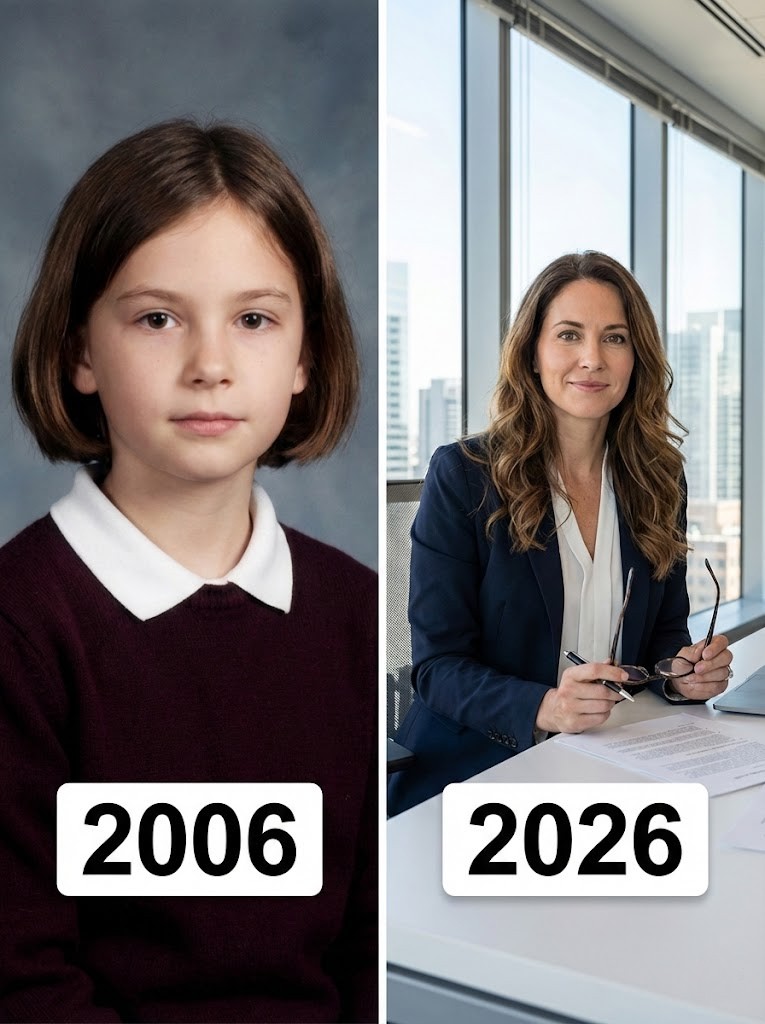
My name is Claire. I still remember the sharp smell of industrial glue from my sophomore chemistry class. I was sixteen, quiet, careful not to draw attention. Mark sat behind me — loud, admired, certain of his place in the world.
One afternoon he pressed my braid against the metal frame of my desk and poured glue over it. When the bell rang and I stood, pain tore through my scalp. The nurse had to cut me free. I walked home with a bald patch and a nickname I didn’t choose.
That day I decided something privately: if I could not command popularity, I would build competence. I would become steady in ways that did not depend on applause.
Twenty years later, I held a controlling interest in our regional community bank and personally reviewed high-risk loan applications. One file stopped me cold. The applicant’s name was Mark.
His credit history was fractured. Missed payments. Debt. On paper, denial was simple. But the purpose of the loan was not indulgence. It was $50,000 for emergency heart surgery for his eight-year-old daughter, Lily.
I asked him to come in.
He walked into my office thinner, tired, carrying worry in his shoulders. When he recognized me, the confidence I once knew in him vanished. He did not defend himself. He asked only one thing: that I not punish his daughter for what he had done as a boy.
The request sat between us — heavy, honest.
I told him I would approve the full amount, interest-free, under one condition. He would return to our former high school and speak at an upcoming assembly. He would describe what he had done — plainly — and apologize publicly.
He hesitated. Then he agreed.
The next morning, I stood quietly at the back of the auditorium. Mark faced rows of students and named his actions without humor or justification. He described the glue, the humiliation, the harm. He apologized — not vaguely, not theatrically, but clearly. He said having a daughter had forced him to understand the weight of cruelty.
The room was silent in a way that felt instructive, not dramatic.
Afterward, I told him the hospital would receive the funds within the hour. I also asked him to meet me at the bank the following week. We would restructure his debt and begin repairing his credit. Accountability, if sincere, deserves a path forward.
He wept — not for himself, I think, but for the collision of past and present.
We did not become friends. We did not erase what happened. But something settled.
For years I believed power meant holding the upper hand — being the one who could decide another’s fate. That day I understood something quieter: power is choosing not to replicate harm when you finally have the leverage to do so.
Justice without cruelty. Mercy without naivety.
The girl in that chemistry classroom wanted strength so she would never feel small again. The woman in that auditorium learned that true strength is not in revenge, but in correction — in making truth visible and then allowing growth to follow.
For the first time in two decades, the memory of that desk no longer burned. It had been faced. It had been answered. And then it was laid down.