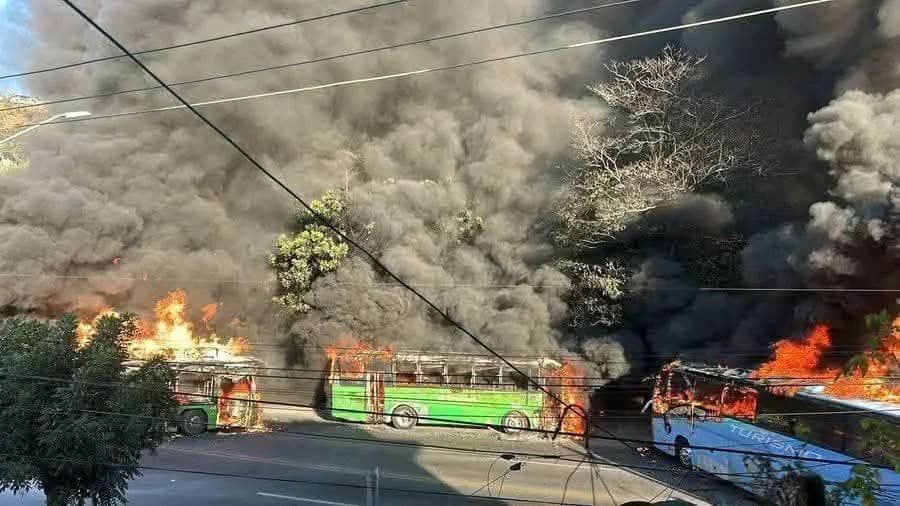
Reports indicating that three buses caught fire often point to a sudden mechanical issue, accident, or another unexpected incident. While investigations are needed to determine the exact cause, bus fires can stem from several factors — including engine overheating, electrical malfunctions, fuel leaks, brake system failure, or collisions. Because buses contain fuel, rubber, plastic components, and extensive wiring, flames can spread quickly once ignited.
In such situations, emergency services are typically dispatched without delay. Fire crews work to contain and extinguish the blaze, secure the area, and prevent the fire from spreading to nearby vehicles or structures. At the same time, medical teams assess passengers and drivers for injuries, particularly burns or smoke inhalation.
Safety authorities consistently emphasize the importance of immediate evacuation if smoke or fire is detected. Passengers are advised to move a safe distance away from the vehicle and avoid re-entering under any circumstances. Once the immediate danger is addressed, transportation officials conduct a thorough investigation to identify whether the cause was mechanical failure, maintenance oversight, or another contributing factor.
Incidents involving multiple vehicles often prompt broader safety reviews and inspections to reduce the risk of recurrence. The central priorities remain clear: protect lives, provide timely medical care, and determine the cause carefully before drawing conclusions.