Bruce Springsteen’s 10 Most Powerful Political Songs
In November 2025, Bruce Springsteen took the stage at the New York Public Library’s annual gala and made something of a personal vow: he wanted to write more political songs.
“The writer is always strongest when he has something to push against,” Springsteen said at the event. “And right now, there’s a lot for an American writer to push against. That’s where my inspiration is headed.”
He didn’t waste any time backing that up. Soon after, Springsteen released Streets of Minneapolis, a stark new track inspired by the deaths of Alex Pretti and Renee Good following encounters with ICE agents.
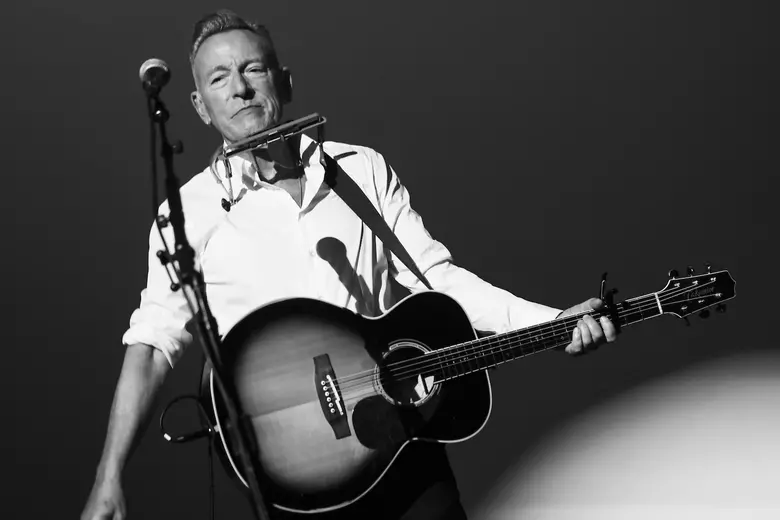
“This song is for the people of Minneapolis, our innocent immigrant neighbors, and in memory of Alex Pretti and Renee Good,” he said. “Stay free.”
Of course, longtime fans know this wasn’t a pivot — it was a continuation. Springsteen has always written politically charged music, shaped by early influences like Woody Guthrie, Pete Seeger, and Bob Dylan.
Political music doesn’t come with a strict definition — you usually recognize it by feel. And while many Springsteen songs could qualify depending on interpretation, the ten below leave little room for doubt. Listed chronologically, these are some of the clearest examples of Springsteen using songwriting as social confrontation.
1. “Lost in the Flood”
From: Greetings From Asbury Park, N.J. (1973)
Springsteen began grappling with the impact of the Vietnam War on his very first album. Though he avoided the draft due to a prior injury, he saw firsthand how the war hollowed out young men in his community. “Lost in the Flood” captures that damage — emotional, spiritual, and societal — while also touching on addiction and moral disillusionment.
2. “Born in the U.S.A.”
From: Born in the U.S.A. (1984)
Perhaps the most misunderstood political song in American music history. Often mistaken for a patriotic anthem, the song is actually a brutal portrait of a Vietnam veteran discarded by the country he served. Springsteen later explained that the song forces listeners to hold pride and criticism at the same time — a tension that still defines American political debate.
3. “Roulette”
From: 1988 B-side (recorded during The River sessions)
Written after the partial nuclear meltdown at Three Mile Island, “Roulette” reflects fear, misinformation, and institutional failure. Though it didn’t make The River, the song stands as a sharp indictment of how authorities handled a crisis that shattered public trust.
4. “The Ghost of Tom Joad”
From: The Ghost of Tom Joad (1995)
Inspired by The Grapes of Wrath and Woody Guthrie’s writings, this song brings Depression-era themes into the modern world. Springsteen sings of migrants, police brutality, and people living on the margins — updating a historic struggle for a contemporary America.
5. “Youngstown”
From: The Ghost of Tom Joad (1995)
Told through the voice of a steelworker, “Youngstown” traces the rise and collapse of America’s industrial backbone. The song confronts how generations of labor and sacrifice were rewarded with abandonment once profits dried up.
6. “American Skin (41 Shots)”
From: Live in New York City (2001)
Written after the police killing of Amadou Diallo, the song addresses systemic racism and police violence. Though rooted in one tragedy, it speaks to a recurring national pattern that remains unresolved decades later.
7. “Long Walk Home”
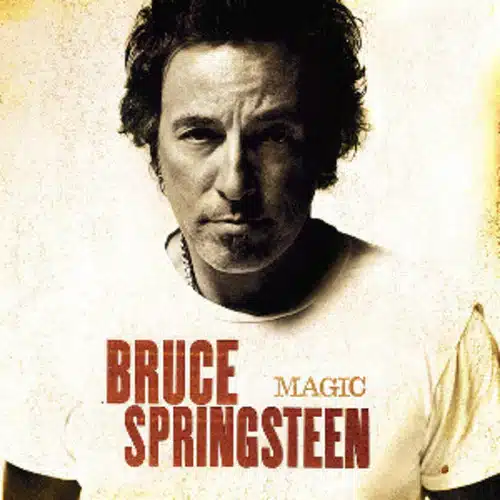
From: Magic (2007)
Born out of Springsteen’s disillusionment during the George W. Bush era, this song reflects the feeling of returning home only to find your values no longer recognized. It captures the emotional fallout of political and cultural division.
8. “Jack of All Trades”
From: Wrecking Ball (2012)
Written in the shadow of the 2008 financial crisis, this song centers on working-class survival while banks thrive. Springsteen once said his music measures the distance between the American Dream and American reality — and here, that gap is vast.
9. “We Take Care of Our Own”
From: Wrecking Ball (2012)
Despite its rally-style chorus, the song is deeply ironic. Springsteen questions whether America actually lives up to its promises, especially when institutions fail and communities are left to support themselves.
10. “Death to My Hometown”
From: Wrecking Ball (2012)
Using the imagery of warfare, this song isn’t about bombs or soldiers — it’s about economic destruction. Springsteen frames financial collapse as an invasion, one that devastates towns, families, and livelihoods without accountability.
Across five decades, Bruce Springsteen has returned again and again to the same core question: who pays the price when systems fail? Whether through war, labor, race, or economics, these songs show that political writing isn’t a phase for Springsteen — it’s the backbone of his art.