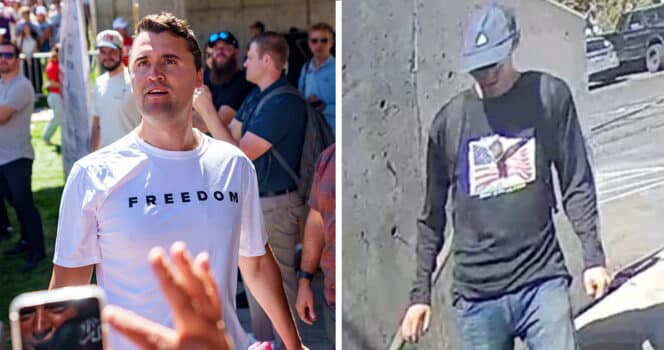
By late Thursday night, the hunt for the person who shot Charlie Kirk had shifted from frantic to focused. A day and a half of sifting tips and footage finally converged on a name: 22-year-old Tyler Robinson of Utah. Before dawn on Friday, multiple outlets reported that a suspect was in custody, and state officials confirmed that the arrest followed a family member’s tip that set the final pieces in motion.
What unfolded between the first echoing crack of a rifle and the click of handcuffs was a tangle of fear, confusion, and methodical police work that spilled across a university campus, neighboring roofs, and eventually into the desert south of the Wasatch Front. Investigators had been working the case in overlapping circles: canvassing the quad, pulling camera angles from building after building, and tracing a flight path that led off a roof and into a patch of trees beyond the courtyard. There, they recovered a bolt-action rifle and ammunition—critical evidence that narrowed their search from speculation to specificity. AP News
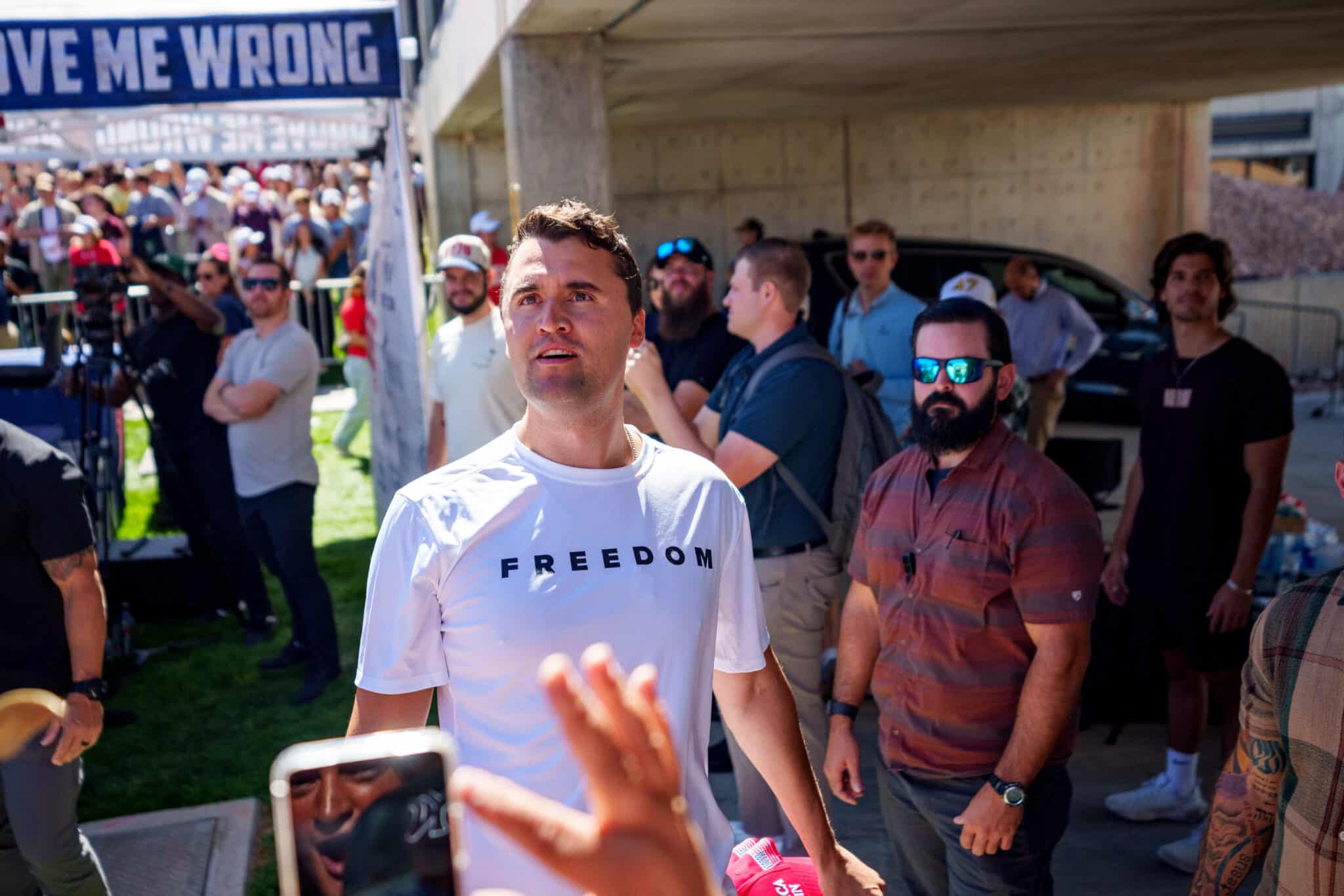
Kirk, 31, had been in Utah to kick off his “American Comeback Tour,” doing what made him a lightning rod and a draw on college campuses: taking questions, arguing points, pushing and parrying with students. The courtyard at Utah Valley University was crowded—reports ranged into the thousands—when a single round found his neck. The commotion was instant. People dove for cover, sprinted for doors, barricaded classrooms, and called family from bathrooms and behind flipped tables. Within 90 minutes, doctors in a nearby hospital had done all they could. AP News
In those first hours, police took two people into custody, only to release them after questioning. The search reset around a new “person of interest,” amplified by a $100,000 reward for information and a slate of enhanced stills pushed out to the public. The FBI also released security footage that drew a line from the rooftop where the shot was fired to the route the suspect took to get down and disappear—jumping to ground level, cutting across a service area, and vanishing into the trees. AP News
The rifle mattered. According to information circulated among law enforcement and described to the Associated Press, it was a Mauser .30-caliber bolt-action, recovered with a spent casing in the chamber and three more in the magazine. That, along with a palm print and a shoe impression, became the spine of the lab work the FBI rushed to its federal facility. It was a reminder that even in a case heavy with politics, the quiet grind of forensics still carries much of the load. AP News
By Thursday afternoon, the political reaction had hardened. Utah Gov. Spencer Cox called the killing a “political assassination,” pleaded for public help, and said the state was preparing to pursue the death penalty if prosecutors secured a conviction. That stance echoed through conservative media and drew quick national attention, both from supporters who wanted maximum punishment and from critics warning against rhetorical escalation while the investigation was still unfolding. Utah is among the states where capital punishment remains on the books. AP News
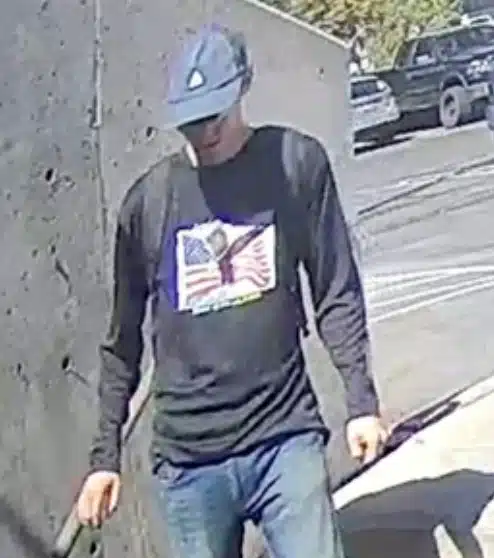
Then came the break. A family member recognized the images being circulated, contacted authorities, and—according to people briefed on the matter—helped convince Robinson to surrender. Late Thursday, Fox News correspondent Jacqui Heinrich reported that the suspect had been “walked in” near St. George after 11 p.m., an account state officials did not dispute as they confirmed the arrest and thanked the public for the flood of tips. The speed of that pivot—from unknown gunman to a named suspect in custody—was striking, even by the compressed timelines of modern manhunts.
The political reverberations continued. In a Friday morning appearance on Fox News, President Donald Trump said “somebody close” to the suspect had alerted authorities and urged him to come in—comments that lined up with what Utah officials suggested later in the day. Trump also said he hoped the shooter would receive the death penalty if convicted, a sentiment that mirrored calls from Utah leaders and underlined how quickly the case had become a proxy fight over political violence, security on campus, and the outer edge of punishment in American law.
None of it undid the chaos students described from the ground. Witnesses told reporters they heard one shot and saw Kirk’s hand fly to his neck, blood conspicuous and sudden. People barricaded doors with desks and an electric pencil sharpener tied to a chair leg, improvised measures in spaces that had never installed metal detectors because the courtyard was meant to be open—a place for speeches, not searches. Many who ran said they called their parents even as cell service jammed; others whispered prayers in dark classrooms. The canopy that had framed the Q&A still stood the next day, scuffed and half-tilted, the slogan on it—“PROVE ME WRONG”—now more elegy than dare. AP News
Federal authorities have kept their cards close on motive. They said the shooter appeared “college-age” and blended into the crowd, but they have offered no public theory about ideology or grievance, and cautioned against filling that void with speculation. The emphasis, they insisted, was on evidence—a print here, a shoe impression there, ballistics that can tie a rifle to a casing and a casing to a scene. AP News
Even the first, wrong turns mattered. Investigators admitted that detaining two people and releasing them burned precious hours, but said those interviews also helped eliminate dead ends and refocus on the rooftop path. The recovered weapon and the woods it was found in became a pivot point: a place to pull DNA, a place to collect trace, a place to reset a search perimeter that initially felt too large to grip. AP News
By the time authorities named Robinson, the story had stretched far beyond Orem. National outlets raced to update live blogs. Pundits argued about campus security, railing either at lax screening or at the impossibility of screening an outdoor quad. Students posted shaky phone videos and shook through interviews. Turning Point USA erected memorials and promised to continue Kirk’s work. And in Arizona, at the organization’s headquarters, families brought flowers and recorded messages—small acts of grief in a week that felt impossibly loud. AP News
The legal process ahead is likely to be slow where everything else has been fast. If prosecutors seek the death penalty, Utah law requires a set of formal findings and deadlines that will stretch into months. A defense team will demand every frame of footage, every chain-of-custody signature on the rifle, every lab report and lead sheet and phone log. Each step will be argued, and each argument will be documented in a case already under a blinding spotlight. AP News
For those who were in the courtyard, the timeline is simpler and crueler. One question about gun violence, one answer cut off by a single shot, one rush to triage that could not outrun physics. In the days since, investigators say they’ve logged thousands of tips, the kind of volume that can swamp a case unless a handful are threaded carefully into something usable. This time, one of those threads belonged to a family who saw a face on the news and picked up the phone. AP News
By Friday evening, the campus was quieter. Police tape hung in tired loops. The quad had been cleared, then recleared. Inside conference rooms and labs, agents continued to work through the digital sprawl of a modern homicide: phones imaged, drives cloned, social media scraped, location pings requested, and timelines aligned against the unimpeachable metronome of video timecodes. The story that will emerge from all that is still being written—by forensics, by interviews, by the slow weight of court filings. But the central fact no longer wobbles: a suspect has a name, and he is in custody.
What remains—why this happened, whether anyone helped, what warning signs existed and were missed—will take longer to settle. For now, a city exhales, not in relief exactly, but in the smaller, steadier breath that comes when a chase ends and the long, procedural work begins.
{"post":89656,"page":1,"next":[{"id":89624,"title":"Country Music\u2019s Heart STOPPED When Jamey Johnson Sang \u201cThree Wooden Crosses\u201d to Honor Randy Travis","url":"https:\/\/new24.info\/89624"},{"id":89615,"title":"Student who asked Charlie Kirk final question before shooting breaks silence","url":"https:\/\/new24.info\/89615"},{"id":89618,"title":"Forget the awards, forget the spotlight \u2014 JELLY ROLL just proved what REAL SUCCESS looks like. Instead of chasing luxury, he quietly built his MOM the home she had dreamed of her entire life. Every corner was designed with LOVE, not for Instagram likes, but for family. Fans are calling this move \u201cthe most BEAUTIFUL chapter of his story yet.\u201d","url":"https:\/\/new24.info\/89618"},{"id":89609,"title":"Kane Brown QUITS social media after being ATTACKED from both sides over his tribute to Charlie Kirk","url":"https:\/\/new24.info\/89609"},{"id":89606,"title":"It\u0027s amongst The Most Poweful Plants in the World","url":"https:\/\/new24.info\/89606"},{"id":89603,"title":"People Point Out To Strange \u201cHand Sign\u201d From A Man In A Black Shirt Behind Charlie Kirk Seconds Before The Shooting","url":"https:\/\/new24.info\/89603"},{"id":89599,"title":"Ocasio-Cortez Blames Guns For Assassination of Charlie Kirk","url":"https:\/\/new24.info\/89599"},{"id":89594,"title":"Beloved Film and Broadway Star Dies","url":"https:\/\/new24.info\/89594"},{"id":89590,"title":"Entitled Neighbor Banned My Kids from Playing Outside Because They Break Her Rules, I Went to War for My Kids","url":"https:\/\/new24.info\/89590"},{"id":89587,"title":"SHOCKING DETAIL: The Person of Interest\u2019s Shirt Could Say More Than Words","url":"https:\/\/new24.info\/89587"},{"id":89584,"title":"Old Man Asks Son to Take Him to Nursing Home as Opposed to Living with His Family","url":"https:\/\/new24.info\/89584"},{"id":89581,"title":"Charlie Kirk Passes Away at 31 \u2013 Here\u2019s What We Know","url":"https:\/\/new24.info\/89581"},{"id":89578,"title":"Analyst fired after comments on live TV about Charlie Kirk\u2019s death","url":"https:\/\/new24.info\/89578"},{"id":89573,"title":"BREAKING: STUDENT SHOOTS CLASSMATES AT EVERGREEN HIGH SCHOOL \u2013 ONE DEAD, CHAOS ERUPTS","url":"https:\/\/new24.info\/89573"}]}