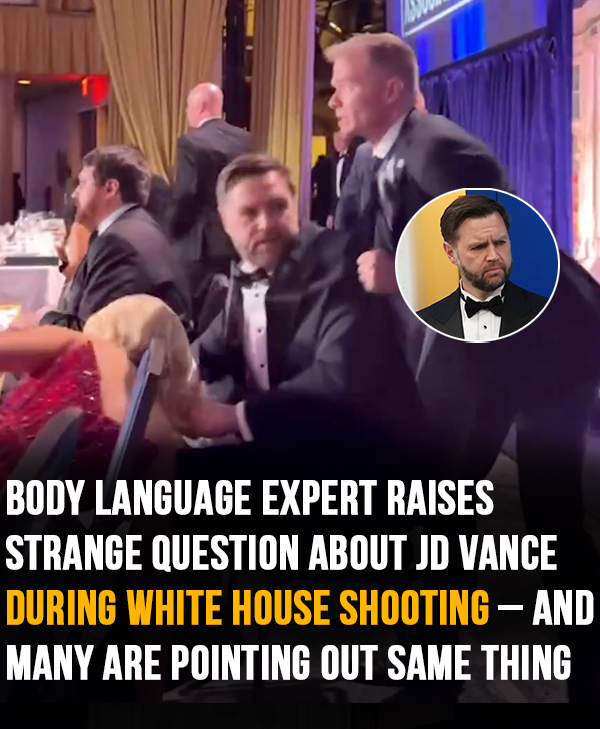
This kind of situation tends to look more dramatic—and more suspicious—than it actually is once you understand how protection protocols work.
First, the basics: both Donald Trump and JD Vance are under constant protection by the United States Secret Service. But they are not handled identically in every moment.
What people are reacting to—one being moved quickly while the other appears to stay seated briefly—usually comes down to three factors:
1. Position relative to the threat
Security decisions are made in seconds based on where the danger is coming from. If one protectee is closer to a perceived threat vector (entrance, corridor, line of fire), they may be extracted immediately, while another is momentarily held in a “secure-in-place” position behind shielding.
2. Layered evacuation priorities
It’s not always “everyone runs at once.” The Secret Service uses layered movement:
- One protectee is moved
- Others are covered, secured, then moved
This avoids chaos and reduces risk of cross-exposure.
3. Agent control vs. individual reaction
Even if a leader says they “chose” to wait, in reality agents are controlling the situation. Sometimes what looks like hesitation is actually:
- agents assessing the threat
- securing a path
- positioning protective barriers
So Trump remaining seated briefly doesn’t necessarily mean delay or error—it can mean he was already in a controlled protective posture.
About the “body language analysis”
Commentary from analysts like John Paul Garrison can be interesting, but it has limits.
Body language in a real security incident is not a reliable indicator of:
- confidence
- awareness
- decision-making
Because the person’s movement is heavily dictated by trained agents, not instinct.
What actually matters here
From a security standpoint, the key outcome is simple:
- Threat identified
- Response within seconds
- Suspect stopped
- No casualties among attendees
That’s exactly what the system is designed to do.
Why it feels “off” to people
The discomfort people feel comes from expectation:
We assume leaders should react the same way at the same time.
But in reality, protection is asymmetric by design—different movement, different timing, depending on risk.
If you strip away the social media angle, this doesn’t look like a failure or something suspicious. It looks like a controlled, layered response to a fast-moving threat.
If you want, I can break down how Secret Service extraction actually works step-by-step—it’s more structured than most people think.