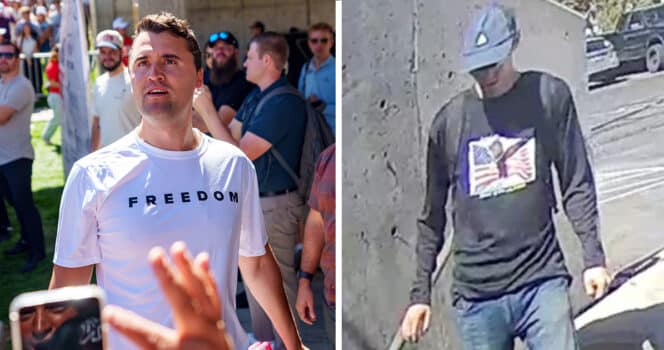
The rumor mill lit up within hours of the Utah Valley University shooting, and one of the louder claims was that a man seen near Charlie Kirk just before the shot looked like a U.S. Secret Service agent who once protected Donald Trump. It’s an eye-catching theory, but there’s no credible reporting or official statement to support it. What we do have is a fast-moving criminal investigation, a suspect in custody, newly released evidence, and a lot of speculation filling in the gaps where facts are still coming in.
Multiple outlets reported that a 22-year-old Utah man, Tyler Robinson, was taken into custody in the days after the shooting. During a Friday morning TV interview, President Donald Trump said he believed “with a high degree of certainty” that the suspect was in custody and added that “someone very close” to the individual helped lead authorities to him. Reporting later the same day echoed that detail, indicating a family member urged the surrender.

Investigators have shared specific, verifiable pieces of evidence. The FBI released footage of an individual leaping from a rooftop and fleeing moments after the shot, and local and federal authorities said they recovered a rifle and trace evidence—shoe impressions and a palm/forearm imprint—near the campus. Those are the kinds of breadcrumbs labs can test and match to build a timeline.
Now stack that against the “Secret Service lookalike” narrative. The Secret Service protects presidents, vice presidents, their families, visiting heads of state, and designated candidates—not private figures hosting campus events. Nothing in the public record indicates the Service had any role at Utah Valley University that day, and agencies haven’t said any federal protective detail was present for Kirk. If one were, that would typically be explicit in after-action statements. A college appearance by a media personality simply isn’t the sort of venue USSS secures unless a protectee is on site.
So why do the “it was a Secret Service guy” posts spread so fast? Visual ambiguity plus emotion. Grainy screenshots, a familiar haircut, someone making hand signals—it’s easy to project meaning into a few out-of-context frames, especially in the supercharged window after a political killing. But line the claims up with what’s confirmed: the event was a public Q&A outdoors; campus police have spoken openly about security posture and gaps; and there’s zero official corroboration that any federal protective unit was staged around the dais.
Another thread making the rounds is that the rifle’s ammunition bore politically charged engravings. One national outlet reported, citing an unnamed law-enforcement source, that unspent rounds had etched messages suggesting social or political motives. Treat that with careful skepticism until it shows up in a charging document or sworn affidavit. Early, anonymously sourced tidbits often evolve—or vanish—once forensics and interviews are complete.
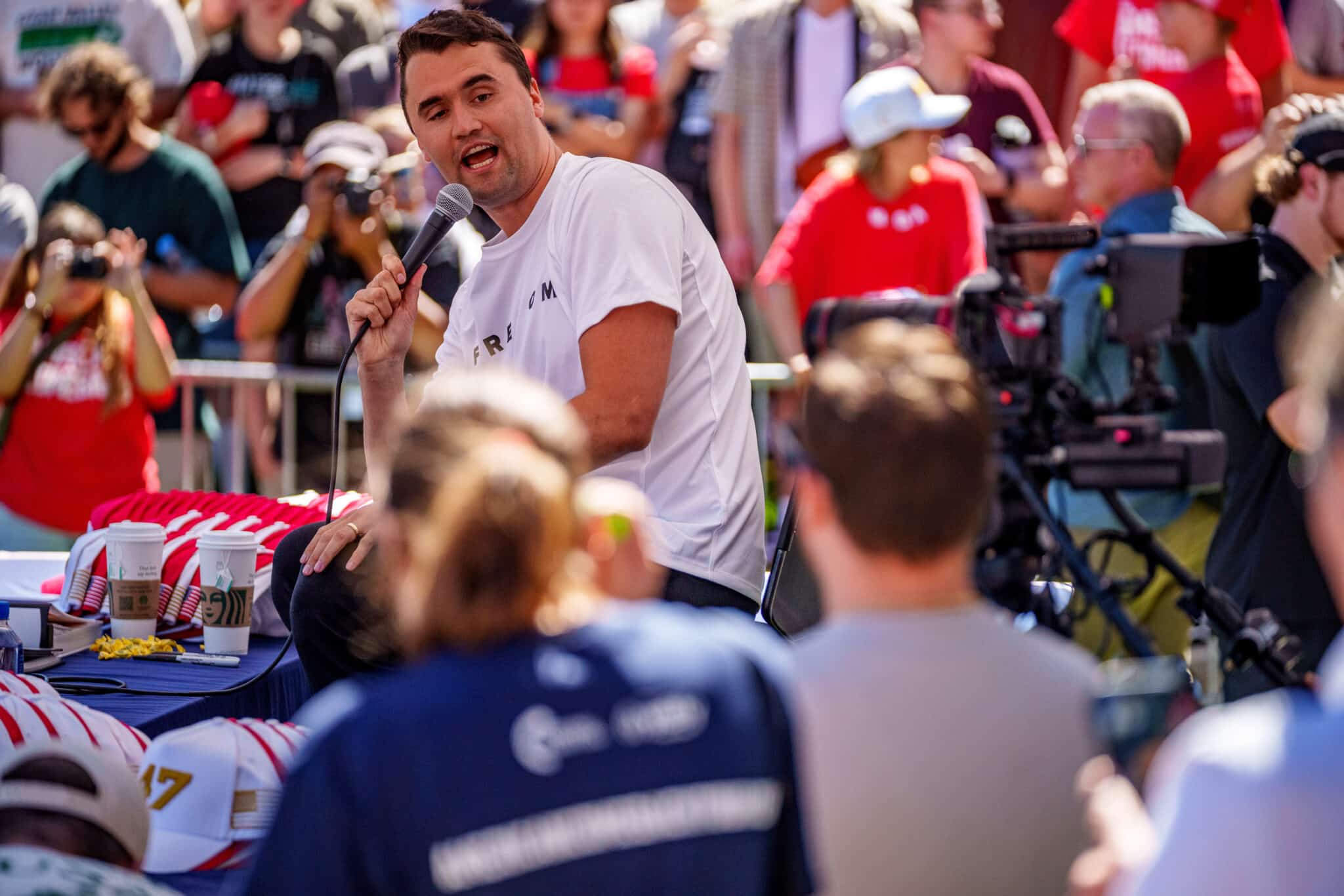
As for the basic arc of the day, witnesses describe exactly what you’d expect from a single, distant shot: a sharp crack, a flinch and collapse at the dais, a split second of stunned quiet, then chaos—people dropping behind chairs, sprinting for cover, calling loved ones as police flooded the quad. The university ordered an immediate evacuation. Within hours, the FBI joined the local task force; by the next day they’d pushed out the rooftop video and a tip request. From there, the work is methodical: tool-mark and ballistics comparisons, latent print and DNA on the weapon and towel, surveillance pulls to stitch together a route on and off the roof, and interviews to test alibis and tighten the timeline.
Security questions are already on the table. The school’s police chief acknowledged shortcomings and promised a full review. That typically means a hard audit of sightlines, staffing levels, bag-check decisions, overwatch positions, and the balance between “open campus” culture and protective realities at high-profile political events. Sniper-style attacks exploit distance, altitude, and surprise; that’s why counter-sniper overwatch, controlled perimeters, and ingress screening are standard when a federal protectee appears—even outdoors. Those layers weren’t built for this event, which is one reason the shot was possible at all.
If you’re trying to navigate the flood of claims, give more weight to named officials than to anonymous avatars, and to lab reports and court filings over viral clips. Ask whether a reputable outlet or an agency has endorsed a claim or whether it’s just bouncing between accounts that recycle each other. Separate what’s certain—a suspect in custody, physical evidence recovered, a public request for tips—from what’s plausible but unconfirmed, like motive hints or engraving stories, and from what’s purely speculative, like Secret Service involvement. A simple rule of thumb while the case moves toward charges: resemblance is not evidence.
{"post":89663,"page":1,"next":[{"id":89628,"title":"Erika Kirk seen for the first time since her husband\u2019s tragic death","url":"https:\/\/new24.info\/89628"},{"id":89624,"title":"Country Music\u2019s Heart STOPPED When Jamey Johnson Sang \u201cThree Wooden Crosses\u201d to Honor Randy Travis","url":"https:\/\/new24.info\/89624"},{"id":89615,"title":"Student who asked Charlie Kirk final question before shooting breaks silence","url":"https:\/\/new24.info\/89615"},{"id":89618,"title":"Forget the awards, forget the spotlight \u2014 JELLY ROLL just proved what REAL SUCCESS looks like. Instead of chasing luxury, he quietly built his MOM the home she had dreamed of her entire life. Every corner was designed with LOVE, not for Instagram likes, but for family. Fans are calling this move \u201cthe most BEAUTIFUL chapter of his story yet.\u201d","url":"https:\/\/new24.info\/89618"},{"id":89609,"title":"Kane Brown QUITS social media after being ATTACKED from both sides over his tribute to Charlie Kirk","url":"https:\/\/new24.info\/89609"},{"id":89606,"title":"It\u0027s amongst The Most Poweful Plants in the World","url":"https:\/\/new24.info\/89606"},{"id":89603,"title":"People Point Out To Strange \u201cHand Sign\u201d From A Man In A Black Shirt Behind Charlie Kirk Seconds Before The Shooting","url":"https:\/\/new24.info\/89603"},{"id":89599,"title":"Ocasio-Cortez Blames Guns For Assassination of Charlie Kirk","url":"https:\/\/new24.info\/89599"},{"id":89594,"title":"Beloved Film and Broadway Star Dies","url":"https:\/\/new24.info\/89594"},{"id":89590,"title":"Entitled Neighbor Banned My Kids from Playing Outside Because They Break Her Rules, I Went to War for My Kids","url":"https:\/\/new24.info\/89590"},{"id":89587,"title":"SHOCKING DETAIL: The Person of Interest\u2019s Shirt Could Say More Than Words","url":"https:\/\/new24.info\/89587"},{"id":89584,"title":"Old Man Asks Son to Take Him to Nursing Home as Opposed to Living with His Family","url":"https:\/\/new24.info\/89584"},{"id":89581,"title":"Charlie Kirk Passes Away at 31 \u2013 Here\u2019s What We Know","url":"https:\/\/new24.info\/89581"},{"id":89578,"title":"Analyst fired after comments on live TV about Charlie Kirk\u2019s death","url":"https:\/\/new24.info\/89578"}]}