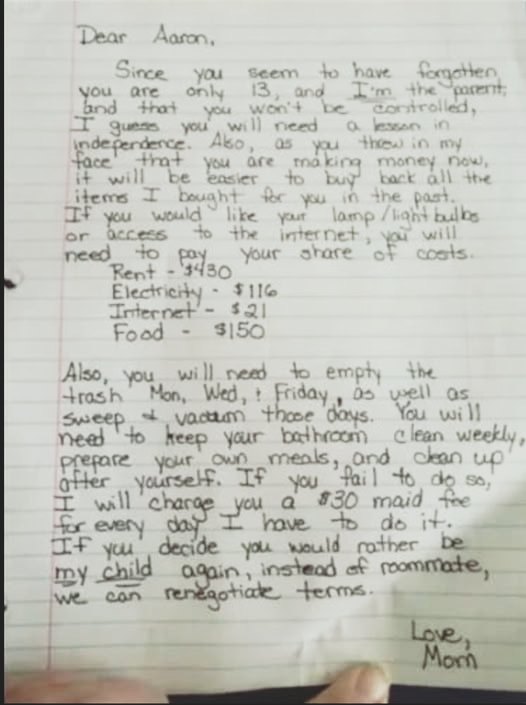
The tension in their home escalated until Heidi decided that instead of arguing, she would teach him the one lesson he hadn’t yet learned about the real world. The lesson was delivered in the form of a formal, typed “roommate contract” taped to his bedroom door. It was a masterclass in perspective. In the letter, Heidi calmly acknowledged his desire for independence but laid out the cold, hard math of adult survival. If Aaron wanted to be a roommate, he would have to pay his share of the rent, cover his portion of the electricity, and contribute to the internet bill. The contract didn’t stop at finances; it mandated that he prepare his own meals and maintain the cleanliness of the shared spaces he occupied.
When Aaron first read the document, his reaction was one of pure, teenage defiance. He crumpled the paper, fueled by the indignation of someone who felt his newfound autonomy was being stifled. But Heidi didn’t buckle. She remained the steady anchor in the storm, refusing to engage in a shouting match. Instead, she let the silence of the house do the talking. She began removing items from his room that he had not earned or paid for, turning the abstract concepts in her letter into a tangible, unavoidable reality.
The shift in Aaron’s attitude didn’t happen overnight, but it was inevitable. As the reality of his financial limitations set in—realizing that his small online income wouldn’t even cover a fraction of the costs required to maintain his lifestyle—the bravado began to fade. He eventually approached his mother, not with demands, but with questions about how he could regain his privileges. It was the moment of growth she had been waiting for.
Heidi’s story, which went viral after she shared it online, struck a chord with parents across the globe. It wasn’t about being a harsh disciplinarian; it was about stripping away the illusion that adulthood is free. By treating her son with the dignity of a roommate rather than the authority of a dictator, she forced him to confront the truth: that freedom is inextricably linked to responsibility. In the end, the contract wasn’t about money at all—it was about preparing her son for a world where nothing is guaranteed, and everything is earned through effort, sacrifice, and the maturity to understand the value of the home he lived in.