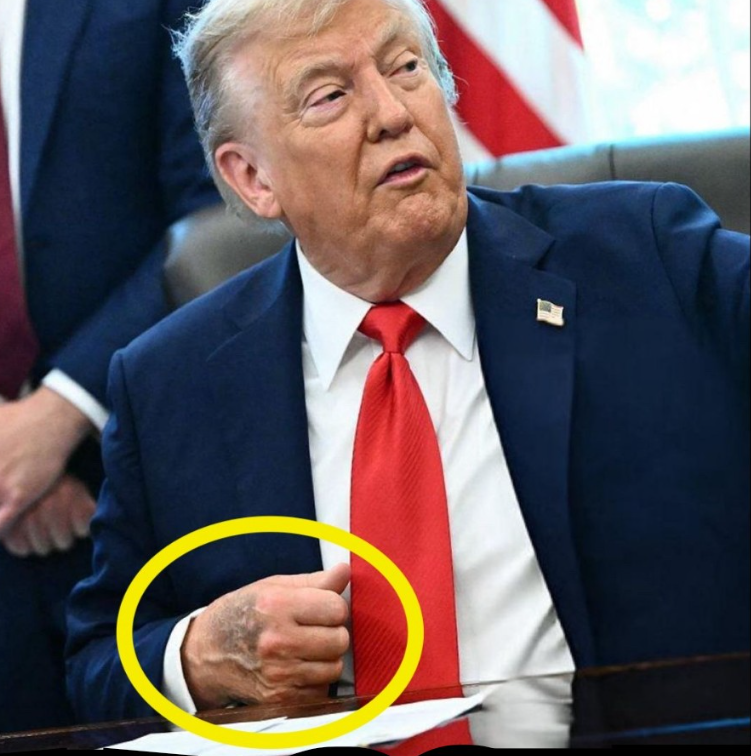
re the eyes of a nation watching his every move. The revelation of chronic venous insufficiency has forced a rare, uncomfortable pause in a campaign built entirely on the foundation of relentless motion and defiance. For a man whose brand is defined by high-energy rallies and an unyielding public persona, the diagnosis of a condition that causes swelling, discomfort, and the physical necessity to slow down is more than just a medical note—it is a seismic political tremor.
Every careful step off a rally stage, every subtle adjustment in his posture, and every visible moment of fatigue will now be scrutinized, replayed in slow motion, and weaponized in a race where perception is often treated as reality. The political arena is unforgiving, and the timing of this news adds a layer of complexity that neither side of the aisle can ignore. Critics are already whispering about the implications for his endurance, while his loyal base views the news as yet another hurdle for a fighter to overcome.
Yet, beneath the deafening noise of the campaign cycle, a quieter, more human story emerges. It is the story of a 78-year-old man pushing his body through a schedule that would strain someone half his age, refusing to show a single crack in his armor in a country that remains obsessed with the image of strength. The demands of the presidency—or the pursuit of it—are grueling, often stripping away the private comforts that most people take for granted as they age.
For his supporters, this revelation is a rallying cry, a moment to stand closer and offer support to a leader they believe is sacrificing his own well-being for the sake of the nation. For his opponents, it serves as a sign of vulnerability, a potential chink in the armor that could shift the momentum of the entire race. But for the average observer, this moment serves as a stark, humbling reminder that even the most polarizing, larger-than-life figures are ultimately subject to the same biological realities as everyone else.
They bleed, they age, and they hurt, regardless of their status or their standing in the polls. The real challenge now is not just the medical management of his condition, but the management of his image. In a world that demands constant, high-octane performance, Donald Trump must decide how much of this truth he is willing to let the world see—and whether that truth will be viewed as a sign of human frailty or a testament to his sheer, stubborn will to keep moving forward.