
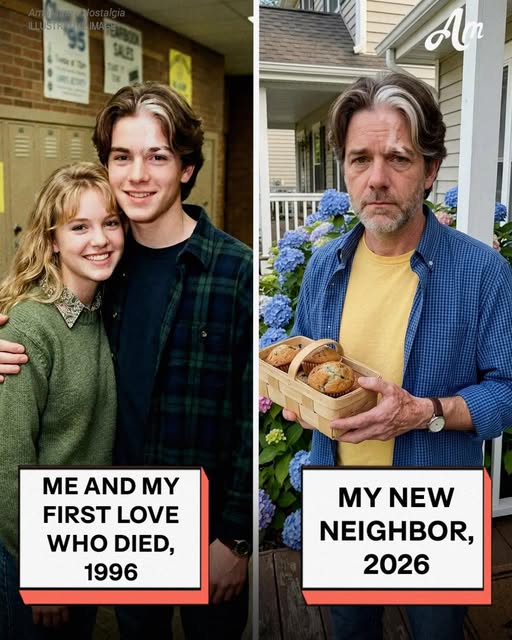
The man standing in the driveway didn’t just resemble Gabriel; he was a living, breathing echo of him, aged by three decades of secrets. When he knocked on my door later that week, his voice—rougher, deeper, but hauntingly familiar—shattered my carefully constructed life. He introduced himself as Elias, but when his sleeve slid back to reveal the telltale, jagged scars of a fire I thought had claimed his life, the mask fell away. He wasn’t a ghost. He was the boy I had mourned for half my life, and he had been kept in a gilded cage by the very people who told me he was dead.
We sat at my kitchen table, the silence heavy with the weight of stolen years. Gabriel explained that his mother, Camille, had orchestrated the entire tragedy. She had redirected dental records and used the fire as a convenient cover to erase me from his life, citing my lack of status. He had spent years in a fog of controlled recovery and forced isolation, his mind kept in a state of survival mode by doctors on his mother’s payroll. He had been a prisoner of his own inheritance, watched, managed, and silenced by the woman who claimed to be his protector.
The revelation was a physical blow, but as the shock faded, a cold, hard resolve took its place. For thirty years, I had carried the guilt of his death, a burden I never should have borne. I looked at Gabriel—at the man who had finally found the strength to break his chains—and realized that the power Camille held was only as strong as our silence. She had relied on our fear, our distance, and our belief that she was untouchable. She hadn’t counted on the fact that the girl she once deemed ‘beneath’ her son had spent three decades learning how to survive on her own.
We didn’t just sit in the shadows. With the help of a trusted friend, we gathered the evidence of his coerced medical history and the documentation of his mother’s manipulation. We walked to her door, not as victims, but as architects of our own reckoning. When Camille saw us, her carefully maintained composure faltered. She tried to threaten us, to invoke the old power dynamics, but the look in Gabriel’s eyes told her the game was over. He was no longer the boy she could manipulate; he was a man reclaiming his name and his future.
As she watched her phone light up with notifications of an emergency board session, the realization hit her: she had lost. We didn’t just walk away; we walked into a new life, one where the truth was no longer a secret buried in a grave. The past had tried to own us, but in the end, we chose to write our own ending. Gabriel was home, and for the first time in thirty years, the story was finally ours to tell.