Claims Circulating About Prince Andrew Highlight Need for Caution and Verified Information
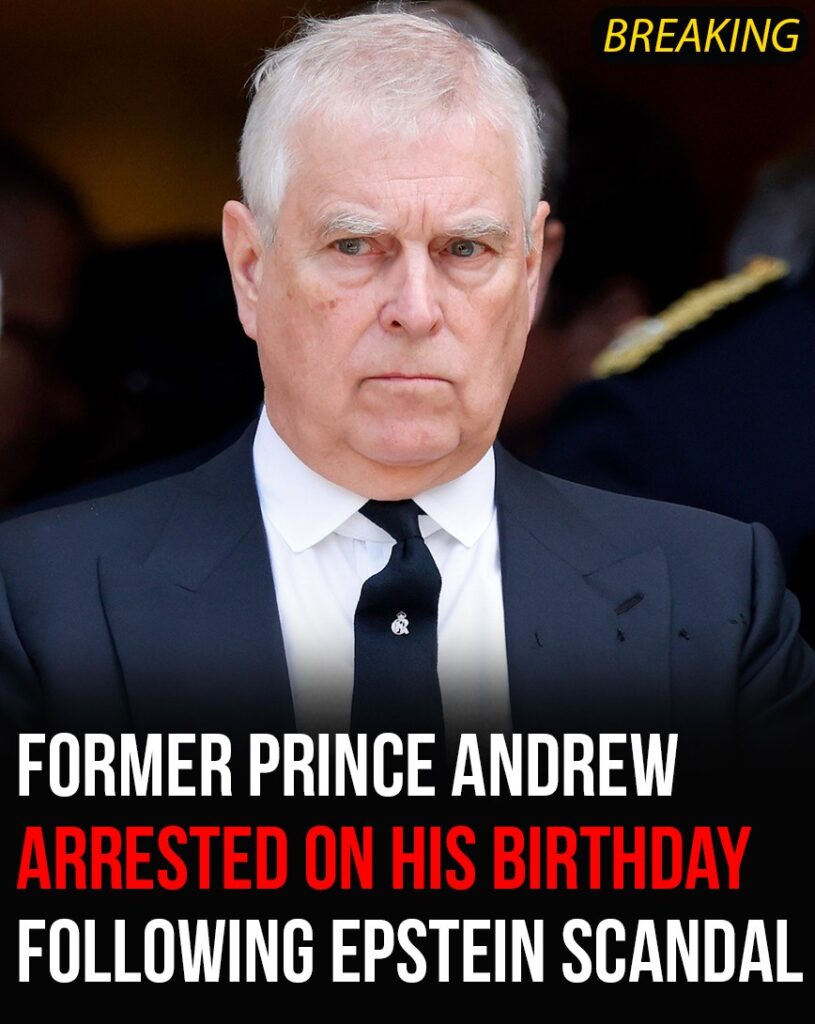
In recent days, reports circulating online have claimed that Prince Andrew, Duke of York — formally known as Andrew Mountbatten-Windsor — was arrested in February 2026 in connection with alleged misconduct in public office.
These claims have attracted widespread attention due to Prince Andrew’s longstanding public scrutiny, particularly in relation to Jeffrey Epstein.
However, as of this writing, no confirmed public statements from UK law enforcement or major independent authorities have verified such an arrest.
Officials and media analysts have urged the public to rely only on confirmed sources when evaluating reports involving serious legal allegations.
Prince Andrew’s Public Background
Prince Andrew is the second son of the late Queen Elizabeth II and the brother of King Charles III.
For many years, he served in the Royal Navy and later held a government-appointed role as the UK’s Special Representative for International Trade and Investment.
His public standing changed significantly after revelations about his association with Epstein. In 2019, he stepped back from official royal duties, and in 2022 his royal patronages and military titles were removed.
Since then, he has remained largely absent from public life.
Legal Context and Previous Proceedings
Prince Andrew has previously faced civil legal action connected to allegations by Virginia Giuffre.
That case was settled in 2022 without an admission of wrongdoing.
No criminal charges were brought against him in relation to those allegations, and UK authorities have not announced any criminal prosecution connected to his past roles.
Understanding “Misconduct in Public Office”
In the UK, misconduct in public office is a serious common-law offence that applies when a public official is alleged to have abused their position or violated public trust.
However, investigations of this nature are complex and require:
-
Clear evidence of intentional wrongdoing
-
Proof of abuse of authority
-
Approval by prosecutors
-
Careful judicial review
An arrest, where it occurs, does not indicate guilt. It signals only that authorities are examining potential evidence.
In this case, no verified record currently supports claims of such proceedings involving Prince Andrew in 2026.
Role of Law Enforcement and Government
Major investigations in the UK are typically confirmed publicly by forces such as Thames Valley Police or by prosecutors through official channels.
To date, no confirmed public notice has established that such an arrest has taken place.
Likewise, the UK government, led by Keir Starmer, has not issued statements confirming the claims currently circulating online.
Public Reaction and Online Misinformation
The renewed attention reflects a broader challenge of the digital age: unverified reports can spread rapidly, especially when they involve well-known public figures.
High-profile individuals connected to past controversies are particularly vulnerable to speculation.
Media experts emphasize that:
-
Viral claims are not evidence
-
Screenshots and anonymous posts lack legal standing
-
Serious allegations require official confirmation
-
Premature conclusions can cause lasting harm
Responsible discussion depends on patience and verification.
Accountability and Due Process
Public concern about power, privilege, and accountability remains legitimate, especially in cases involving influential individuals.
At the same time, justice systems are built on:
-
Presumption of innocence
-
Evidence-based investigation
-
Independent prosecution
-
Fair judicial review
Without confirmed legal action, allegations remain unproven.
The Broader Impact on Public Trust
The Epstein case continues to raise important questions about institutional responsibility and elite accountability.
Many advocacy groups and members of the public call for transparency and continued scrutiny.
However, transparency must be matched with accuracy.
False or exaggerated claims weaken trust and distract from genuine efforts to protect victims and uphold justice.
Conclusion: Patience, Evidence, and Integrity
Claims regarding the alleged arrest of Prince Andrew in 2026 have circulated widely but remain unverified by official sources.
Until confirmed by law enforcement or courts, such reports should be treated with caution.
The case underscores an enduring principle:
Justice requires evidence.
Truth requires patience.
Accountability requires integrity.
In complex and emotionally charged matters, responsible judgment means waiting for verified facts rather than reacting to speculation.
Further developments, if any, should be assessed through credible, independent reporting and official legal channels.