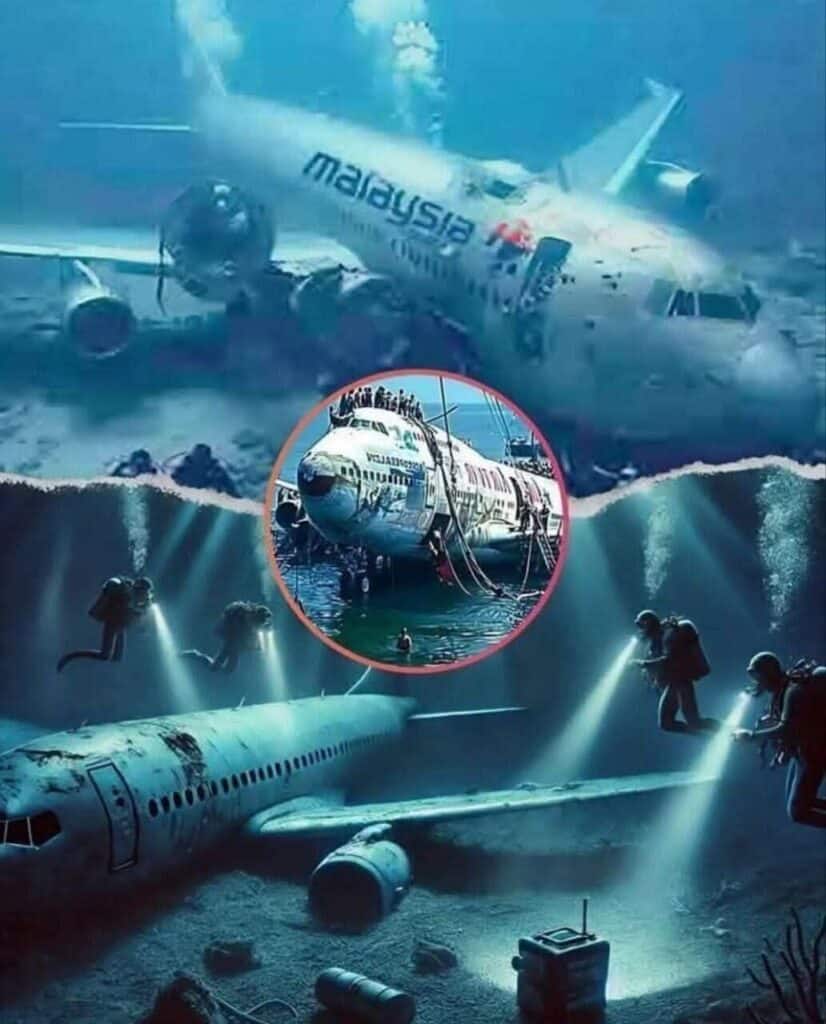
When the aircraft appeared in the Sahara, it did not announce itself with noise or fire.
It simply rested there.
A long white body of metal on open sand, as though it had landed gently after a delayed journey.
At first, satellite analysts thought it was debris — another forgotten wreck in a vast desert. But the heat signature was wrong. The shape was too whole. When teams arrived, they found something that did not fit any known pattern of disappearance or decay.
The plane was intact.
No corrosion.
No crash damage.
No signs of forty years of weather.
And inside were ninety-two people who believed they had just completed a normal flight.
Their watches still marked the same hour.
Their clothes belonged to another decade.
The meals onboard matched menus from the early 1980s.
Medical examinations showed no aging beyond the moment the aircraft vanished.
From the passengers’ perspective, there had only been turbulence — a flash of light — and then descent.
From the world’s perspective, forty years had passed.
Scientists are careful now.
Some speak quietly about rare atmospheric phenomena. Others explore theoretical distortions of time and space — ideas once confined to equations and imagination. But most insist on patience. Extraordinary moments demand ordinary discipline before extraordinary claims.
The truth is not yet known.
And it may not be simple.
Public speculation has moved faster than understanding — theories of experiments, hidden technologies, visitors beyond Earth. Authorities have closed the area not to fuel mystery, but to protect evidence from being shaped by imagination.
The passengers themselves face the heaviest reality.
They have stepped into a world that continued without them.
Parents are gone.
Children are older than they are.
Familiar streets now hold unfamiliar lives.
Some wept when they learned the dates. Others sat quietly, absorbing the weight of years they never lived.
Not fear.
Just grief for time lost without knowing it was leaving.
Whatever happened in that sky — whether a rare natural event, a scientific anomaly, or something still beyond our understanding — one truth stands clear:
Human knowledge is large, but not complete.
Moments like this are not invitations to panic or fantasy. They are reminders of humility.
The universe does not owe us easy explanations.
For now, the aircraft rests under guarded skies. The people are being cared for. And the questions remain open — not as a threat, but as a call to careful understanding.
Sometimes mystery is not meant to frighten.
It is meant to teach us how much we still have to learn.
And sometimes the greatest wisdom is not in answering quickly —
but in listening patiently while truth unfolds.