Trust is the quiet agreement between a shopper and a store.
For years, most people honored it without thinking. If a label said “fresh,” “premium,” or “100% beef,” that was enough. Dinner was made. Life moved on.
Then small things began to feel different.
Steaks that pressed back like foam.
Chicken that released far more liquid than usual.
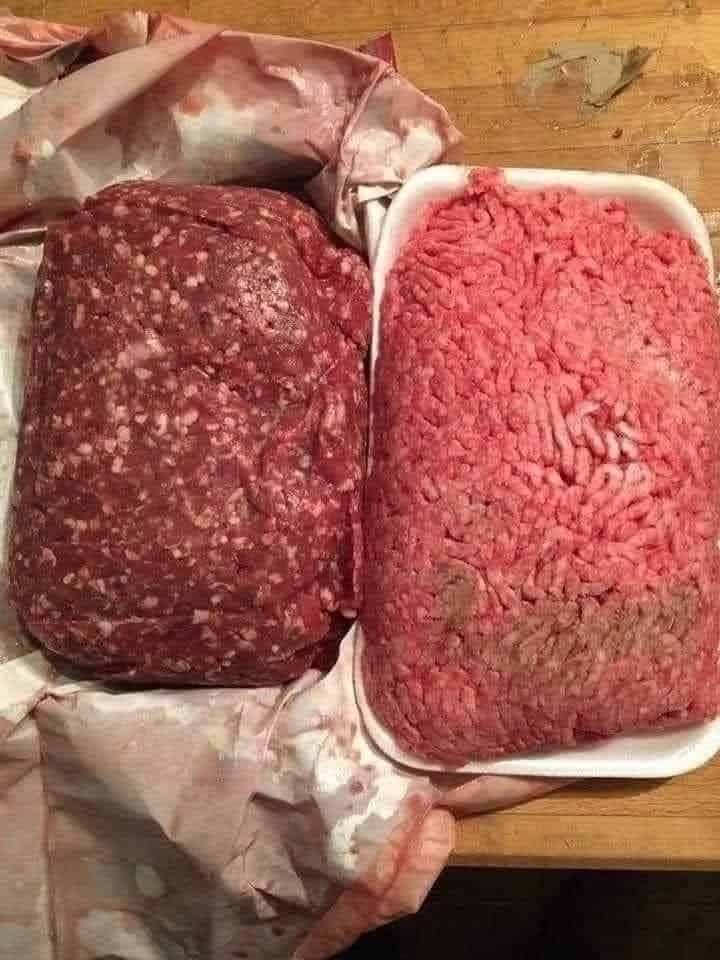
Ground beef that cooked unevenly and carried unfamiliar smells.
At first, people assumed coincidence — a bad batch, a storage issue, a busy day at the store.
But the same patterns kept returning.
Different neighborhoods.
Different supermarkets.
Same strange results.
What began as irritation slowly became awareness.
Online communities compared experiences. Home cooks who had prepared the same recipes for decades noticed their food behaving in ways it never had before. Photos circulated. Questions grew louder — not in panic, but in quiet doubt.
Eventually, a small independent food-testing group looked closer.
What they uncovered wasn’t dangerous.
It was dishonest.
Some distributors — not the supermarkets themselves — had been blending lower-grade imported meats with higher-quality cuts, packaging the mix under premium labels without disclosure. Certifications remained intact. Prices stayed high. The difference lived only inside the wrapping.
No illness.
No contamination.
Just deception.
Advocates for food transparency had warned for years how complex supply chains invite shortcuts when pressure rises. This was one of those shortcuts — not harmful to the body, but corrosive to trust.
And that mattered.
Families weren’t angry because the meat wasn’t perfect. They were angry because it wasn’t what they were told it was.
“If it says premium,” one shopper said quietly, “I expect honesty — not leftovers dressed up as something better.”
Regulators announced reviews. Stores distanced themselves from the suppliers involved. Policies tightened.
But something deeper had already shifted.
The issue was never about safety.
It was about integrity.
It was the realization that between farm and shelf sit many decisions — some careful, some careless, some driven by cost instead of conscience.
This wasn’t a food crisis.
It was a trust fracture.
Now shoppers read labels more slowly. They ask questions. They don’t assume familiarity means transparency.
And perhaps that is the quiet good that comes from moments like this — not outrage, but awareness.
Because industries change fastest not when people panic,
but when they begin paying attention.
Honesty doesn’t need perfection.
It only needs truth.
And once consumers start expecting that again, shortcuts lose their power.