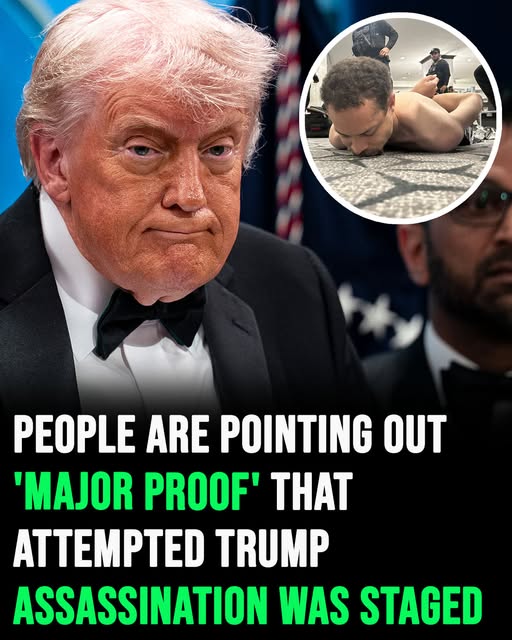
…ned, a calculated move to shift the narrative in a high-stakes election year. In the immediate aftermath of the gunfire at the White House Correspondents’ Dinner, one specific detail refused to fade into the background: Karoline Leavitt’s breezy, almost casual prediction that there would be “some shots fired tonight in the room.”
What was intended as a cheeky, lighthearted reference to the sharp-tongued verbal jabs and political roasts expected at such an event suddenly took on a chilling, sinister tone. To a traumatized public, already reeling from the shock of the violence and obsessively replaying every frame of the footage for hidden meaning, those words became a smoking gun. Within hours, the digital landscape was ablaze with viral threads and breathless accusations, all positing that the attack on Donald Trump was a staged event meant to manufacture sympathy and surge poll numbers.
But as the digital fervor reaches a fever pitch, the cold, hard reality of the investigation tells a far more harrowing story. Law enforcement officials have laid out a grim dossier: a heavily armed suspect, a manifesto dripping with ideological fervor, and a frantic, split-second shootout that was only brought to a terminal end by the lightning-fast reflexes of the Secret Service. It is a narrative of chaos, not choreography.
The tension between these established facts and the internet’s darkest, most persistent suspicions reveals a deeper, more uncomfortable truth about our current era. We have become a nation conditioned to doubt the very evidence of our own eyes. In a world of deepfakes, algorithmic manipulation, and echo chambers, the line between a genuine tragedy and a digital mirage has blurred to the point of extinction.
Perhaps the most haunting aspect of this entire ordeal is not the violence itself, but the speed with which we rush to categorize it. Whether one believes the official report or the viral theories, the reaction is the same: a desperate search for a narrative that fits our existing worldview. The real story may be brutally simple—a lone man with a terrifying plan and a weapon—but for a country so profoundly fractured, the truth has become a casualty of our inability to agree on what reality actually looks like anymore. As the dust settles, we are left to wonder if we are witnessing the death of objective truth, or merely the birth of a new, more dangerous way of seeing the world.