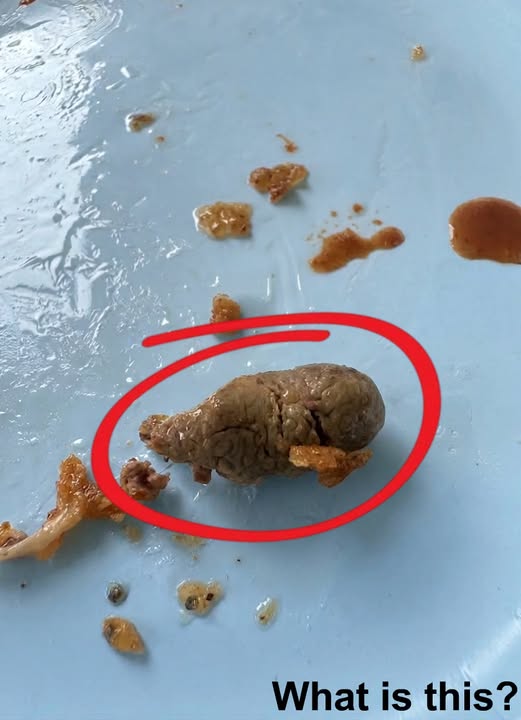
…eased, foreign objects, or perhaps a sign of a massive failure in the food supply chain. I sat there for an hour, the steam rising from the plate, but my appetite had vanished, replaced by a cold, hollow pit in my stomach. The meal, which had promised comfort, now felt like a betrayal of trust.
The shock of finding that strange, brain-like piece inside what was supposed to be a simple, processed cut of meat flipped my entire evening upside down. For a moment, it didn’t matter how perfectly the skin was fried or how savory the aroma was; all I could see was that tiny, wrinkled intruder. I pushed the plate away, my hands trembling slightly, and reached for my phone. I needed to document it, to show someone, to find out if I was overreacting or if I had just stumbled upon a genuine health hazard.
We live in a world of convenience, where we rarely think about the anatomy of our food. We buy it packaged, breaded, and ready to heat, trusting that the machinery of industrial farming has scrubbed away the reality of the animal. But that small, grey lump was a stark, visceral reminder that the chicken on my plate was once a living, breathing creature. It was a piece of biology that had somehow escaped the rigorous, sterile assembly line.
Only later, after hours of anxiety and frantic research, did I learn the truth: it was just a chicken kidney. It is a harmless organ that sometimes slips through the processing phase, remaining tucked inside the cavity of the meat. It is perfectly normal, not dangerous, and certainly not a sign of contamination or disease. It was just anatomy—a part of the bird that most people never see because it is usually removed long before the meat reaches the supermarket shelf.
But knowing the scientific explanation didn’t immediately erase that first, primal jolt of disgust. The human brain is wired to be wary of the unexpected, especially when it comes to what we put into our bodies. Even after the logical part of my mind accepted that I wasn’t in danger, the visceral reaction remained. It’s strange how quickly our trust in something as ordinary as dinner can crack, and how long it takes before you can look at your next plate of chicken without feeling that same, lingering hesitation.
In the end, this experience was a humbling lesson in the disconnect between our food and its source. We demand perfection and uniformity, but nature is messy, and the systems we rely on are not infallible. While I can laugh about it now, that night served as a reminder that every meal is a choice, and sometimes, the reality of that choice is a little more raw than we are prepared to handle.