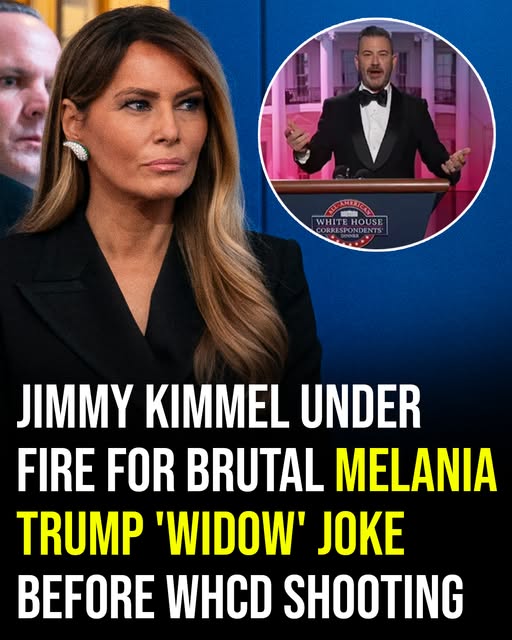
…edge of a nervous breakdown. The joke, which had garnered easy applause days earlier, was now being re-evaluated under the harsh, unforgiving light of a near-tragedy. Critics were no longer laughing; they were pointing fingers, arguing that the line between sharp political commentary and the incitement of hostility had been irrevocably blurred.
As the dust settled at the Washington Hilton, the discourse shifted from the mechanics of the security failure to the responsibility of the cultural elite. Conservative commentators were swift and unforgiving, labeling Kimmel “broken” and “evil.” They argued that the late-night comedy circuit has spent years treating political figures not as rivals to be debated, but as caricatures to be destroyed. By framing the former First Lady through the lens of bereavement, critics claim Kimmel and his peers have normalized a culture where the dehumanization of political opponents is not just acceptable, but celebrated for ratings.
The imagery of the night was stark: a ballroom turned into a crime scene, a wounded officer saved only by the grace of his tactical vest, and the visceral, heart-pounding footage of the Trumps being hurried away from the line of fire. These scenes collided with the resurfaced clip of Kimmel’s monologue, creating a jarring juxtaposition that left many viewers feeling deeply uncomfortable. The joke, once intended to be a fleeting moment of sharp-tongued wit, now felt like a relic of a more naive time, or perhaps, a symptom of a deeper rot.
Donald Trump’s own response was characteristically defiant. “When you’re impactful, they go after you,” he declared, a statement that only served to sharpen the sense of siege felt by his supporters. For those who view the media as an adversarial force, the “expectant widow” comment was not an isolated incident of poor taste. It was, they argued, the logical conclusion of a media ecosystem that has spent years stoking division for the sake of a monologue’s punchline.
The White House Correspondents’ Dinner, an event meant to be a celebration of the uneasy truce between the press and the powerful, will be rescheduled. Organizers promise it will return “bigger and better,” a testament to the resilience of the tradition. Yet, the question that lingers in the halls of power and the soundstages of Hollywood is far more difficult to answer. When does a joke stop being just a joke? In an era where rhetoric is increasingly weaponized, the line between satire and incitement has become a razor’s edge, and the public is no longer willing to let the laughter cover the sound of the fallout.