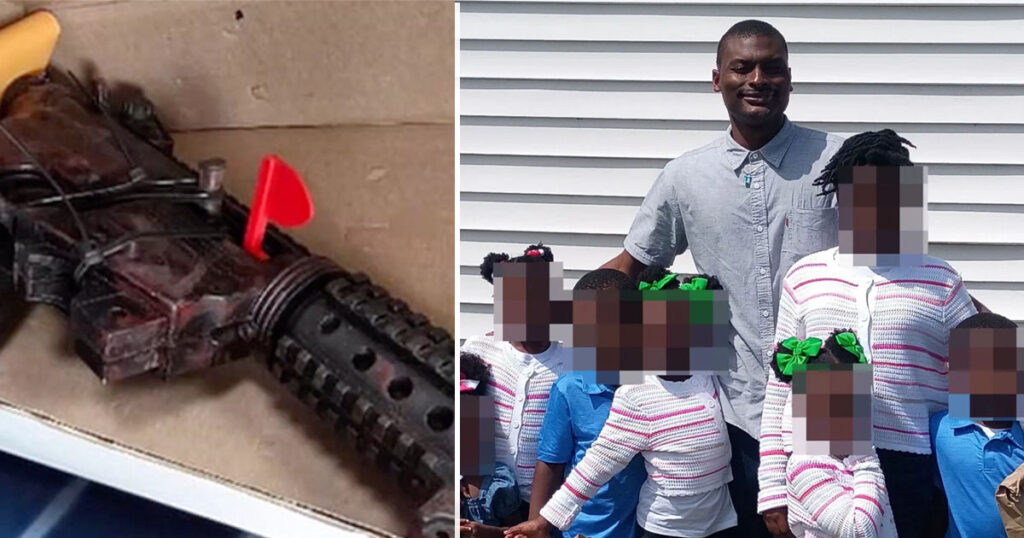
A new development in the investigation surrounding the Shreveport tragedy has added another layer to an already devastating case.
Authorities in Louisiana have confirmed that a second individual, Charles Ford, has been arrested in connection with the events that unfolded on April 19. Federal prosecutors say the 56-year-old now faces serious charges, including being a felon in possession of a firearm and allegedly making false statements to investigators.
According to officials, these charges are directly tied to how the weapon may have ended up in the hands of Shamar Elkins, the father accused of carrying out the attack that claimed the lives of eight children—seven of them his own, along with their cousin.
Investigators believe the firearm linked to Ford may be the same one used during the shooting. While police previously indicated that an assault-style pistol and a handgun were recovered, it remains unclear which weapon was ultimately used in the killings. Determining that detail is now a central focus of the ongoing inquiry.
The case, which unfolded in Shreveport, has left both the local community and the broader public struggling to process the scale of the loss. Law enforcement officials have emphasized that their work is far from over, particularly when it comes to understanding how the suspect obtained access to firearms despite legal restrictions.
Federal prosecutors noted that Ford could face up to 15 years in prison for the firearm possession charge, along with an additional five years if convicted of making false statements. While those charges do not directly relate to the violence itself, authorities have made clear they are part of a broader effort to hold accountable anyone who may have contributed—directly or indirectly—to the circumstances that allowed the tragedy to occur.
In a statement, U.S. Attorney Zachary A. Keller acknowledged the limits of justice in this case, noting that Elkins’ death means he will never stand trial. Still, officials expressed hope that pursuing related charges might offer at least a measure of accountability.
The events of that morning remain deeply disturbing. Police responding to emergency calls discovered multiple victims across the home, with reports indicating that some were attacked while asleep and others while trying to escape. The suspect later fled, reportedly carjacking a vehicle before being confronted by law enforcement and dying shortly afterward. Authorities have not definitively stated whether he was killed by police or died by suicide.
The scale of the violence has placed this incident among the deadliest mass shootings in the United States in recent years, intensifying scrutiny around domestic violence warning signs, firearm access, and intervention gaps.
As the investigation continues, officials are working to reconstruct not only the timeline of events but also the chain of decisions and failures that may have led to such an outcome. For the community, however, the focus remains on mourning—families grieving unimaginable loss, and a city trying to make sense of something that defies easy explanation.