
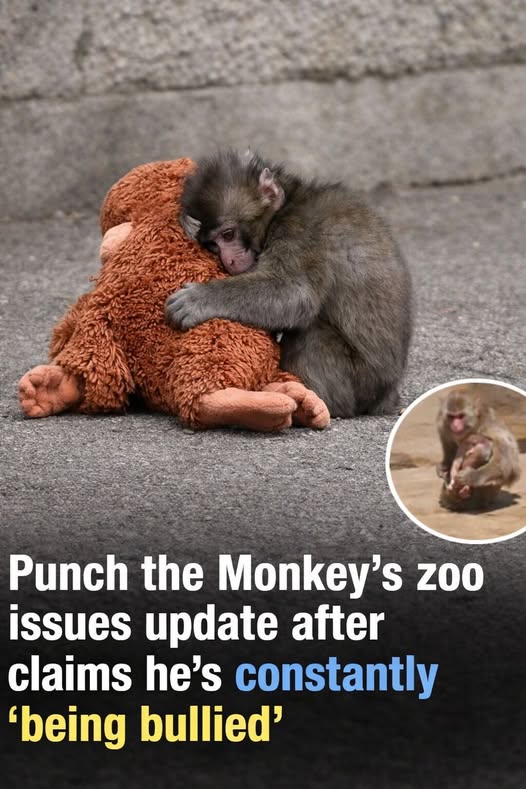
Punch, a young Japanese macaque born at the Ichikawa City Zoological and Botanical Garden, began life with an unexpected hardship. Shortly after his birth in July, his mother rejected him, leaving the tiny primate without the care and warmth that young macaques normally receive. The zoo staff stepped in quickly, providing close monitoring and a simple but thoughtful comfort: a stuffed toy about the size of his body. Punch clung to it constantly, using it as a substitute for the security he had been denied.
Videos of the small monkey hugging the toy soon spread across the internet. Many people were moved by the sight, seeing in it a quiet reminder that even animals seek reassurance and connection. Yet life inside a macaque troop is not shaped by sentiment alone. Japanese macaques live within clear social hierarchies, where younger members gradually learn their place through interaction with older animals.
Concern grew online when a clip showed Punch being pulled across the enclosure by another monkey. To many viewers, the scene appeared alarming. The zoo responded by explaining that such behavior, while rough to human eyes, can be a normal part of how macaques establish boundaries and teach younger members of the group. According to the keepers, Punch has occasionally been scolded or disciplined, but none of the interactions have crossed the line into serious harm.
For the staff, the greater risk would be isolating him. Young macaques must learn communication, cooperation, and social cues from their troop if they are to grow into healthy adults. Removing Punch entirely could protect him in the short term but might leave him unable to function socially later in life.
At the same time, the zoo has taken careful steps to reduce stress around him. On March 8, a few particularly aggressive monkeys were temporarily removed from the enclosure to create a calmer environment while still allowing Punch to remain part of the group. The goal has been balance—protecting the young monkey while letting him slowly learn the rhythms of troop life.
The signs of progress are encouraging. Keepers report that more monkeys have begun grooming and playing with Punch. He now spends less time clinging to his stuffed toy and more time exploring, climbing, and watching the older macaques around him. The toy still offers comfort during uncertain moments, which is expected for a young animal that experienced early maternal loss.
His daily routine includes supervised play, enrichment activities like puzzle feeders and climbing structures, and a carefully managed diet of fruits, vegetables, and macaque-specific supplements. Veterinary staff also monitor his weight, posture, vocalizations, and overall behavior to ensure he remains healthy both physically and emotionally.
Public interest in Punch remains strong, and the zoo has used that attention to educate visitors about the complex social world of Japanese macaques. What may look like bullying to humans is often part of a broader process of teaching and adaptation. Within the troop, even firm corrections can serve a purpose—helping young animals learn the rules that guide group life.
Punch’s story has also opened wider conversations about animal care, the effects of maternal rejection, and the role careful human support can play in helping young animals recover. With patience and attentive monitoring, the zoo believes he is gradually becoming a confident member of his troop.
For now, the small macaque who once clung tightly to a stuffed toy is beginning to rely more on the companionship of his own kind. His journey is still unfolding, but it offers a quiet reminder: resilience often grows slowly, nurtured by steady care, thoughtful guidance, and the patient rhythms of life within a community.