Michael Jackson’s Legacy—and the Questions That Still Remain
Few artists have left a cultural mark as lasting as Michael Jackson. Years after his passing in 2009, his influence continues to shape music, performance, and global pop culture.
A recent biographical film, Michael, has brought renewed attention to his life. Despite mixed critical reception, the film’s commercial success reflects something steady: public interest in Jackson has not faded. His work still draws people in, even as conversations around his life remain complex.
Fame and Its Shadows
Jackson’s career was defined by extraordinary achievement. He redefined performance, broke industry records, and reached audiences across generations.
At the same time, his public image carried controversy. Allegations that were widely debated never led to a criminal conviction, yet they remain part of how his story is discussed. The new film’s decision to avoid these topics has drawn criticism from some, including director Dan Reed.
This tension—between legacy and unresolved questions—is part of what keeps his story unsettled even today.
His Final Hours
On June 25, 2009, Jackson died from an overdose that raised serious concerns about medical care and prescription practices.
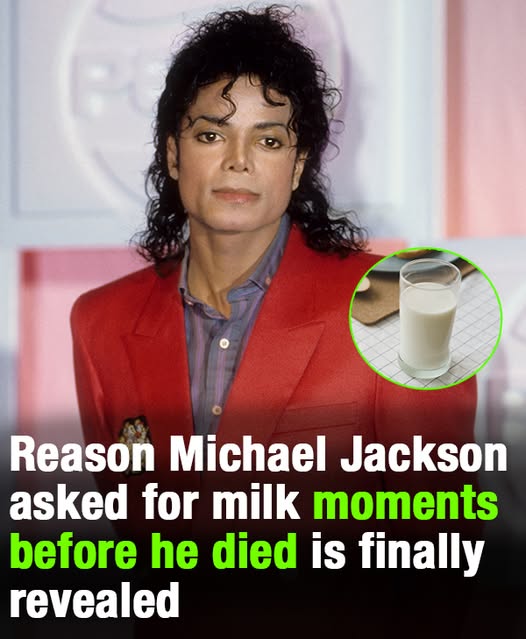
At the center of the case was his physician, Conrad Murray, who admitted to administering strong sedatives. During court proceedings, Murray revealed that Jackson’s final request was for “milk.”
It was not a drink.
In medical terms, “milk” referred to propofol, an anesthetic sometimes called the “milk of amnesia” because of its appearance. It is typically used in controlled hospital settings, not as a sleep aid.
That distinction matters.
When Treatment Becomes Risk
Testimony later showed that Jackson had also taken other sedatives, including lorazepam. The combination, even in moderate amounts, can suppress breathing and heart function.
Medical experts described the interaction as highly dangerous.
Murray was convicted of involuntary manslaughter, with the court determining that the standard of care had been violated. His defense argued he was unaware of the full extent of medications already in Jackson’s system, but the outcome reflected a broader failure—one that extended beyond a single decision.
A Wider Reflection
Jackson’s death continues to be referenced in discussions about patient safety and medical responsibility.
It raises difficult questions:
How far should care go when a patient insists?
Where does responsibility hold when boundaries are crossed?
And how easily can access and influence blur the line between treatment and harm?
These are not questions limited to celebrity cases. They point to a larger issue—how systems respond when pressure, expectation, and vulnerability meet.
Final Reflection
Michael Jackson’s legacy remains powerful, but it is not simple.
His music endures. His influence remains. Yet the circumstances surrounding his death remind us that success does not shield a person from risk—and that care, when it loses its limits, can quietly become something else.
In the end, his story is not only about what he achieved, but also about what must be learned—so that admiration does not come at the cost of awareness.