
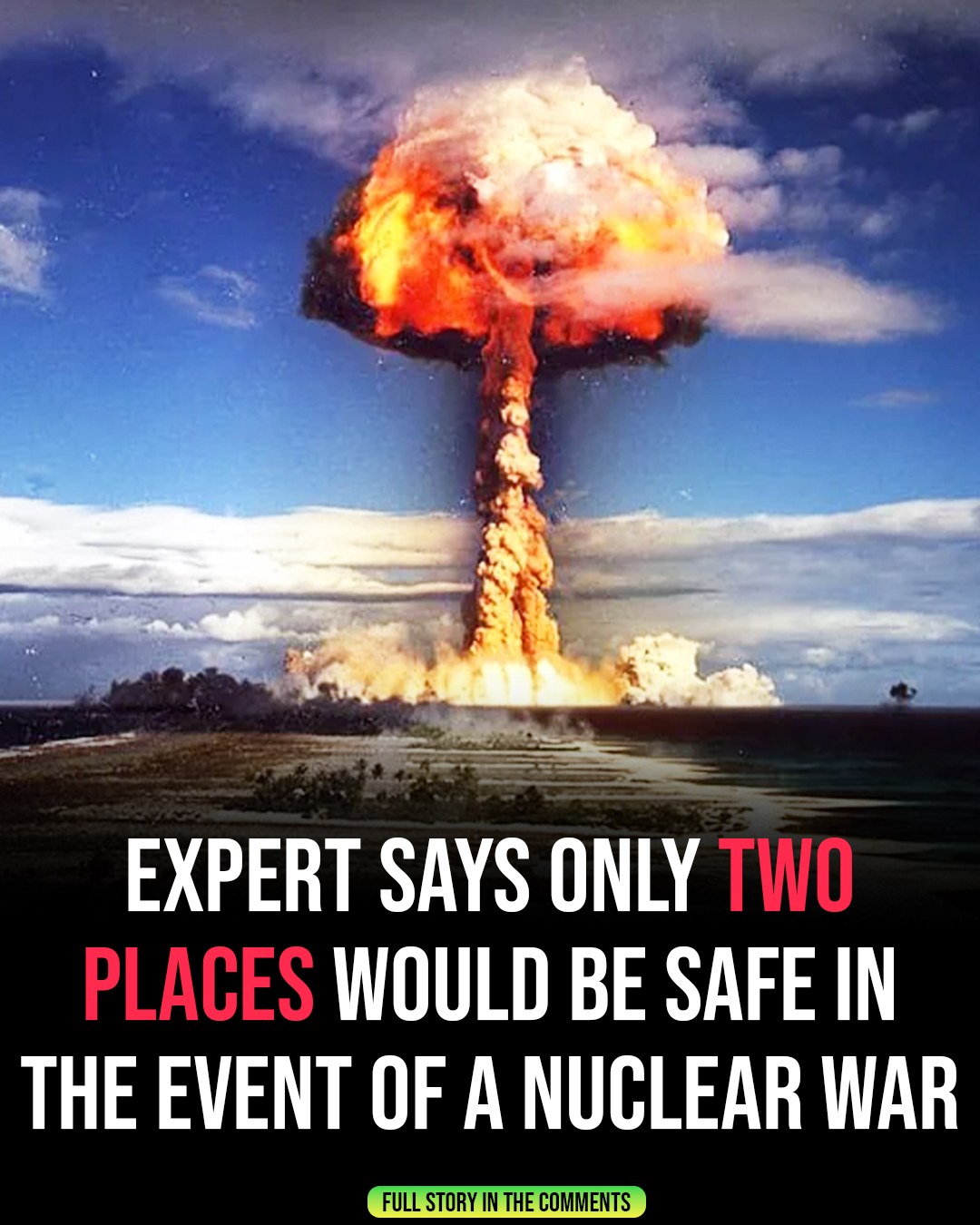
Rising geopolitical tension often brings a familiar question back into public conversation: if a nuclear-armed conflict were ever to escalate into a wider war, what would survival look like inside the United States?
The question itself reflects a deeper unease. When headlines mention military confrontations between major powers, people naturally begin thinking about worst-case scenarios. Yet serious discussions about nuclear risk are rarely driven by panic. Researchers, strategic planners, and scientists approach the issue through evidence, modelling, and historical experience rather than speculation.
How Nuclear Risk Is Discussed Today
During the Cold War, American schoolchildren practiced “duck and cover” drills, a symbol of the era’s fear of sudden Soviet nuclear strikes. The exercises were intended to promote preparedness, even though modern experts acknowledge they offered limited protection against the scale of nuclear weapons.
Today, the conversation around nuclear conflict is far more complex. Instead of two rival superpowers facing off directly, multiple nuclear-armed states now operate under different doctrines, alliances, and deterrence strategies. Analysts therefore focus on probabilities, strategic incentives, and the systems designed to prevent escalation.
The central idea behind nuclear deterrence remains unchanged: the destructive consequences are so extreme that rational actors are expected to avoid initiating such conflict.
Where Nuclear Forces Are Located in the United States
The United States maintains one of the world’s largest nuclear arsenals, though significantly smaller than during the Cold War. Defense analysts estimate roughly 3,700 nuclear warheads remain in the U.S. military stockpile, with around 1,700 considered deployed strategic weapons ready for potential use.
These weapons form what is known as the nuclear triad, a system designed to ensure redundancy and survivability:
Land-based intercontinental ballistic missiles (ICBMs), primarily located in silo fields across the Great Plains in states such as Montana, North Dakota, and Wyoming.
Submarine-launched ballistic missiles (SLBMs), carried by nuclear-powered submarines that patrol the oceans and are based at facilities in Washington State and Georgia.
Strategic bombers capable of delivering nuclear gravity bombs and cruise missiles from air bases within the continental United States.
Additional storage and maintenance facilities exist at specialized defense complexes, including locations in New Mexico and Texas.
The dispersion of these systems is deliberate. Strategic planners designed the triad so that no single strike could eliminate the nation’s nuclear capability.
What Happens in a Nuclear Exchange
In discussions about nuclear war, experts typically distinguish between direct effects and indirect consequences.
Direct effects include the blast itself — intense heat, shockwaves, and immediate radiation around the detonation point.
Indirect consequences involve radioactive fallout, disruption of infrastructure, long-term radiation exposure, and wider economic and environmental effects.
A key factor influencing these outcomes is how weapons are detonated. Ground-level detonations tend to produce heavier radioactive fallout because debris is pulled into the atmosphere and later falls back to earth. Airbursts, by contrast, maximize blast damage but produce somewhat less fallout.
Wind patterns, weather conditions, and terrain can strongly influence where radioactive particles travel.
Fallout and the Geography of Risk
Radioactive fallout represents one of the most serious dangers beyond the immediate blast zone. Tiny particles of radioactive material can travel hundreds of miles before settling, exposing populations far from the initial detonation.
During the Cold War, civil defense modelling suggested that areas surrounding missile silos and other military installations could experience particularly intense radiation if those targets were attacked.
The reason is simple: military infrastructure would likely be prioritized because disabling it weakens a nation’s ability to retaliate.
However, fallout patterns remain highly variable. Wind direction and atmospheric conditions at the time of a detonation can dramatically change where contamination spreads.
Geographic Factors That Influence Survival Odds
Experts emphasize that no place in the United States would be completely safe during a large-scale nuclear exchange. Still, several factors can influence relative risk levels during the initial phase:
Distance from major military targets such as missile fields, bomber bases, and command centers.
Lower population density, which generally corresponds with fewer strategic targets.
Prevailing wind patterns that may carry fallout away from certain regions depending on the location of detonations.
Based on these considerations, analysts sometimes identify areas farther from major nuclear infrastructure as comparatively lower-risk during the earliest stages of a conflict.
These can include portions of the southeastern United States, parts of New England, sections of the Great Lakes region, and some areas of the Southwest and interior West.
Such assessments, however, are comparative rather than absolute. Fallout movement, supply disruptions, and infrastructure failures would affect large portions of the country regardless of geography.
The Larger Threat: Climate and Food Systems
One of the most serious long-term risks discussed by climate scientists is nuclear winter — a dramatic cooling of global temperatures caused by smoke and soot from massive firestorms entering the upper atmosphere.
Research dating back to the 1980s, and updated with modern climate models, suggests that a large nuclear exchange involving hundreds of detonations could reduce sunlight reaching the Earth’s surface.
Reduced sunlight would lead to lower temperatures and major disruptions to agriculture worldwide.
Studies examining staple crops such as corn and wheat show that global yields could decline sharply under severe nuclear winter scenarios, raising the risk of widespread food shortages.
Even countries far from the initial conflict could face severe consequences through disrupted food supply and trade.
Surviving the Aftermath
Avoiding the initial blast and radiation exposure would be only the beginning of survival.
Experts warn that nuclear conflict could disrupt many systems modern societies rely upon:
Food distribution networks could collapse or become severely limited.
Electric grids and communication systems could fail.
Healthcare services would struggle to cope with radiation injuries and widespread illness.
Water contamination and sanitation breakdowns could create additional public health crises.
In many ways, the long-term survival challenge would involve rebuilding stability in a severely disrupted world.
Looking Beyond North America
Some disaster researchers studying extreme scenarios note that the Southern Hemisphere might experience less direct fallout and fewer immediate targets in certain nuclear conflict models.
Countries such as Australia and New Zealand are sometimes discussed in academic literature as potentially more resilient regions due to geographic isolation and strong agricultural capacity.
This does not mean they would be untouched. Global climate effects, economic shocks, and food supply disruptions would still reach those areas.
The difference lies mainly in relative exposure to the earliest phases of conflict.
A Reality Worth Remembering
Ultimately, the question of “where to survive” in a nuclear war does not have a simple answer.
Risk would vary widely depending on geography, wind patterns, the number of weapons used, and the targets selected. Some areas might face lower immediate exposure than others, but none would be entirely immune from the broader consequences.
In truth, the most effective strategy for survival has always existed long before any crisis begins.
It lies in diplomacy, arms control, international cooperation, and sustained efforts to reduce nuclear arsenals.
The lesson drawn by many historians and policy experts is clear: preventing nuclear conflict is far easier than surviving its aftermath.
And the stability that allows everyday life to continue quietly — often taken for granted — is itself one of the most valuable achievements of modern diplomacy.