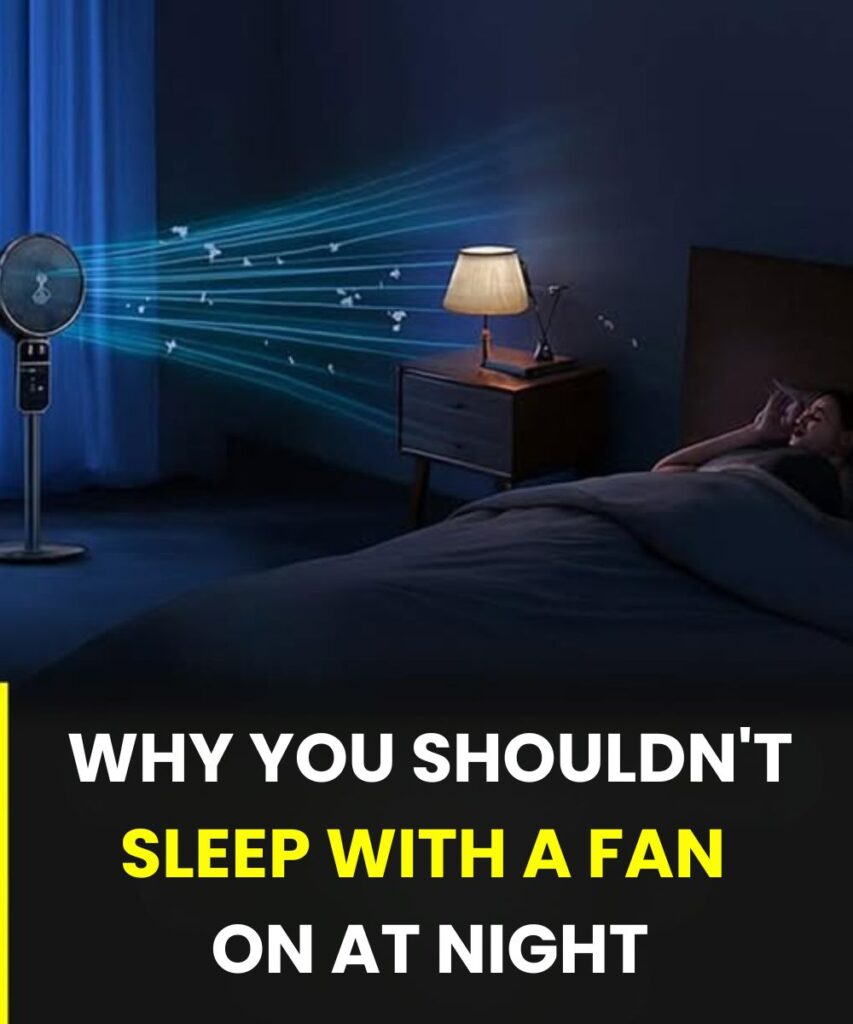
For many people, the soft whir of a fan and the steady movement of cool air are part of what makes sleep possible. Yet for some bodies, that same breeze can quietly create discomfort that shows up not during the night, but in the morning.
One of the most common signs is dryness in the mouth, throat, and sinuses. Continuous airflow speeds up moisture loss from delicate tissues, especially for those who sleep with their mouths slightly open. Waking with a scratchy throat, mild congestion, or sinus pressure isn’t always a cold — often it’s the body trying to rehydrate and rebalance after hours of drying air.
Muscles can be affected as well. When cool air flows directly across the body for long periods, the nervous system may respond by subtly tightening muscles to preserve warmth. Over time, this can lead to neck stiffness, shoulder soreness, or that familiar “sleep wrong” feeling despite resting for hours.
Fans also keep particles in motion. Dust, pollen, and pet dander that would normally settle are constantly recirculated, which can irritate airways and eyes for those with allergies or sensitivities. Instead of freshening the room, the fan can unintentionally keep irritants suspended around the sleeping area.
Another quieter sign is waking up tired even after a full night’s rest. Air blowing directly on the skin can interfere with the body’s natural temperature regulation, leading to brief, unnoticed disruptions in sleep depth. These tiny interruptions may not wake you fully, but they can reduce the time your brain spends in its most restorative stages.
Skin and eyes may also feel more irritated or dry in the morning, particularly for people already prone to dryness.
None of this means fans are harmful for everyone. Many people sleep perfectly well with them. The key is how the air is used.
Simple adjustments often make a difference:
• Aim the fan toward a wall or ceiling rather than directly at your body
• Use oscillation so air isn’t concentrated in one spot
• Set a timer so it turns off after the room cools
• Add light humidity if your environment is very dry
Sleep is meant to restore, not quietly strain the body.
If you consistently wake up dry, stiff, congested, or more tired than expected, your nightly airflow may be working against you rather than for you.
Comfort is personal — and sometimes the smallest environmental tweaks lead to the deepest rest.
Listening to what your body signals in the morning is often the best guide to a healthier night’s sleep.