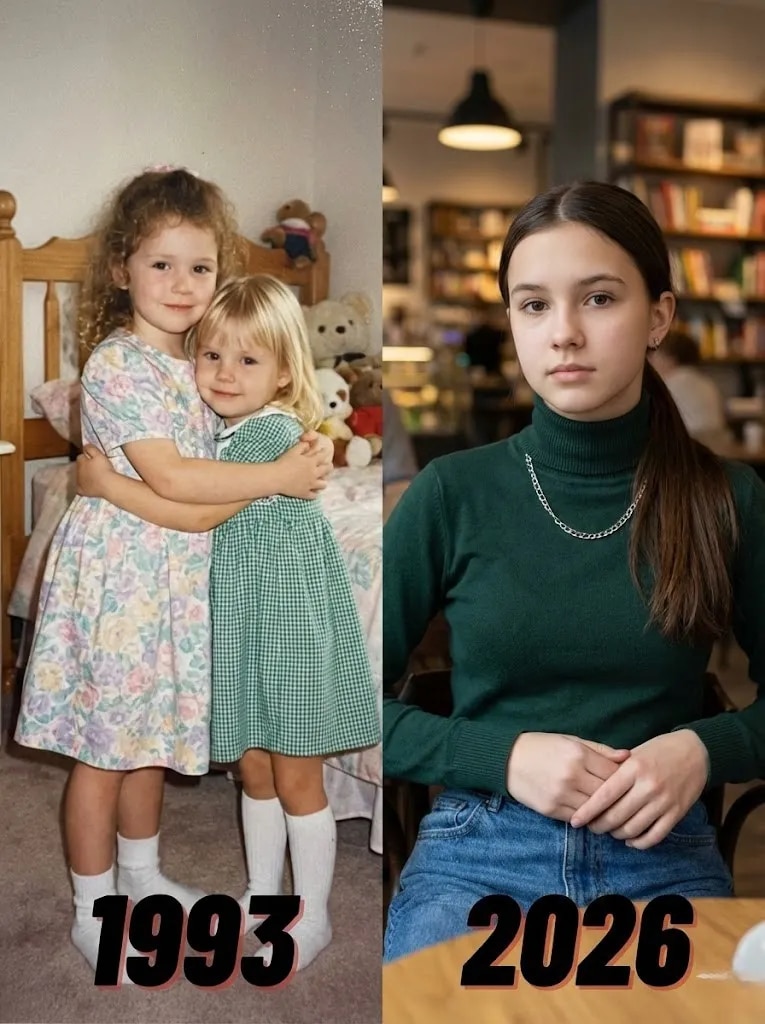
Mia and I learned early what it meant to belong to one another. In the crowded orphanage where we grew up, we had no photographs, no parents to claim us—just each other. I became her protector by instinct, braiding her hair, saving bits of food, teaching her small things that made life feel less fragile. When I was eight, I took red and blue yarn from a craft box and made two uneven bracelets. They weren’t pretty, but they were ours. I believed that if we wore them, we couldn’t truly be separated.
Then a couple came and chose me. They were kind, but they only wanted one child. I begged to stay with Mia. The director said this was my chance, that I had to move forward. As the staff pulled her away, I promised her I would find her again. It was a promise made with a child’s certainty and an adult’s weight I wouldn’t understand for years.
My adoptive family gave me stability, but they preferred silence about my past. I learned to tuck Mia away inside me, to grow up without speaking her name. I built a life—education, work, a sense of competence—but something essential remained unfinished. When I turned eighteen, I went back to the orphanage. Her records were sealed. I tried again and again over the years, meeting closed doors and polite refusals. Still, I didn’t let go of the promise. Hope became quieter, but it didn’t disappear.
Thirty-two years later, on an ordinary business trip, I stood in a supermarket aisle and saw a little girl wearing a red and blue bracelet. The yarn pattern was crooked in the exact way mine had been. My body knew before my mind caught up. I asked the child about it, gently. She said her mother had given it to her—made by someone special.
When her mother approached, I recognized Mia immediately. The tilt of her head, the way she held herself. I asked if she had grown up in an orphanage. The color drained from her face as recognition found her too.
We sat in a nearby café for hours. She told me she had kept the bracelet all those years, passing it to her daughter when it felt right. She confessed she had wondered if I’d forgotten her. I told her the truth—that I had spent decades trying to find her, that forgetting had never been possible.
Finding her in such an ordinary place felt like mercy rather than spectacle. No grand reunion, no crowd—just two sisters finally standing in the same moment again. We didn’t recover the lost years. We didn’t try to. We began where we were.
Now we speak often. We visit when we can. We’re learning how to be sisters as adults, stitching a relationship slowly, with patience. The promise I made as a child wasn’t fulfilled the way I imagined—but it was kept.
Some bonds survive distance not because they are loud, but because they are faithful. And sometimes, after a lifetime of waiting, they return—not to make up for what was lost, but to give peace to what endured.