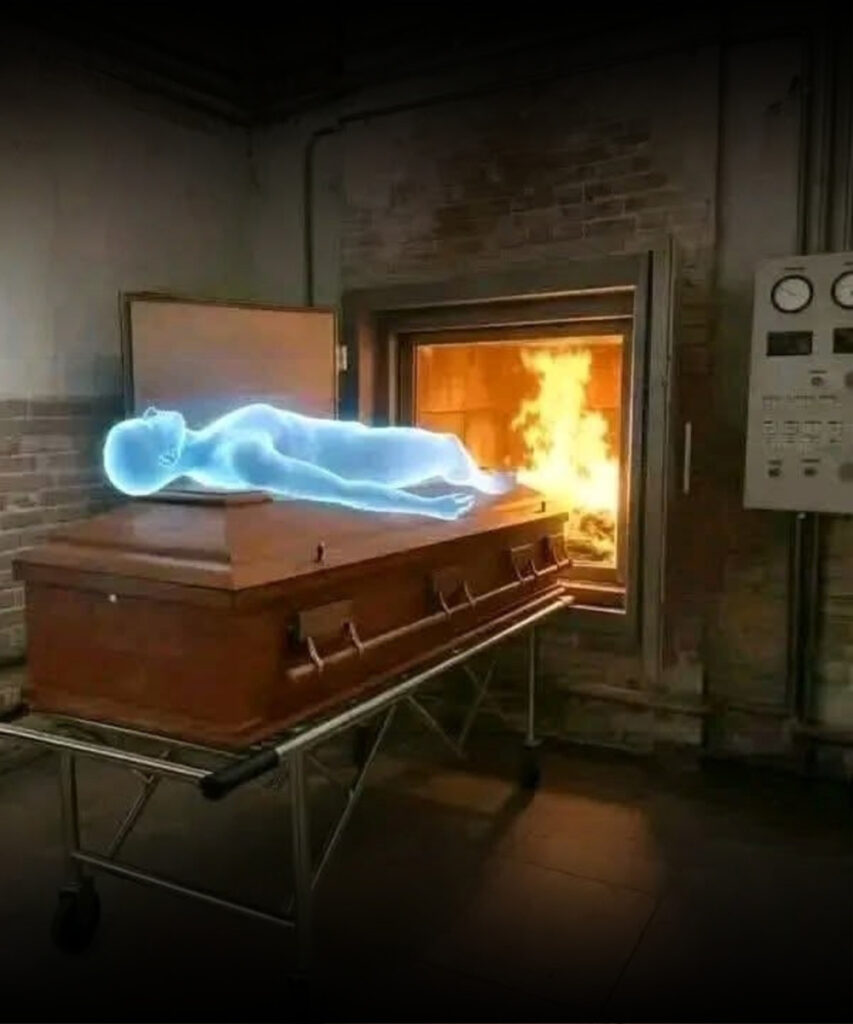
Cremation has become increasingly common in modern society, raising thoughtful questions among many believers about how it aligns with Christian faith and biblical teaching. For those seeking clarity, the issue is less about strict prohibition and more about understanding the deeper spiritual principles reflected in Scripture.
At its core, Christianity emphasizes God’s sovereignty over human life and death. The Bible does not contain a direct command that forbids cremation. Instead, it offers broader teachings about the body, dignity, and the promise of resurrection. These themes shape how many Christians approach the subject today.
Historically, burial was the most common practice among the Israelites. In the Bible, figures such as Abraham are described as purchasing burial places for loved ones, while Joseph expressed a clear wish for his remains to be returned to his homeland. These accounts reflect a cultural and religious preference for burial, often tied to respect, remembrance, and identity.
However, it is important to recognize that these examples describe tradition rather than explicit command. Scripture records what was practiced, but it does not establish burial as the only acceptable method. In fact, there are passages where bodies were burned in specific contexts, though these instances were often associated with judgment or unusual circumstances rather than standard practice.
From a theological perspective, the central question is not the physical state of the body after death, but the belief in resurrection. Christian doctrine teaches that God’s power is not limited by physical conditions. Whether a body returns to dust naturally or is reduced to ashes through cremation, the promise of resurrection remains unchanged.
This belief is rooted in the understanding that human identity is not confined to physical form. The body, while honored in life and death, is ultimately temporary. What endures is the soul and the divine promise of renewal. For many Christians, this reinforces the idea that cremation does not interfere with God’s plan or diminish one’s spiritual standing.
At the same time, respect for the body continues to hold importance. The body is often viewed as a creation of God and, in life, a temple of the Holy Spirit. Because of this, decisions surrounding death—whether burial or cremation—are encouraged to be made with dignity, reverence, and thoughtful intention.
Different Christian traditions interpret these ideas in slightly different ways. Some denominations historically discouraged cremation due to its departure from long-standing burial customs, while many modern churches now accept it as a personal and practical choice. Cultural, economic, and environmental considerations have also influenced this shift.
Ultimately, the question of cremation is not one of sin or spiritual failure in most contemporary Christian thought. Instead, it is an opportunity to reflect on faith, trust, and the meaning of life beyond death. What matters most is the attitude behind the decision—whether it is made with respect for the deceased and confidence in God’s eternal purpose.
For believers, the reassurance lies in the conviction that God’s grace is not dependent on human rituals. The manner in which a body is laid to rest does not define one’s relationship with Him. Rather, it is faith, devotion, and trust in divine promises that remain central.
In this sense, cremation can be understood not as a contradiction of faith, but as a personal choice within the broader framework of Christian belief—one that still allows for honor, remembrance, and hope in the promise of resurrection.
{"post":100744,"page":1,"next":[{"id":100724,"title":"People Think King Charles Sent Trump a Secret Message","url":"https:\/\/new24.info\/100724"},{"id":100718,"title":"My 16-Year-Old Son Went Missing \u2013 A Week Later, His Teacher Called and Said He Had Submitted a Paper Titled, \u0027Mom, You Need to Know the Whole Truth\u0027","url":"https:\/\/new24.info\/100718"},{"id":100715,"title":"news.clubofsocial.com","url":"https:\/\/new24.info\/100715"},{"id":100711,"title":"This Girl Lost Her Father in a Tragic Case Involving Her Mother \u2013 Left with $300, She Went on to Find Fame","url":"https:\/\/new24.info\/100711"},{"id":100706,"title":"Donald Trump branded \u201cclassless\u201d over behavior towards Queen Camilla","url":"https:\/\/new24.info\/100706"},{"id":100701,"title":"With heavy hearts, we announce the passing of this country music legend who gave us so much","url":"https:\/\/new24.info\/100701"},{"id":100696,"title":"The tearjerking handwritten note King Charles placed at the 9\/11 Memorial","url":"https:\/\/new24.info\/100696"},{"id":100691,"title":"A Couple\u2019s Story That Took an Unexpected Turn After One Photo","url":"https:\/\/new24.info\/100691"},{"id":100687,"title":"My Husband Desperately Begged Me Not To Sell Our House After Giving Away My Car","url":"https:\/\/new24.info\/100687"},{"id":100683,"title":"My mother-in-law dismissed my three-day-old baby turning blue as \u201cjust a cold\u201d and convinced my husband I was \u201challucinating for attention.\u201d They took my credit card and flew off to Hawaii for a luxury wedding\u2014on my dime.","url":"https:\/\/new24.info\/100683"},{"id":100680,"title":"I\u2019m a retired surgeon. Late one night, a former colleague called me and said my daughter had been rushed to the emergency room.","url":"https:\/\/new24.info\/100680"},{"id":100677,"title":"I Took in the 6-Month-Old Boy Left Beside My Rose Bushes \u2013 The Chilling Security Footage I Watched One Day Later Ruined My Family Forever","url":"https:\/\/new24.info\/100677"},{"id":100673,"title":"Melania Trump Turns Heads in a Pale Pink Dress at State Dinner with Queen Camilla and King Charles III \u2014 Photos","url":"https:\/\/new24.info\/100673"},{"id":100640,"title":"Melania Trump Turns Heads in White at State Dinner as Other Notable Moments Spark Buzz \u2014 Photos","url":"https:\/\/new24.info\/100640"}]}