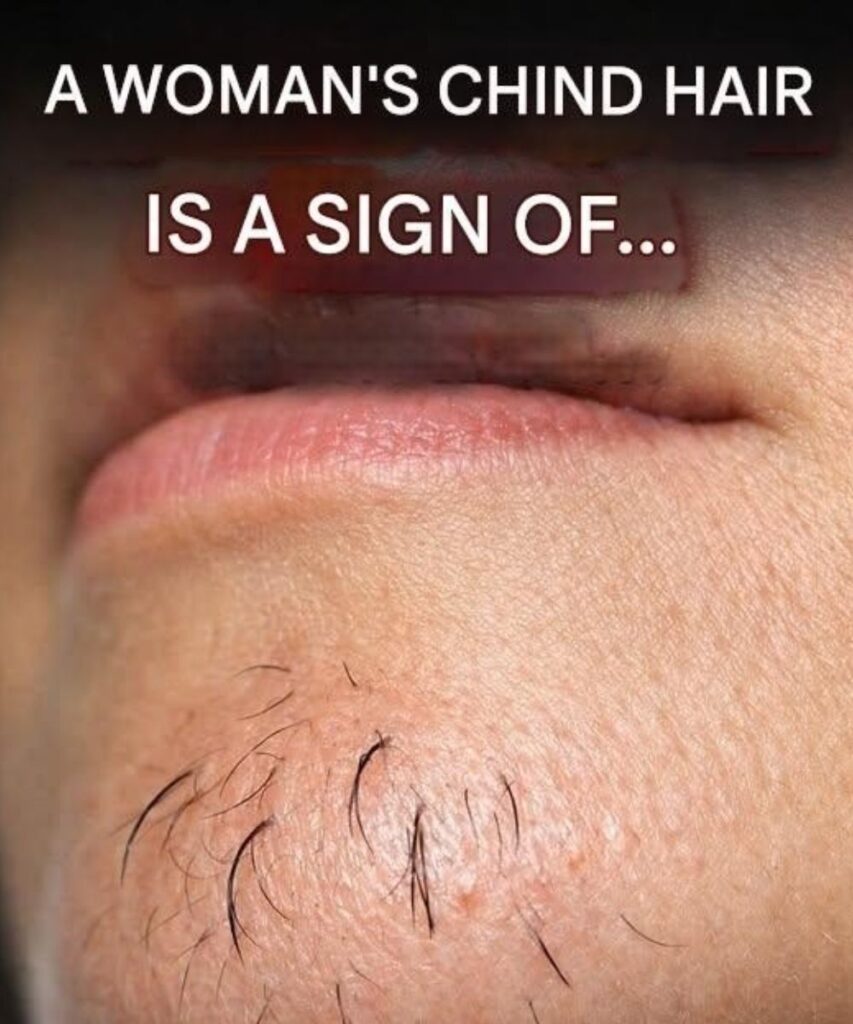
When Small Changes Point to Something Deeper
It’s easy to notice a few new chin hairs and assume it’s simply part of getting older. That explanation feels convenient. Sometimes it’s true. But not always complete.
The body rarely shifts without reason.
What Stress Quietly Disrupts
When stress becomes constant—not occasional, but daily—the body adjusts in ways that aren’t always visible at first.
Cortisol rises. Sleep becomes lighter or shorter. Recovery slows.
Over time, this can disturb the balance between estrogen and androgens. And when androgens begin to carry more weight than they should, changes like thicker or faster facial hair can follow.
It’s not immediate. It builds quietly.
And often, it’s overlooked because stress itself feels “normal.”
The Role of Everyday Eating
Diet works the same way—subtle, but cumulative.
Meals high in refined sugars and processed carbohydrates can lead to repeated spikes in blood sugar. The body responds with increased insulin, and over time, that pattern can encourage higher androgen activity.
This connection is often seen more clearly in conditions like Polycystic Ovary Syndrome, but even outside of diagnosed conditions, the pattern can still influence how the body regulates itself.
A steadier approach—whole foods, balanced meals, fiber, protein, and healthy fats—doesn’t “fix” everything overnight.
But it reduces the pressure on the system.
When the Body Lacks What It Needs
Deficiencies matter too.
Low levels of nutrients like vitamin D, zinc, or iron don’t directly cause new hair growth. But they weaken the body’s ability to regulate itself properly.
That creates space for imbalances to take hold.
Correction doesn’t require extremes—just consistency, and when needed, guidance from a healthcare professional.
Knowing When to Look Closer
An occasional stray hair is not a problem.
A sudden change—especially when paired with symptoms like weight shifts, acne, or irregular cycles—is worth paying attention to.
Not with panic.
With clarity.
Because sometimes the body signals early, long before anything becomes serious.
Final Reflection
These changes are rarely about one cause.
They’re usually the result of small patterns—stress, diet, sleep, and balance—moving in the wrong direction over time.
The response doesn’t need to be drastic.
It needs to be steady.
Less strain. Better nourishment. Enough rest.
Given that, the body often finds its way back without force.