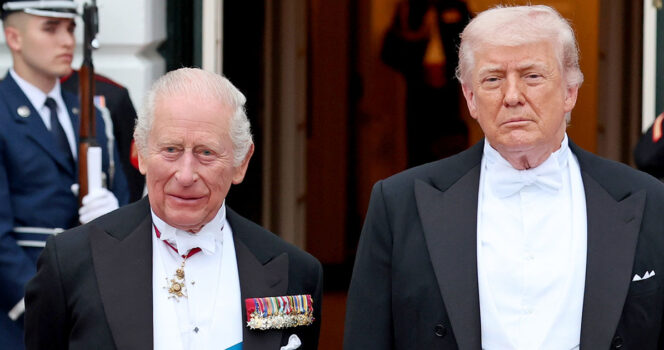
While Donald Trump hosted King Charles III and Queen Camilla for a high-profile state visit in Washington, the backdrop was anything but routine. Ongoing tensions linked to the situation in Iran and broader geopolitical strains added a layer of complexity to what is typically a carefully choreographed diplomatic occasion.
From the outset, the visit carried symbolic weight. Relations between the United States and the United Kingdom had faced visible strain in recent months, with disagreements over foreign policy—particularly in the Middle East—contributing to a more fragile tone between longtime allies. Against that context, the presence of the British monarch in Washington was widely seen as an effort to reinforce stability and continuity in the relationship.
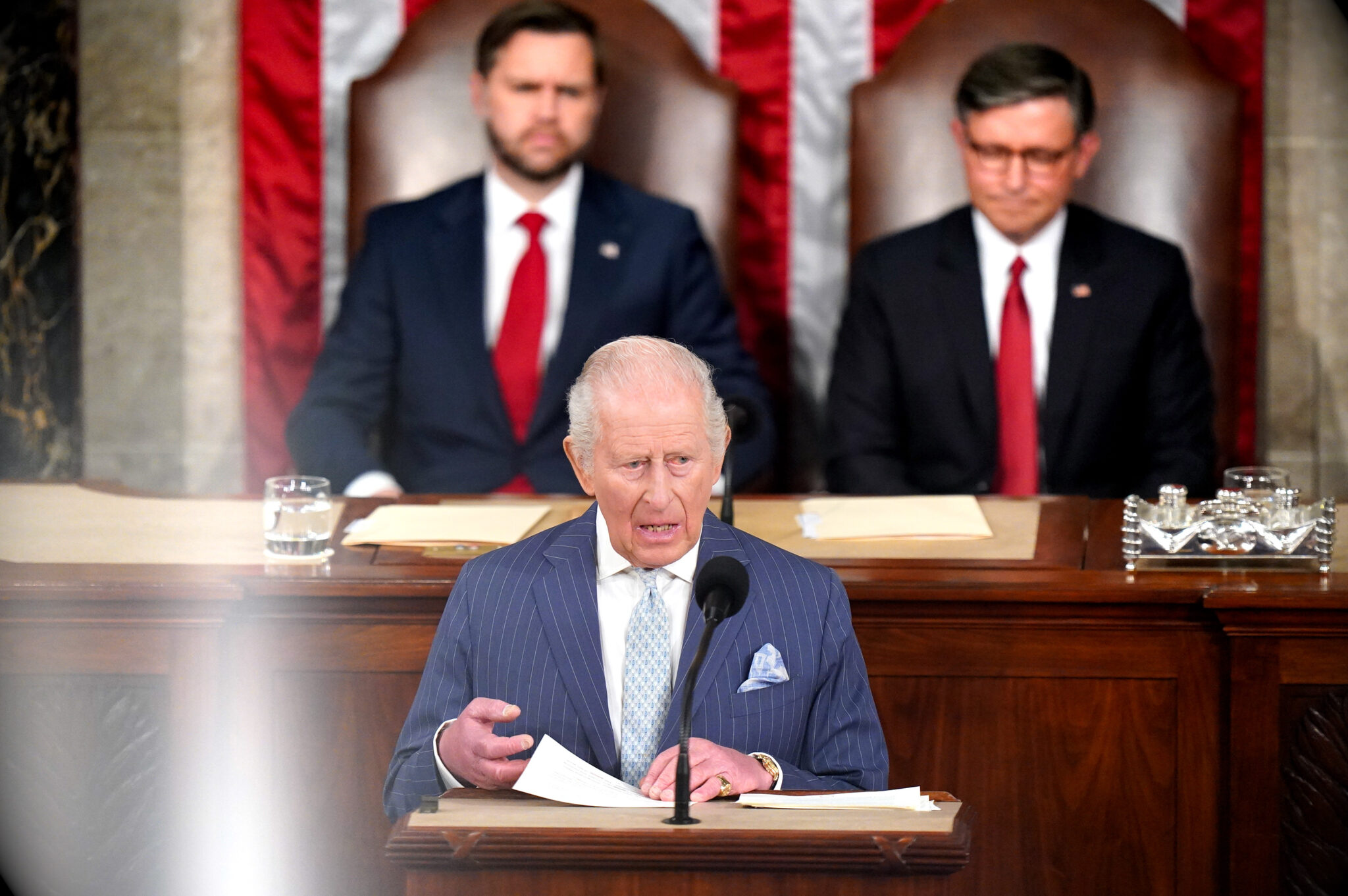
During his address to the U.S. Congress, King Charles leaned into that message. He spoke about the depth of the historical bond between the two nations, emphasizing centuries of shared ties and the enduring importance of cooperation. His tone remained consistent with the traditional role of the British monarchy—measured, unifying, and intentionally non-political, even when referencing global uncertainty.
At the same time, interpretations of his remarks quickly emerged. Some observers suggested that his references to current global challenges—and his reflection on how past leaders might view them—could be read as subtle commentary on present conflicts. Others viewed the speech as broadly diplomatic, designed to avoid direct alignment with any specific political stance.
The contrast between diplomatic neutrality and political messaging became more pronounced during the State Dinner at the White House. While raising a toast, Donald Trump made a striking claim, stating that King Charles “agrees” with his position regarding Iran and the issue of nuclear weapons. The comment drew attention not only for its content but also for how it intersected with the long-standing convention that British royals do not publicly endorse political positions, particularly those tied to ongoing conflicts.
Notably, King Charles had not explicitly mentioned Iran during his public remarks, instead referring more generally to instability in the Middle East. That distinction matters in diplomatic terms, where wording is often deliberate and carefully calibrated. Following the dinner, a spokesperson associated with Buckingham Palace reiterated a more traditional stance, emphasizing alignment with established policies on nuclear non-proliferation rather than any specific political endorsement.
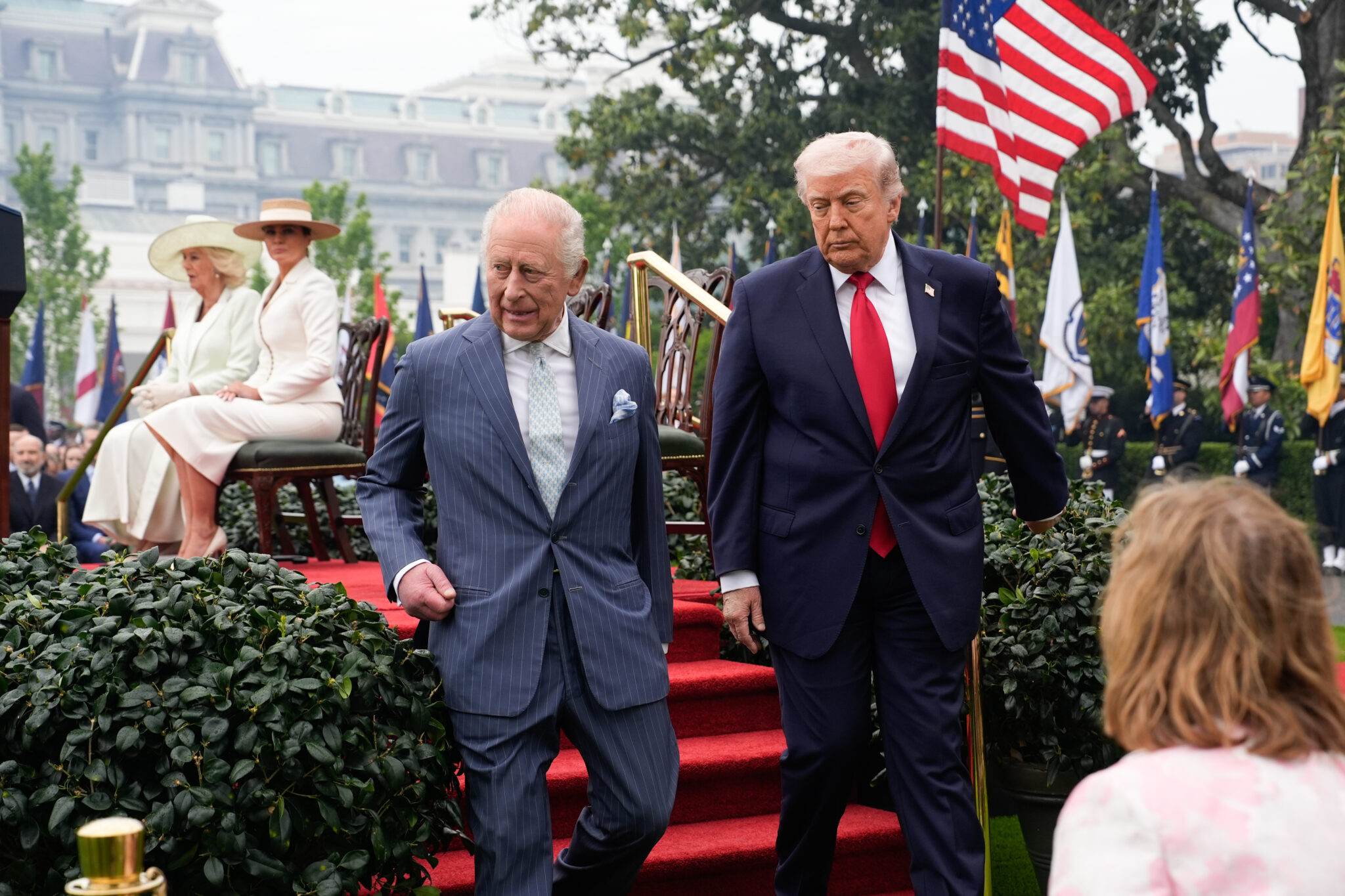
This divergence highlights a familiar dynamic in international relations: political leaders often speak in direct, assertive terms, while constitutional figures like the British monarch operate within a framework of neutrality and symbolic diplomacy. When those two styles intersect publicly, interpretations can quickly become contested.
Beyond the statements themselves, the visit reflects a broader reality. Even in moments designed to project unity—state dinners, formal speeches, ceremonial welcomes—underlying tensions do not disappear. Instead, they tend to surface in subtler ways: through phrasing, body language, or how different sides describe the same interaction.
In that sense, the discussion surrounding the visit is less about a single remark and more about the balance between perception and protocol. One side may present alignment; the other may emphasize neutrality. Both approaches serve different purposes, particularly in a period marked by geopolitical uncertainty.
Ultimately, the visit underscores the enduring importance of the U.S.–U.K. relationship, even during periods of disagreement. Public narratives may shift depending on perspective, but the underlying diplomatic effort remains consistent: maintaining dialogue, preserving alliances, and navigating complex global issues without escalating divisions unnecessarily.