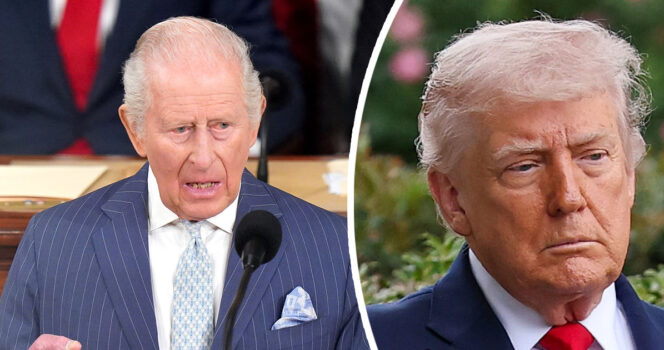
King Charles III delivered one of the most closely watched moments of the state visit during his address to the U.S. Congress, an appearance that carried both ceremonial weight and quiet diplomatic intent. While the speech was framed around unity and shared history, it quickly drew attention for how it was interpreted—particularly in relation to Donald Trump and current geopolitical tensions.
The visit itself comes at a delicate time. Relations between the United States and the United Kingdom have been strained by disagreements over foreign policy, including the situation involving Iran and differing approaches toward the war in Ukraine. Against that backdrop, the presence of the British monarch in Washington has been widely seen as an effort to reinforce stability between longstanding allies.
During his speech, King Charles leaned heavily on history to underscore that relationship. He referenced moments when both nations stood together, including the aftermath of the September 11 attacks, when NATO allies invoked collective defense for the first time. By highlighting that unity, he emphasized a broader theme: that cooperation has been the defining strength of the transatlantic partnership.
He extended that argument into the present, noting that similar resolve is needed today—particularly in supporting Ukraine and maintaining collective security. The message itself aligned with established Western positions, but the context made it more significant. At a time when divisions have emerged over strategy and priorities, even a general call for unity can carry political weight.
This is where interpretations began to diverge. Some observers described the remarks as a subtle critique of current U.S. leadership, suggesting that the emphasis on alliance solidarity indirectly contrasted with recent rhetoric from Washington. Others viewed it more traditionally—as a diplomatic reaffirmation rather than a pointed challenge.
The standing ovations that followed parts of the speech added another layer to the moment. In Congress, such reactions often reflect not just agreement with specific lines, but broader approval of tone and message. In this case, the response appeared tied to the speech’s emphasis on shared values, historical continuity, and collective responsibility.
Online reactions, however, were far less uniform. Supporters praised the address as measured, dignified, and clear in its defense of alliances like NATO. Critics or skeptics questioned whether the speech was being over-interpreted, arguing that the monarch’s role is inherently neutral and not designed for political confrontation.
That tension between interpretation and intention is central to understanding the moment. The British monarchy operates within strict conventions, avoiding direct political statements while still engaging in global conversations through symbolism and carefully chosen language. Political leaders, by contrast, often frame events more explicitly, which can create mismatched narratives about what was actually said or implied.
In practical terms, the speech did what such addresses are meant to do: reinforce the idea that, despite disagreements, the U.S. and U.K. remain closely connected. Whether it was perceived as a “dig” or simply a reminder depends largely on the listener’s perspective.
What remains clear is that the address resonated beyond the chamber itself. It became part of a wider discussion about leadership styles, alliance expectations, and the role of diplomacy in a period marked by uncertainty.