My name is Daphne. I’m twenty-nine, and for most of my adult life, I confused being needed with being loved.
It didn’t happen all at once. It happened in small, reasonable moments. A call here, a request there. A crisis that felt urgent enough to override common sense.
When my mother, Stella, called crying about losing the house, I didn’t hesitate. I sent $3,000 without asking for proof. I told myself that’s what daughters do.
When my father, Edison, said he had “medical bills,” I ignored the lack of details and sent more money. When my aunt said her children were freezing, I transferred what I could before she even finished explaining. When my cousin Hazel claimed her tuition was at risk, I covered it—because she sounded desperate, and desperation had always been enough to convince me.
For six months, I lived like that. Tracking their needs in a little blue notebook, adjusting my life around their emergencies. Skipping things for myself without thinking twice.
I told myself it was temporary.
That one day, it would stop.
It didn’t stop. It escalated.
And then one afternoon, it collapsed.
It happened at a grocery store.
My card was declined over eggs, bread, and coffee creamer. Not luxury items. Not anything unnecessary. Just the basics. I stood there, pretending it was a mistake, putting items back one by one until all I had left were noodles and bruised bananas.
That was the first crack.
The second came days later, at my mother’s house.
She had invited everyone for dinner. I almost didn’t go, but she asked me to bring dessert, and I said yes out of habit more than willingness. I made lemon bars from scratch because it was cheaper than buying them.
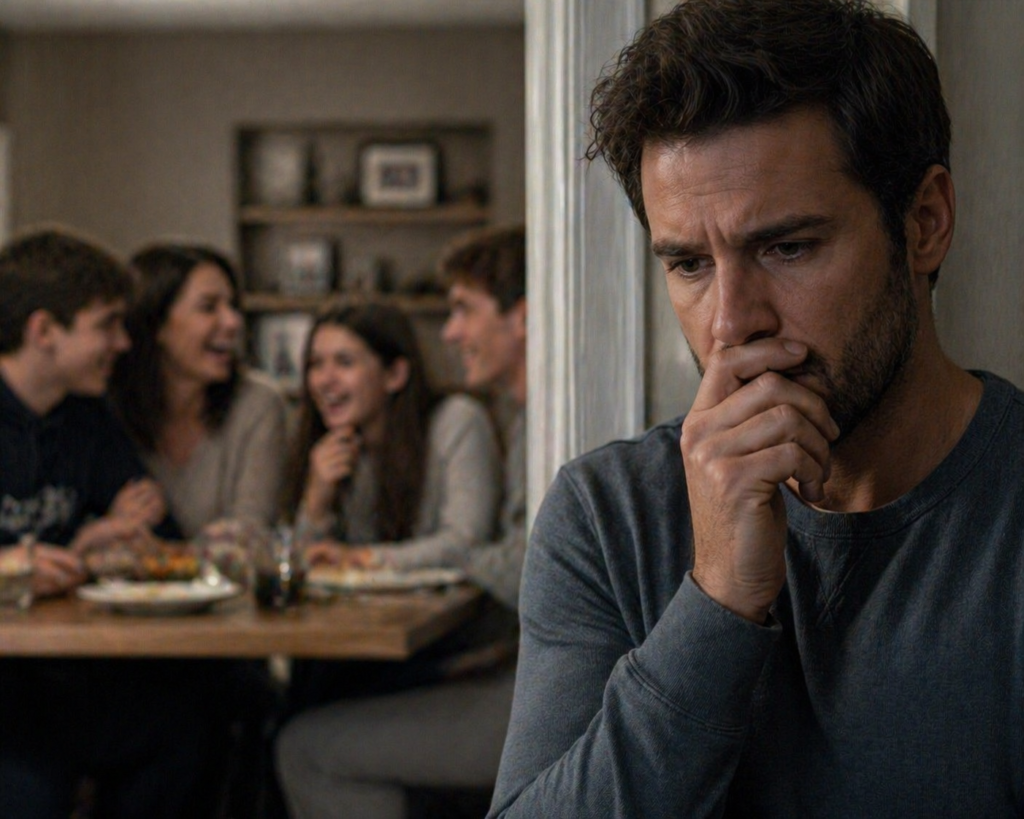
When I walked in, I heard them before they saw me.
They were laughing.
Not casually. Not kindly.
Carelessly.
I stood in the hallway and listened as my cousin joked about how easy I was to manipulate. My aunt said all it took was a little crying. My father said the word “urgent” worked like magic.
Then my mother spoke.
“Despite everything,” she said, almost bored, “at least she’s useful.”
That was the moment everything changed.
Not loudly. Not dramatically.
Quietly.
Something in me stopped reaching for them.
I walked in, set the lemon bars down, and asked them to explain the joke. No one could. Not really. They tried to soften it, dismiss it, call it harmless.
But the truth had already settled.
I left without eating.
That night, I sat on my floor with my notebook and did something I should have done months earlier. I added everything up.
Over $25,000.
Money I didn’t have.
Money I gave because I believed them.
Then I checked.
The mortgage was never behind. My father’s “medical bills” had gone toward boat repairs. My aunt’s power had never been cut. Hazel’s tuition had turned into a trip she posted online.
It wasn’t misunderstanding.
It was a pattern.
And I had enabled it.
So I stopped.
I wrote one message in the family group chat. I listed what each person had asked for, what they said it was for, and where the money actually went. Then I said I was done.
No more money.
No more emergencies.
No more pretending.
The response came fast.
Not apologies.
Accusations.
“How dare you embarrass us?”
“You chose to help.”
“This was private.”
That was the part that clarified everything.
They weren’t sorry for what they had done.
They were angry that I had made it visible.
So I did what I hadn’t done before.
I protected myself.
I closed accounts, changed passwords, removed access, and stopped responding emotionally. I didn’t block them. I documented everything.
When the situation followed me into public spaces, I didn’t stay quiet. Not aggressively. Just clearly.
I told the truth.
And for the first time, people saw what had been happening.
Not the version my family preferred.
The real one.
There were consequences.
Social ones. Financial ones. Personal ones.
My parents lost credibility. My cousin had to explain herself. My aunt stopped pretending nothing had happened.
Eventually, my mother came to my door.
Not with excuses.
With something closer to accountability.
“I’m sorry I used your love against you,” she said.
It wasn’t perfect.
But it was real.
I accepted it.
And then I asked for something I had never asked for before.
A repayment plan.
Because forgiveness without boundaries is just permission.
A month later, I went back to the grocery store.
I bought everything I needed without checking my balance twice. I stood at the register and paid without that quiet panic sitting in my chest.
For the first time in a long time, I wasn’t thinking about who needed me.
I was thinking about myself.
And the difference was simple, but it changed everything.
I wasn’t useful anymore.
I was free.