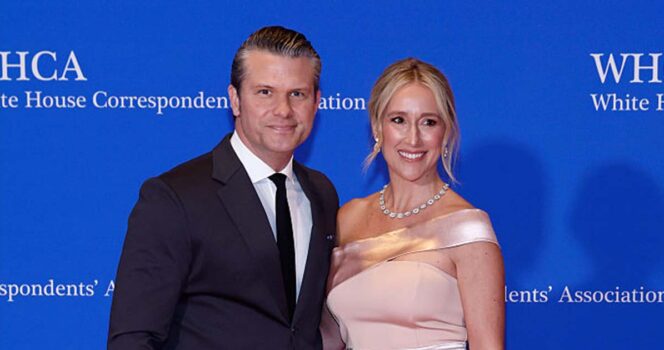
What was meant to be a polished evening in Washington quickly turned into something far less predictable, and not just because of the reported security scare outside the ballroom.
The 2026 White House Correspondents’ Association Dinner, held at the Washington Hilton on April 25, brought together prominent figures from politics, media, and entertainment. Among those in attendance were Donald Trump, JD Vance, and Pete Hegseth alongside his wife, Jennifer Rauchet.
For a brief moment, the evening followed its usual rhythm—red carpet arrivals, cameras flashing, and carefully staged appearances. Then reports emerged of an armed individual outside the venue, prompting a rapid evacuation and shifting attention away from ceremony to security.
Yet even amid that disruption, one unexpected detail managed to dominate online conversation.
Jennifer Rauchet’s dress.
Photos from the red carpet began circulating almost immediately, but it wasn’t long before an 18-year-old content creator, Ella Devi, sparked a debate that spread far beyond the event itself. She posted a side-by-side comparison suggesting that Rauchet’s outfit closely resembled a dress available on Temu.
Her caption was direct and dismissive, and it quickly triggered a wave of reactions.
Some commenters leaned into criticism, suggesting the look lacked originality or was sourced from low-cost fast fashion. Others questioned whether it mattered at all, pointing out that many widely sold designs are inspired—or copied—from higher-end fashion houses.
That argument opened a broader discussion about the nature of fast fashion itself. Brands like Shein and Temu are frequently accused of replicating designer styles at a fraction of the price, raising ongoing concerns about originality, labor practices, and sustainability.
Ella Devi, however, pushed back against those critiques. She argued that the design itself may not have originated with a luxury label at all and suggested that the criticism was misplaced.
But the conversation didn’t stay within fashion boundaries.
It shifted into politics.
Some critics framed the alleged choice of a low-cost, imported dress as contradictory—particularly given the “America First” messaging associated with figures connected to the event. Others dismissed that line of thinking entirely, arguing that expecting someone to spend thousands on a single outfit runs counter to values like affordability and accessibility.
At that point, the discussion became less about the dress itself and more about what it represented.
For some, it raised questions about authenticity and messaging. For others, it highlighted perceived hypocrisy—on both sides. Critics of Ella pointed out the irony of someone who identifies as a socialist also promoting luxury fashion aesthetics. Supporters argued that fashion and political identity don’t need to align so rigidly.
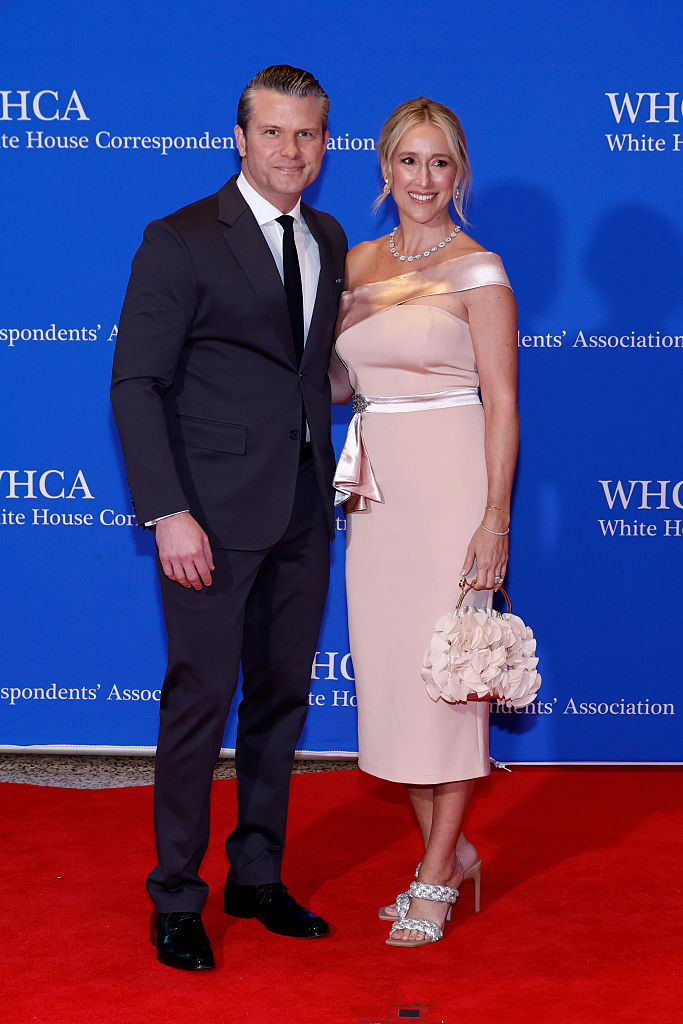
In many ways, the reaction reflected a familiar pattern in modern online discourse: a single visual moment turning into a layered debate about class, values, and identity.
Meanwhile, the original context—the disrupted dinner, the security response, and the broader significance of the event—faded into the background.
What remained was a conversation shaped less by facts and more by interpretation.
Some saw the dress as a symbol. Others saw it as irrelevant.
And in the middle of it all was a reminder of how quickly attention can shift—from global political gatherings to a single outfit—and how easily that shift can take on a life of its own.