What He Secured Before He Left
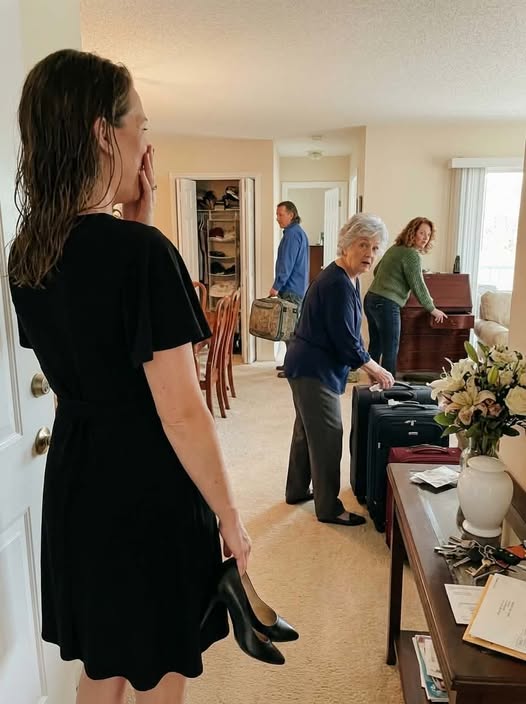
The apartment door opened to noise, not silence.
Suitcases were lined up. Closets emptied. People moved with the confidence of those who believed decisions had already been made. At the center stood Marjorie Hale—composed, certain—speaking as if the home no longer belonged to me.
On the table was a list dividing his things.
Next to it, Bradley’s urn.
No one paused. No one asked. They didn’t see a wife returning—they saw something in the way.
I stood there for a moment and then laughed—not from humor, but from recognition.
They had misunderstood him.
Bradley was quiet, yes. But his quiet wasn’t absence. It was attention. He worked in forensic accounting, spent years tracing patterns others missed. He knew how quickly grief could be followed by claims, how easily people confuse access with ownership.
Six days before he passed, he told me plainly: They won’t come to mourn. They’ll come to take.
He didn’t say it with anger. Just certainty.
Then he told me what to do.
The Line That Was Already Drawn
There was a knock.
Elena Cruz, his attorney, stepped in. She didn’t argue. She didn’t raise her voice. She placed documents on the table and explained, simply, that the apartment was held in a private trust. It wasn’t available to be divided. It had never been.
The room changed.
Questions turned to objections. Objections turned to silence as each point was answered with something already prepared.
There was no waiting process. No opening for negotiation.
Just structure—set in place before anyone thought to challenge it.
When Assumptions Meet Evidence
What followed wasn’t dramatic. It was methodical.
Security footage had recorded entry and removal of items. Nothing exaggerated, nothing unclear. Just a record of what had been done.
A deputy arrived. Suitcases were opened. Items were returned.
No accusations were needed. The facts were enough.
One by one, people left. The certainty they carried in had nowhere to stand.
The Message He Left
Later, Elena handed me a flash drive.
Bradley’s voice was steady, the way it always was. He explained what he had arranged—not to punish anyone, but to prevent confusion after he was gone. He spoke about boundaries, not as a reaction, but as something set in advance, so no one would have to argue for what was already clear.
He had left order where there could have been conflict.
And he had left me within that order.
What Remained
When the door closed, the apartment was quiet again.
Not empty. Not taken.
Just still.
Grief doesn’t disappear because things are settled. But it changes shape when you’re not also defending what was yours to begin with.
He didn’t leave behind noise.
He left behind protection.
And in that, there was a kind of care that didn’t need to be explained further.