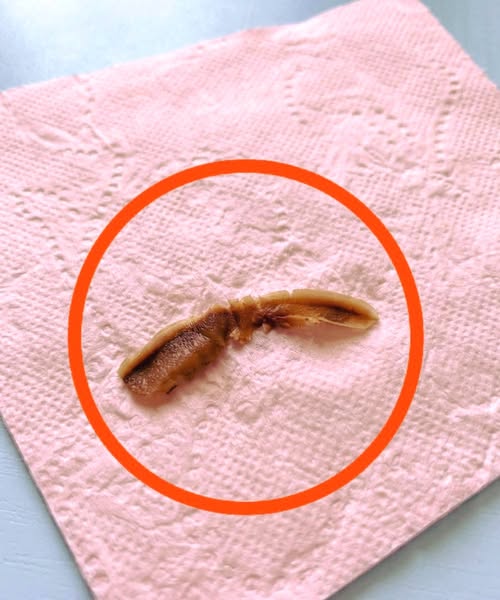
or the peculiar, organic shape of the fragment. My mind immediately raced through a dozen possibilities, each more unsettling than the last. In the quiet of the bathroom, the silence seemed to amplify my anxiety. We are hardwired to notice irregularities, and when we find something that defies our immediate understanding, our brains often leap toward the worst-case scenarios—pests, decay, or something far more invasive. I stood there, frozen, wondering if I should confront her or if I was simply overreacting to a piece of common household debris.
The truth, however, is often far more mundane than our imaginations allow. When we encounter an unfamiliar object in a private space, the instinct to panic is natural, but it is rarely the most productive path. Most “alarming” discoveries are simply everyday materials that have undergone a transformation due to environmental factors. A piece of dried food, a fragment of a synthetic product, or even a dehydrated plant fiber can take on a bizarre, biological appearance when stripped of its original context. Lighting, moisture, and the simple passage of time can turn a harmless object into a source of genuine dread.
Before jumping to conclusions that could cause unnecessary friction in a relationship, it is vital to take a step back. I realized that my initial reaction was driven by a lack of information. By observing the object’s texture, color, and location, I began to see it for what it likely was: a byproduct of daily life, perhaps a remnant of a beauty product or a simple packaging fragment that had degraded over time. The brain loves to fill in the gaps of uncertainty with fear, but a calm, analytical approach usually reveals a much simpler, harmless reality.
Ultimately, this experience served as a reminder that our perceptions are not always reality. Whether it is a strange item in a bathroom or a hidden secret in a family inheritance, we are often quick to judge based on surface appearances. Taking the time to investigate, to look past the initial shock, and to consider the context is the only way to avoid misunderstandings. What I thought was a mystery worth worrying about turned out to be nothing more than a trick of the light and a bit of domestic clutter, proving that sometimes, the best way to handle the unknown is to simply breathe and look a little closer.