
When Old Words Meet Modern Fears
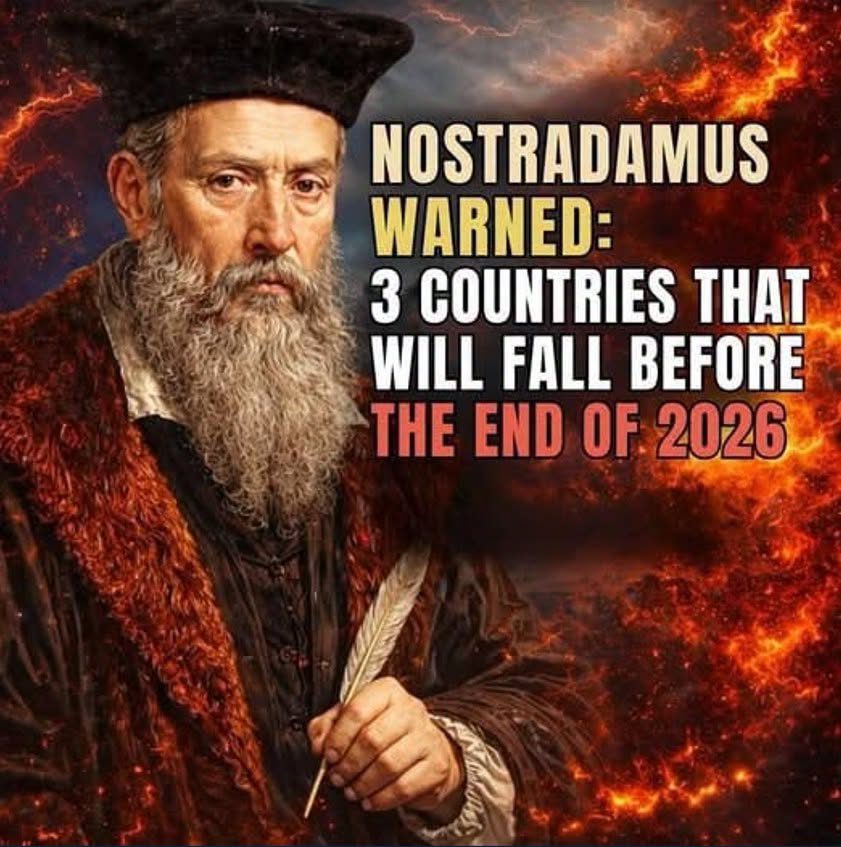
The warnings feel uncomfortably close. As global tensions rise and familiar structures begin to strain, the writings of Nostradamus are once again pulled into the present. His verses—never direct, always layered—are being revisited with a kind of uneasy curiosity.
Did he truly foresee symbols like a wounded eagle, a cornered bear, or an aging lion? Or are we, as people often do, shaping vague language into reflections of what already unsettles us?
That question matters more than the symbols themselves.
Nostradamus’ influence has never come from precise prediction. It rests in suggestion—in images broad enough to stretch across centuries. The eagle can become a nation under pressure, the bear a power navigating isolation, the lion a symbol of identity in transition. These interpretations feel compelling not because they are exact, but because they align with concerns already present.
What we are witnessing is less prophecy, and more recognition.
History has a quiet way of repeating its rhythms. Strength rises, stabilizes, then begins to shift. Confidence gives way to uncertainty. Systems that once seemed permanent reveal their limits. This has happened before, in different forms, under different names. The language changes, but the pattern remains.
That is why these verses feel relevant.
They do not predict the future as much as they reflect the nature of it.
There is a tendency, especially in uncertain times, to search for confirmation that events are inevitable—that decline is fixed, that outcomes are already written. It offers a strange kind of comfort, even if the message itself is heavy. But that view removes something essential: responsibility.
Because while power is never permanent, neither is crisis.
Between those two truths lies a space that is often overlooked—the space where decisions are made. Nations adjust. Leaders respond. People adapt in ways that no verse, however poetic, can fully contain. Even in periods of strain, there is movement, not just collapse.
What Nostradamus ultimately offers is not a script.
It is a mirror.
And what we see in that mirror depends on where we stand. For some, it reflects fear. For others, it reveals patterns that can be understood, not simply endured. The difference is subtle, but important.
Awareness does not require alarm.
It requires steadiness.
When uncertainty rises, the instinct is often to look outward for answers—to old texts, to dramatic interpretations, to anything that seems to explain what feels unsettled. But clarity usually begins closer than that. It starts with recognizing that history moves in cycles, and that within those cycles, people still have a role.
Not to control everything.
But to respond with intention rather than reaction.
The eagle, the bear, the lion—whether symbolic or imagined—do not determine what comes next. They simply remind us that change is part of every structure, no matter how strong it once appeared.
And in that reminder, there is something quieter than fear.
There is perspective.