
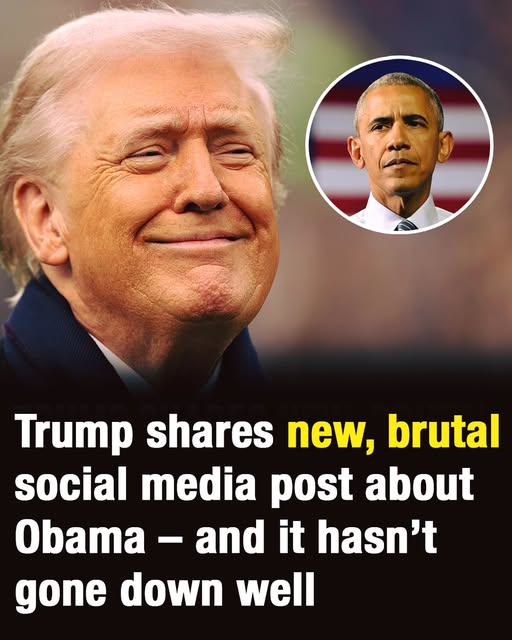
The post, which arrived without an official explanation, immediately gained traction across the internet, acting as a lightning rod for the deeply polarized American electorate. While supporters view such content as a hallmark of Trump’s unfiltered, authentic communication style—a direct line to his base that refuses to bow to conventional political decorum—critics argue that it represents a dangerous erosion of the dignity associated with the office of the presidency. The meme, which touches upon the historical skepticism Obama allegedly held regarding Trump’s electoral viability, has reopened old wounds from the 2016 campaign, forcing a re-examination of how past political jabs are weaponized in today’s digital age.
This incident is not an isolated event; it is part of a broader, more complex trend where political figures are increasingly relying on visual media, memes, and short-form content to shape narratives. In an environment where the line between entertainment and official public discourse is becoming increasingly blurred, the speed of dissemination often outpaces the ability to verify context. Media analysts have pointed out that this shift toward visual-first communication is designed to trigger immediate, visceral emotional reactions, effectively bypassing the nuanced deliberation that once defined political debate.
The debate surrounding this specific post has also reignited concerns regarding the role of AI-generated and digitally altered imagery in political messaging. As audiences struggle to distinguish between genuine historical commentary and stylized digital fabrications, the potential for misinformation grows. Critics warn that this trend contributes to a culture of permanent outrage, where the objective truth is frequently sacrificed for the sake of engagement and partisan signaling. Conversely, those who defend the practice suggest that social media has democratized political expression, allowing leaders to engage in a form of informal, satirical dialogue that was previously impossible.
Ultimately, the silence from both Trump and Obama regarding the meme speaks volumes. By refusing to issue a formal response, both figures allow the digital echo chamber to amplify the narrative, ensuring that the debate remains a focal point for national and international discussion. This episode serves as a stark reminder that in the modern era, political power is increasingly defined by one’s ability to command the digital narrative. As the lines between the personal, the political, and the performative continue to dissolve, the public is left to navigate a landscape where historical records are constantly being reinterpreted, and the only certainty is that the next viral post is just a click away.