
…the social contract that keeps honesty in check. As retailers push for total automation, they have handed the keys to the kingdom to the very people they are trying to monitor. The result is a surge in “inventory shrinkage,” a polite industry term for the quiet, systematic theft occurring at thousands of terminals every single day.
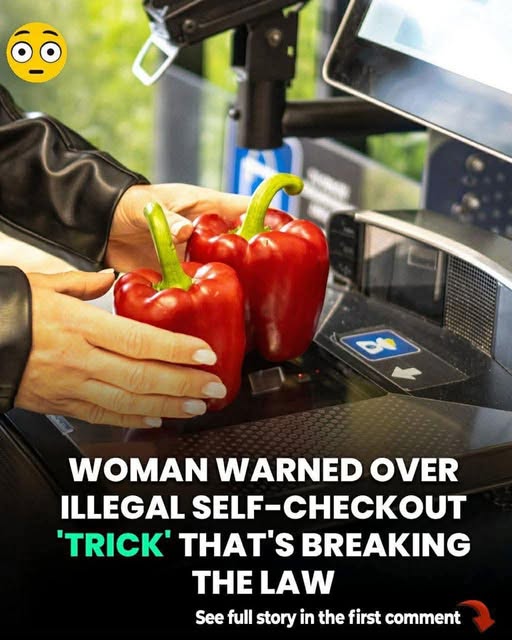
The most infamous of these tactics is the “banana trick.” It is as simple as it is brazen: a shopper takes a premium cut of steak or a bottle of vintage wine and scans it as a bunch of bananas or a bag of onions. In seconds, a twenty-dollar item becomes a fifty-cent purchase. It is a calculated deception that relies entirely on the lack of human oversight.
But the tricks go deeper. There is the “pass-around,” where a shopper mimics the motion of scanning an item without ever actually triggering the barcode, sliding the unpaid goods directly into their bag. There is the “ticket switch,” where a cheap barcode sticker is peeled off a low-cost item and placed over the real price tag of a luxury good. Then there is the “bottom of the basket” maneuver, where heavy, expensive items are intentionally left in the cart, hidden from the scanner’s view, while the customer pays only for the small items on the counter.
The scale of this issue is staggering. A study from the University of Leicester analyzed millions of transactions and found that hundreds of thousands of dollars in goods were simply walking out the door unpaid. Why is this happening? For many, it is the anonymity of the machine. Without a cashier watching, the sense of accountability vanishes. Psychology experts note that people often rationalize these thefts, viewing large corporations as “resilient enough” to absorb the loss, or even justifying it as a form of karmic balance for the “labor” they are forced to perform as unpaid store employees.
Even the law has struggled to keep up. In many major cities, police are stretched so thin that they simply cannot respond to reports of petty theft involving a few apples or a chocolate bar. This creates a feedback loop of impunity: the more people get away with it, the more the behavior becomes normalized.
Yet, the era of the “freebie” is facing a reckoning. Retailers are fighting back with the very technology that enabled the problem in the first place. Modern self-checkout terminals are now being equipped with advanced artificial intelligence and high-definition video monitoring. These systems can detect the difference between a steak and a banana in real-time, instantly freezing a transaction if a discrepancy is flagged. The days of the “unexpected item in the bagging area” are being replaced by the cold, unblinking eye of a camera that knows exactly what you are holding.
While the convenience of self-checkout is likely here to stay, the “digital Wild West” is closing its borders. As AI surveillance becomes the new standard, the temptation to cheat will be met with immediate, automated consequences. For the shoppers who once viewed the terminal as a playground for petty theft, the game is finally coming to an end.