
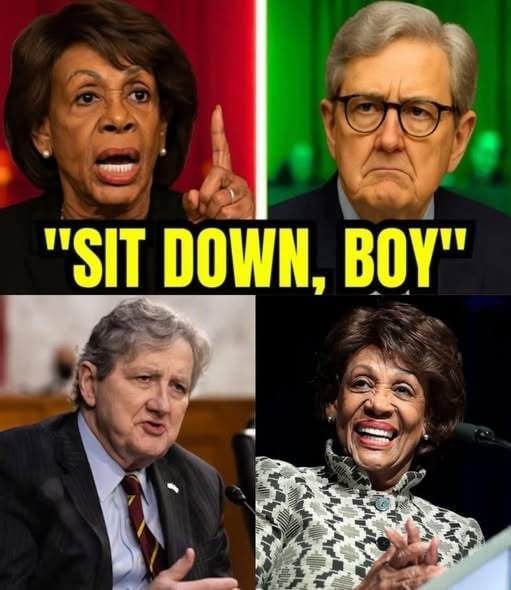
…o hear. He let the insult hang in the air, a jagged piece of verbal shrapnel, and refused to let it define him. Kennedy’s decision not to fire back with the expected volley of anger, sarcasm, or wounded outrage was as calculated as it was human. In a political arena where the loudest voice is usually considered the victor, his choice to remain calm was a masterclass in psychological warfare.
His reply—measured, almost gentle—signaled that he would not accept the label, but he also would not give Waters the explosive, chaotic clash that cable news networks were hungrily waiting to broadcast on a loop. By choosing restraint over reaction, he effectively shifted the entire frame of the encounter. He transitioned from a man being talked down to, to a man who possessed the quiet authority to decide exactly how he would be perceived by the American public.
Waters’ words quickly ricocheted across the country, becoming an immediate litmus test for how different segments of the population understood the intersection of race, gender, and political power. To some, the remark was an expression of justified, long-simmering rage against a system they believe has failed them. To others, it was an unforgivable breach of the basic civility required to hold public office. The discourse was polarized, loud, and deeply personal.
Yet, what lingered in the aftermath was not merely what was said, but how Kennedy chose to respond. In a culture addicted to the spectacle of outrage, his refusal to play the part of the victim or the aggressor became its own kind of confrontation. It forced everyone watching—from the pundits on television to the families at home—to stop and consider the nature of their own reactions. It turned a moment of potential humiliation into a mirror, forcing every observer to decide for themselves what, and who, they were truly applauding. In that brief, electric silence, Kennedy proved that sometimes the most powerful thing you can do is refuse to participate in the game being played against you.