
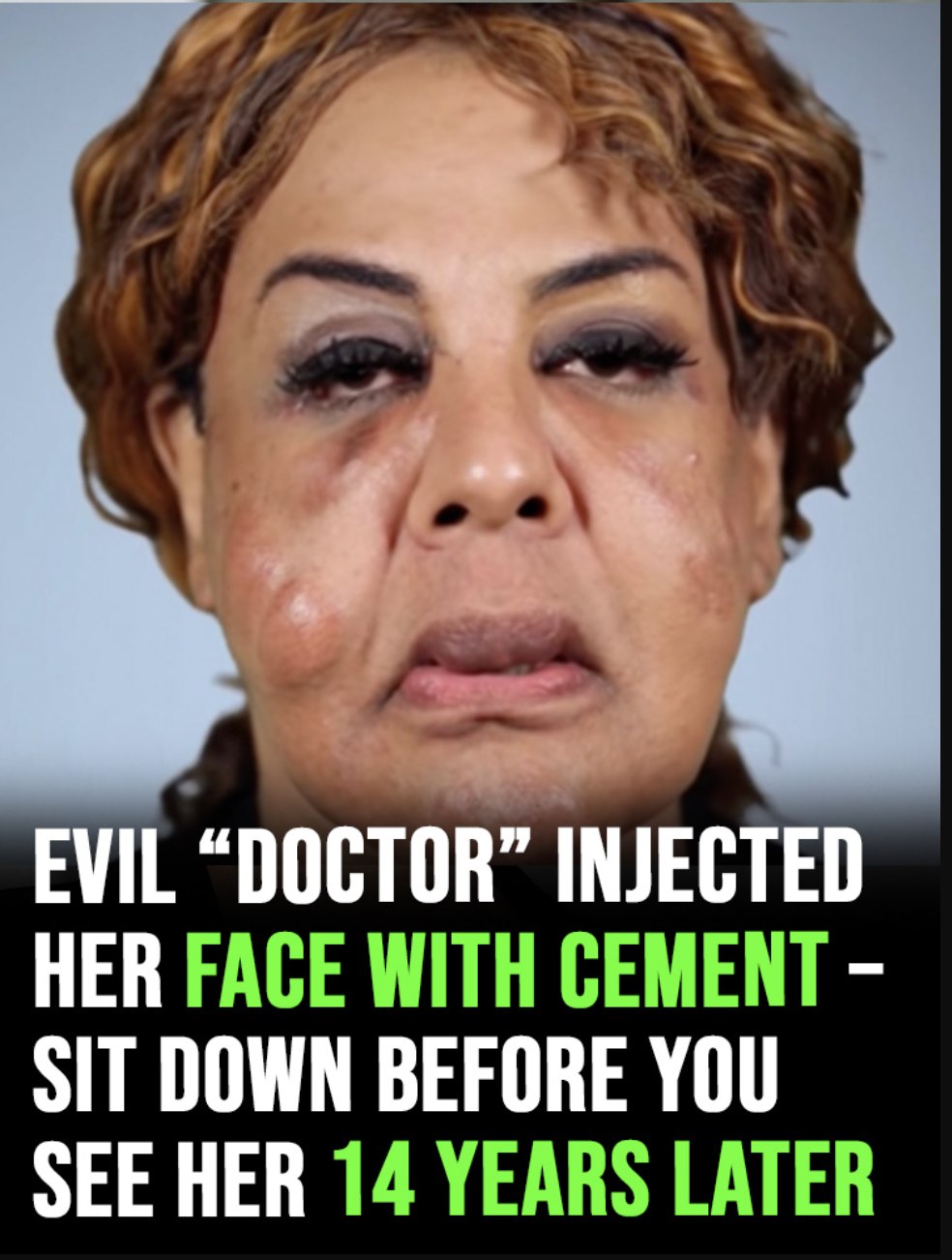
Rajee Narinesingh’s story is often remembered through the shocking images that once circulated around the world. Her face had been injected with substances such as cement, superglue, and tire sealant during an illegal cosmetic procedure. What followed became a widely discussed medical nightmare—one that quickly turned her into a headline, a cautionary tale, and, at times, an object of public ridicule.
But behind the nickname “Cement Face” is a person whose life cannot be reduced to a moment of tragedy.
Rajee Narinesingh’s journey began long before the procedure that changed her life. Growing up, she struggled to reconcile her inner sense of identity with the expectations placed upon her. As a child who felt a deep connection to femininity, she navigated a world that often lacked understanding or language for her experience.
For many transgender people, the desire to align outward appearance with inner identity can become an urgent and deeply personal need. Years ago, when safe and accessible medical options were limited for many in the transgender community, some individuals turned to underground procedures in search of transformation.
That search led Rajee to what she believed would be a solution—but instead resulted in devastating consequences. The substances injected into her face caused severe disfigurement, leaving her in physical pain and emotional distress. Public attention intensified the ordeal, as images of her appearance spread widely across media and the internet.
For a time, it seemed as though her story might be defined only by that painful chapter.
Yet Rajee refused to disappear into silence or shame.
Over time, she found medical professionals willing to help repair the damage. With the assistance of compassionate surgeons and support from programs such as the television series Botched, she underwent procedures that gradually restored her appearance and allowed her to reclaim her confidence.
The physical recovery was only one part of a much larger transformation. Rajee began speaking openly about the dangers of unlicensed cosmetic procedures and the risks faced by people who feel they have no safe alternatives.
She also became an advocate for transgender visibility and health awareness, including discussions about living with HIV and the challenges many marginalized communities face when seeking proper medical care.
Rather than allowing the experience to define her as a victim, Rajee reshaped the narrative around her life. She wrote about her journey, appeared in media and public events, and used her voice to warn others about the dangers of underground cosmetic treatments.
In an unexpected way, the suffering she endured became the foundation for a new purpose: helping others avoid the same path.
Rajee has even spoken publicly about forgiveness toward the person responsible for the illegal injections, explaining that holding onto anger would only prolong the pain. Instead, she has chosen to focus on education, awareness, and resilience.
Today, Rajee Narinesingh is known not only for what happened to her, but for how she responded to it. As an activist, author, and performer, she continues to share her story as a reminder of both the dangers of unsafe procedures and the strength required to rebuild after profound hardship.
Her life illustrates something deeper than the headlines that once surrounded her. Beneath the scars and the spectacle lies a story about identity, perseverance, and the human ability to reclaim dignity after public humiliation.
Out of a moment that once seemed defined by tragedy, Rajee Narinesingh built a life dedicated to purpose, compassion, and the determination to help others walk safer paths.