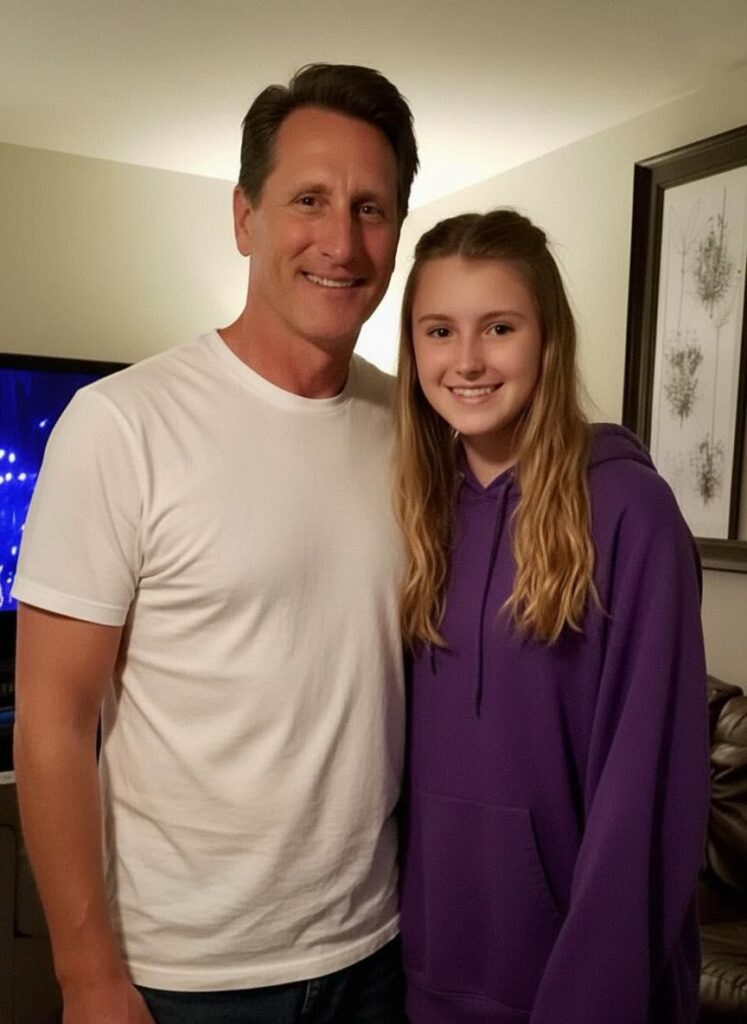
For a long time, I convinced myself there was nothing unusual about my teenage daughter heading out late at night with her stepfather for ice cream. Families bond in their own ways, I thought. Teenagers sometimes open up more easily in relaxed moments. If sharing a milkshake helped them talk and laugh together, why should I worry?
Still, when winter came and those outings continued long after the novelty should have faded, a quiet unease began to settle inside me. I tried to push it away. I wanted to believe I was overthinking, seeing shadows where none existed. But the feeling lingered, growing harder to ignore. Eventually, it pushed me toward a decision I never imagined making as a parent.
And that choice changed everything.
For years, it had been just my daughter, Vivian, and me. Her biological father drifted through our lives when she was little, appearing briefly and then disappearing again. When he finally left for good, I made a silent promise to myself: my daughter would never again feel abandoned or unprotected.
So when I met Mike, I moved carefully. I watched how he behaved, how he treated people, how he interacted with Vivian. I didn’t rush anything. I needed to be certain that anyone I brought into our home would be steady, safe, and kind.
Mike seemed to be all of those things.
He was consistent. He listened more than he spoke. He never forced himself into Vivian’s life but slowly earned her trust. By the time he proposed, we had been together for more than two years, and Vivian was five years old. She liked him — but more importantly, she felt comfortable around him.
That mattered more to me than anything.
Over time, Mike became the man who showed up to every school performance. He helped build science fair models and spent entire weekends constructing a treehouse in the backyard. He learned the small details that make up a child’s world — when she preferred pancakes instead of eggs, when she wanted quiet instead of conversation.
When we got engaged, I sat Vivian down and told her something important. I explained that Mike would never replace her father, and she should never feel pressured to call him anything she didn’t want to.
She nodded with the serious understanding children sometimes show when they realize something important is being said.
Life became steady after that. Peaceful. A few years later, we welcomed a son, and somewhere along the way, Vivian began calling Mike “Dad” on her own. It wasn’t something we asked for. It simply happened.
By the time Vivian reached her mid-teens, she had grown into a focused, determined young woman. Her teachers praised her discipline and intelligence. They spoke about her future with enthusiasm, suggesting advanced classes and early preparation for college.
I was proud of her — deeply proud. And perhaps, without realizing it, I became too focused on making sure she never slowed down.
Looking back, that may have been the moment things began to shift.
One afternoon after meeting with her teachers, I came home energized, talking excitedly about academic opportunities and ambitious plans for the years ahead. Vivian listened quietly. Mike hesitated, suggesting that the workload might become overwhelming and that balance mattered too.
I brushed the concern aside. Hard work was important. This was about her future.
Soon, Vivian was spending evening after evening studying at the dining table. Her books were neatly arranged, her schedule carefully planned. I helped her review assignments and organize her time.
Mike often interrupted those sessions gently, bringing snacks or suggesting short breaks. I assumed he was just being supportive.
Then the ice cream trips began.
At first they felt harmless — even sweet. A small reward after long hours of studying. They would leave together late in the evening and return laughing quietly, sharing an easy connection that I believed was healthy.
But summer passed. Fall slipped into winter. Snow lined the streets, and the air grew bitterly cold.
The trips continued.
That was when I started paying closer attention.
Sometimes they stayed out longer than expected — nearly an hour. When they returned, Vivian seemed different. Her cheeks were flushed, but not entirely from the cold. When I asked casual questions about where they had gone, the answers sometimes felt vague.
I told myself not to jump to conclusions. Her grades were still excellent. Nothing seemed outwardly wrong.
Yet the uneasiness would not fade.
Mike kept a dashcam running in his car, something he had installed for insurance reasons. One night, after the house had gone quiet and everyone was asleep, I stepped outside and removed the memory card.
My hands trembled as I brought it inside.
Sitting alone at the kitchen table, I told myself I was probably being paranoid. Still, I inserted the card into my laptop and pressed play.
The video showed quiet streets and empty intersections. Mike drove calmly, occasionally adjusting the radio. Vivian appeared only in faint reflections.
But the route was wrong.
They were nowhere near the places they had mentioned.
Eventually the car turned onto a street I barely recognized. Mike parked near a building with a partially visible sign. He stepped out, opened the passenger door, and Vivian followed.
They walked toward an entrance just beyond the camera’s view.
I paused the video.
Something about the place made my stomach tighten.
Mike returned to the car alone. Minutes passed. Far too many.
Nothing inappropriate appeared on the footage, yet the lack of explanation felt worse than anything explicit. Why come here? Why keep it hidden? Why lie about it?
Sleep didn’t come that night.
By morning, the fear had hollowed me out.
The footage had not answered my questions — it had only magnified them.
That evening, after dinner, I asked Vivian to sit down with us in the living room. Mike joined us, unaware of what I had discovered.
I told them about the dashcam.
I asked plainly where my daughter had been taken and why it had been hidden from me.
Vivian spoke first. Her voice shook slightly. She admitted the secrecy had been her idea. She had been certain I wouldn’t understand.
The room fell silent.
Finally, Mike explained.
The building was a dance studio. Vivian had been taking evening dance classes there for months. It was something she loved deeply but had been afraid to tell me about because she believed I would say no.
Her words hit harder than anything I had imagined.
Standing there with tears in her eyes, she told me she sometimes felt like a schedule instead of a person. That whenever she mentioned something she wanted to do, I redirected the conversation back to grades, preparation, or achievement.
She said she felt constant pressure to keep pushing forward without pause.
As she spoke, memories surfaced — the times I urged her to work harder, the moments when I dismissed the idea of slowing down.
Mike admitted he should have told me. But he said he saw how happy dance made her, how it gave her a sense of freedom and joy, and he didn’t want to take that away.
Sitting there, listening to both of them, I realized how narrow my perspective had become.
When I finally found my voice, I asked Vivian a simple question.
“Can I watch you dance?”
The look of surprise on her face said everything.
That weekend we talked openly as a family. Some of the advanced academic plans were adjusted. The pressure eased.
Dance stayed.
And a few days later, I found myself sitting quietly in a small studio, watching my daughter move with a confidence and happiness I had not seen in months.
Her future was still bright.
But now, she had space to breathe.