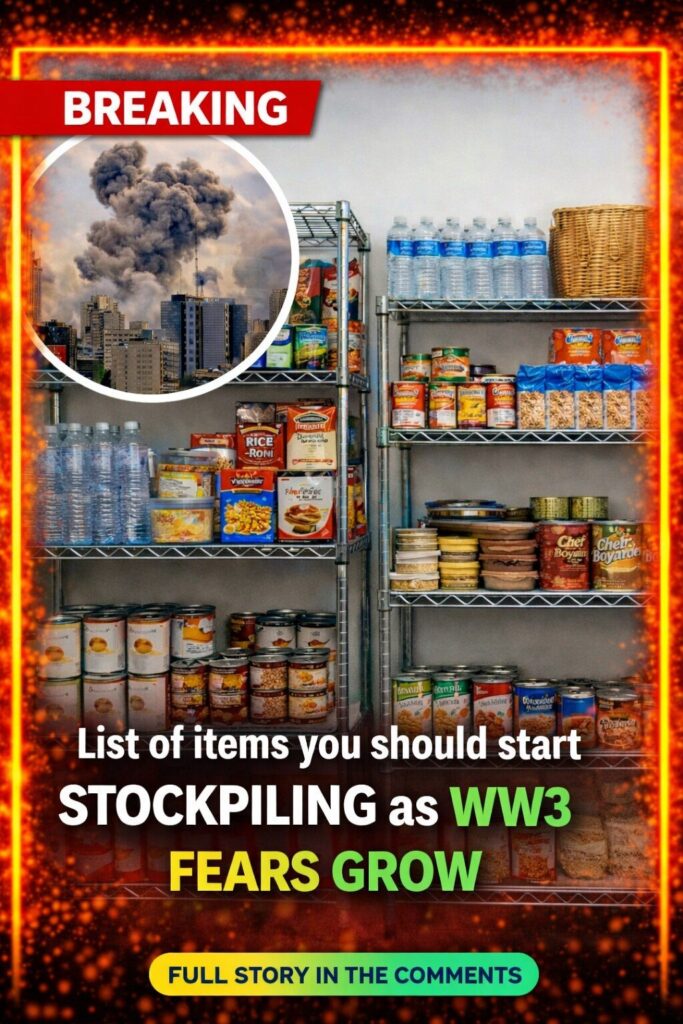
Moments of global tension often begin far from everyday life — headlines about distant conflicts, diplomatic standoffs, or military strikes. Yet when news spreads quickly and uncertainty grows, many people begin to realize how interconnected the modern world truly is. Events that once felt remote can suddenly feel closer to home.
For families watching these developments unfold, the immediate concern is often practical rather than political: what would happen if basic systems temporarily failed? Electricity, communication networks, transportation, and supply chains all depend on complex infrastructure that can become strained during crises.
Why Emergency Preparedness Matters
Emergency planners frequently emphasize that disruptions often begin with small but noticeable changes. Phone batteries run low and cannot be easily recharged during power outages. Grocery stores experience sudden surges in demand. Information becomes inconsistent as communication systems slow or fail.
Individually, these problems seem manageable. Together, they can quickly create stress if households are not prepared.
This is why preparedness experts consistently promote the idea of maintaining a basic emergency kit at home.
The 72-Hour Preparedness Principle
Many civil defense and disaster-response organizations recommend preparing to be self-sufficient for at least 72 hours. During major emergencies — whether natural disasters or infrastructure disruptions — emergency responders may need time to restore services and reach affected communities.
Having essential supplies allows households to remain stable during that initial period.
Typical recommendations include:
• clean drinking water for each family member
• non-perishable food that does not require cooking
• flashlights and spare batteries
• a basic first-aid kit
• portable phone chargers or battery packs
A battery-powered radio can also be helpful if internet or cellular networks become unreliable.
Additional Items That Can Help
Beyond the basic supplies, preparedness guides often suggest including a few additional items that may prove valuable in uncertain situations:
• copies of important identification and documents
• warm clothing or blankets
• emergency cash in small bills
• a simple multi-tool
• a paper map in case digital navigation becomes unavailable
These items do not require complex planning or significant expense, yet they can provide practical support if normal services are temporarily disrupted.
Preparation Without Fear
Preparedness is not about expecting the worst or living in constant anxiety. Instead, it reflects a practical approach to uncertainty. Natural disasters, infrastructure failures, and unexpected disruptions can occur in many forms, and a small amount of preparation can reduce stress when they do.
A basic emergency kit cannot prevent global conflicts or large-scale crises. What it can do is give families a measure of stability during the first hours of uncertainty — helping people remain calm, organized, and resilient until normal systems begin working again.
In an unpredictable world, that quiet sense of readiness can make an important difference.