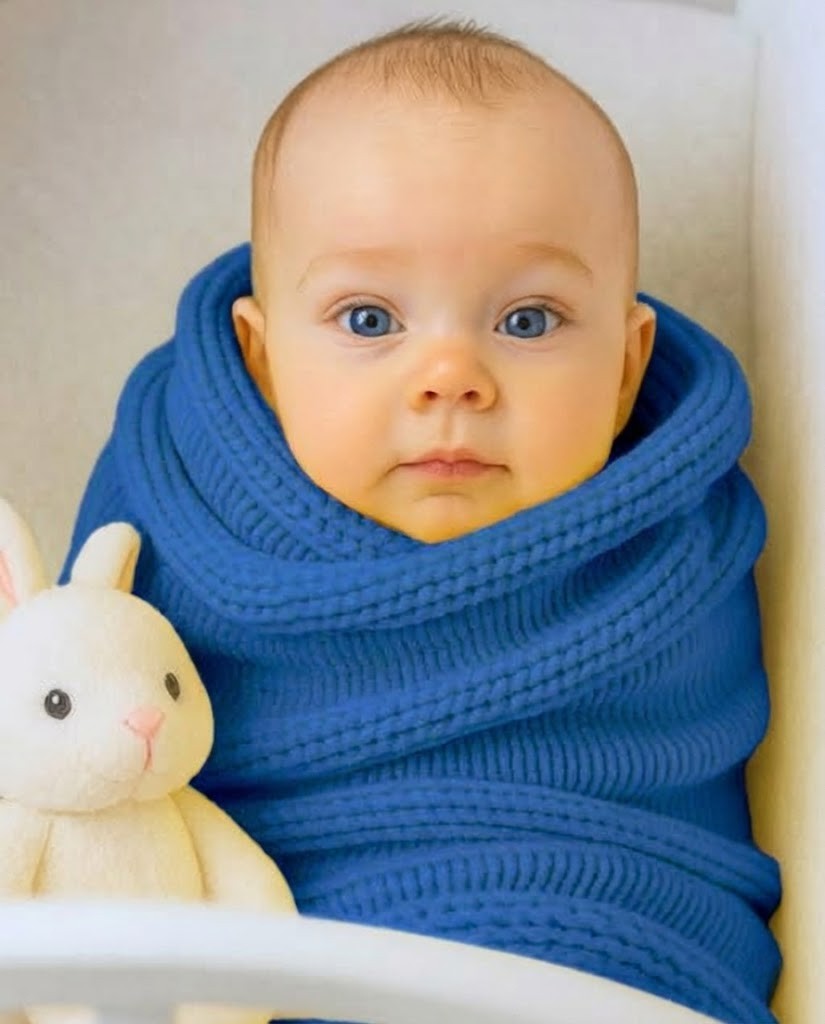
The day I gave birth was supposed to feel like light breaking open. Instead, it became the beginning of a fracture I didn’t see coming.
Caleb and I had been married three years — not perfect, but steady in the ways that count. We argued over bills and chores, then found our way back to each other. When the pregnancy test turned positive, he cried openly. He built the crib himself, painted the nursery long after midnight, and spoke softly to my stomach as if our baby could already understand devotion. I believed him. I believed in us.
Labor lasted fourteen hours before everything shifted. I hemorrhaged. The room filled with sharp lights and urgent voices. When I woke, I felt emptied out, fragile but alive. A nurse placed a warm, dark-haired baby girl in my arms. Relief came like a wave.
I turned to Caleb, ready to share that moment.
He wasn’t smiling.
He stood a few steps back, stiff, staring at the baby as if he were trying to solve something he didn’t want to say aloud. When I called his name, he swallowed and whispered, “She doesn’t look like me.” Then he stepped back, as if proximity itself might confirm something he feared.
He left the room. He didn’t return that night.
At home, something had shifted. He avoided holding her. He startled at her cries. He lay awake, staring at the wall while I fed her in the dim quiet of exhaustion. Then he began leaving the house at the same hour each evening, offering vague explanations about needing air.
I was still healing — body sore, mind unsteady. My thoughts turned dark. An affair? Regret? Some quiet unraveling inside him?
One night I followed him.
His car pulled into a small downtown medical building — a genetic testing and counseling clinic. My chest tightened in a way that felt physical.
Days later, the phone rang while he was in the shower. I answered without thinking.
A calm voice confirmed there was no genetic relationship between my husband and the child.
The words hit like judgment, though I knew I had never betrayed him. Not once. Yet the statement sounded final enough to undo a marriage.
The next morning, I drove back to the hospital. My voice shook as I asked questions I never imagined needing to ask. The head nurse went pale. Records were pulled. Two baby girls born minutes apart. Same ward. Brief overlap during recovery. A mismatched wristband number.
It was a mix-up.
Simple. Devastating.
When I told Caleb, he didn’t explode. He didn’t accuse. He sat down as if something inside him had finally collapsed under its own weight. He said he had felt something was wrong from the first moment but didn’t know how to speak it without tearing us apart — especially after I had nearly died.
An investigation confirmed our biological daughter was alive, living with another family not far away.
Meeting her felt unreal. She had Caleb’s eyes. His dimple. Recognition landed instantly.
And yet the baby I had been holding for weeks knew my heartbeat. She reached for me. She quieted against my chest as if it were the only place she belonged.
Biology clarified facts. It did not erase attachment.
The legal path was clear. The emotional path was not.
Both families wept. There was anger, grief, disbelief — but not hatred. In the end, we chose honesty over resentment. The babies were returned to their biological parents. The other mother and I held each other like women who had survived something neither of us asked for.
Caleb finally told me his nightly disappearances were not escape but fear. He had gone for testing quietly, trying to understand what he sensed without accusing me, terrified that doubt would poison us while I was still fragile.
That night, we cried without defense. Not to win. Not to justify. Just to empty out what had built up between us.
Eventually, our biological daughter came home. Life did not return to what it had been. It moved forward differently — marked, humbler.
I learned something I cannot unlearn.
Love is not secured by DNA alone. It is proven in presence. In restraint when suspicion could turn cruel. In choosing truth, even when it risks everything. In staying when leaving would be easier.
Blood explains origin.
Commitment defines family.