Arrest of Prince Andrew Marks a Serious Test for Royal Accountability
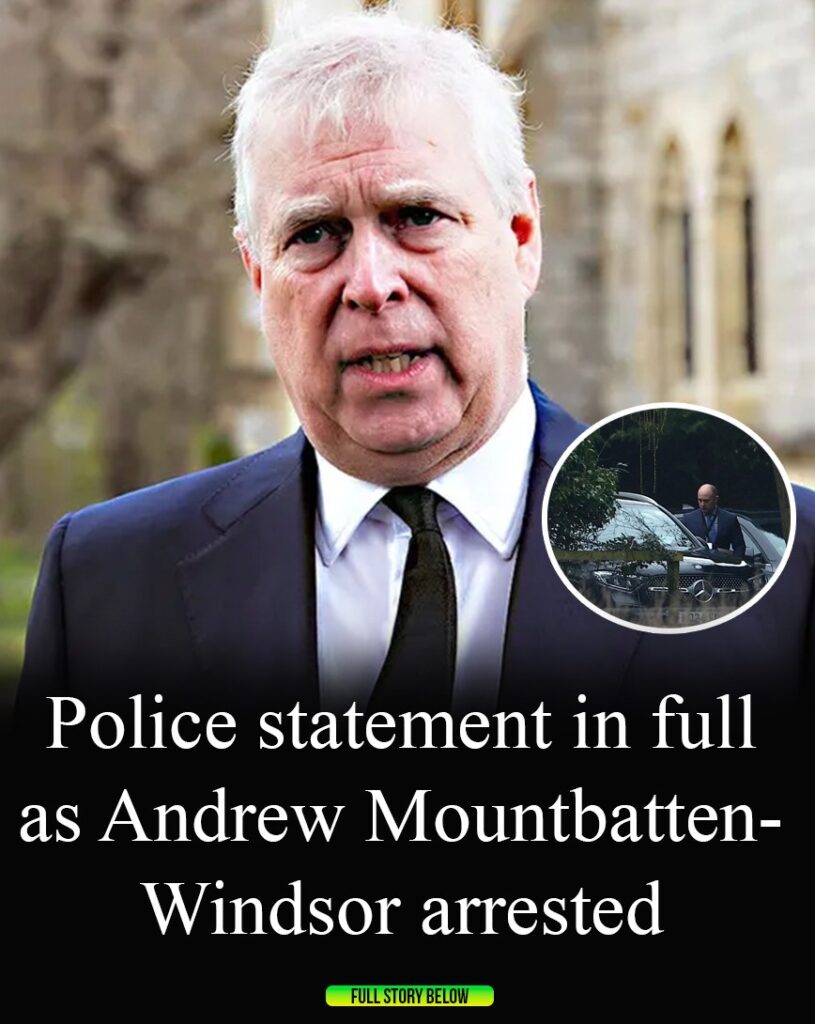
On the morning of February 19, 2026, Prince Andrew, Duke of York, formally known as Andrew Mountbatten-Windsor, was arrested by UK police on suspicion of misconduct in public office.
The arrest took place at his residence on the Sandringham estate in Norfolk, only hours after his 66th birthday. It immediately drew widespread attention across Britain and beyond, becoming one of the most significant legal developments involving the modern monarchy.
Though he has not been charged and continues to deny wrongdoing, the investigation marks a pivotal moment in the long-running scrutiny surrounding his public role and associations.
The Circumstances of the Arrest
In the early hours of February 19, unmarked police vehicles arrived at Wood Farm, where Mountbatten-Windsor had been living.
Officers conducted searches and detained a man in his sixties on suspicion of misconduct in public office. In keeping with UK procedure, police initially declined to name him publicly.
Later, multiple reputable outlets confirmed his identity.
He was taken to custody, questioned for approximately 11 hours, and released later that evening under investigation — meaning inquiries remain active, but no charges have yet been filed.
Police Statement and Legal Process
The investigation is being led by Thames Valley Police, which emphasized the need for caution and fairness.
Officials stated that the inquiry followed a thorough assessment and that updates would be provided only when appropriate.
Under UK law, individuals arrested remain legally innocent unless proven guilty in court. An arrest signals the need for investigation — not a conclusion.
Understanding “Misconduct in Public Office”
Misconduct in public office is a serious common-law offence in the United Kingdom. It applies when a person holding public authority is alleged to have:
-
Abused their position
-
Breached public trust
-
Mishandled confidential information
-
Acted without lawful justification
The charge reflects concern over integrity in public service. However, its complexity means that prosecutions require strong and carefully tested evidence.
Why the Investigation Was Opened
The inquiry stems from documents released in early 2026 connected to Jeffrey Epstein.
Among millions of pages were communications that raised questions about Mountbatten-Windsor’s conduct while serving as the UK’s trade envoy between 2001 and 2011.
During that period, he represented Britain in international trade and investment matters — a role requiring strict confidentiality.
Investigators are examining whether sensitive government information may have been improperly shared with Epstein or related intermediaries.
These claims are still being reviewed and remain unproven.
Searches at Multiple Properties
Alongside the arrest, police searched several locations linked to Mountbatten-Windsor, including his former residence at Royal Lodge in Windsor.
Authorities reportedly collected electronic devices, documents, and correspondence for forensic analysis.
Such searches are standard procedure in complex investigations and do not imply guilt.
Royal Response
Following the arrest, King Charles III issued a measured statement emphasizing respect for legal process.
He affirmed that the family would cooperate fully and that “the law must take its course.”
Senior members of the royal household continued official duties, signaling an effort to preserve institutional stability during uncertainty.
Public and Political Reaction
The arrest prompted wide discussion across political and civic life.
Some lawmakers have suggested revisiting Mountbatten-Windsor’s position in the line of succession.
Advocacy groups welcomed the investigation as a sign that public figures are subject to the same legal standards as others.
Royal historians described the moment as one of the most serious institutional tests in modern times.
At the same time, legal experts cautioned against drawing conclusions before evidence is examined in court.
Current Legal Status
As of now:
-
He has been released under investigation
-
No charges have been filed
-
Evidence review continues
-
The Crown Prosecution Service will decide whether prosecution is warranted
This process may take months, reflecting the complexity and sensitivity of the case.
Relationship to Earlier Epstein Controversies
Mountbatten-Windsor previously faced civil litigation in the United States connected to Epstein and reached a settlement in 2022, while denying wrongdoing.
Those matters are separate from the current UK investigation.
The present inquiry focuses solely on alleged misuse of public office — not on sexual-offence allegations.
Historical Significance
Arrests involving senior royals are exceptionally rare.
Historians note that no close sibling of a reigning monarch has faced comparable legal scrutiny in modern constitutional history.
This underscores the seriousness with which authorities are approaching the matter.
Reflection: Accountability and Restraint
Beyond politics and public fascination, this case raises deeper questions about responsibility, privilege, and trust.
Public office is not merely status — it is stewardship.
With it comes moral and legal accountability.
At the same time, justice requires patience, evidence, and restraint. True fairness protects both victims and the accused from speculation.
Conclusion
The arrest of Prince Andrew on suspicion of misconduct in public office represents a defining moment for Britain’s legal and institutional culture.
He has not been convicted of any crime. The investigation remains ongoing. Due process continues.
What follows will be determined not by headlines, but by law.
For now, the case stands as a reminder that even the highest positions exist under public trust — and that trust must be guarded with integrity, humility, and truth.