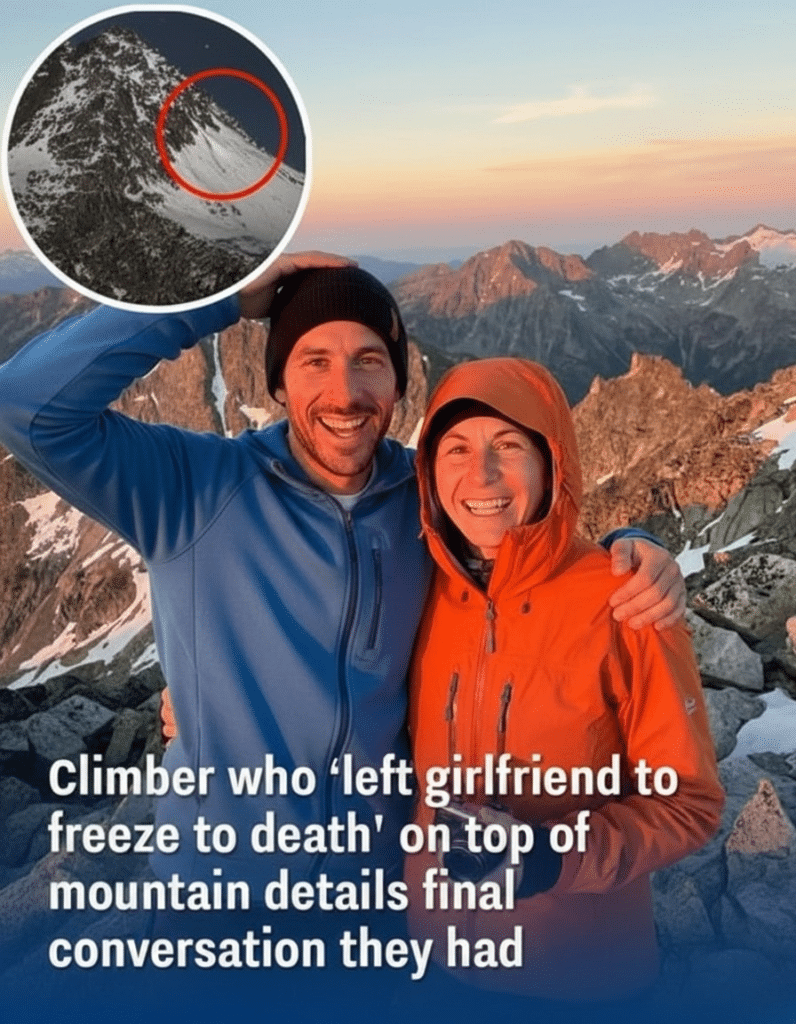
Trial Examines Tragic Death on Austria’s Highest Peak
A 39-year-old climber is facing trial in Innsbruck over the death of his girlfriend during a winter ascent of Grossglockner, the country’s highest mountain.
Thomas Plamberger has been charged with gross negligent manslaughter following the January 19, 2025 tragedy that claimed the life of Kerstin Gurtner, aged 33.
Her body was discovered approximately 150 feet below the summit after severe overnight weather swept through the area. Plamberger has pleaded not guilty, maintaining that her death was the result of a devastating accident rather than criminal wrongdoing.
The case has drawn national attention, raising difficult questions about responsibility, risk, and decision-making in extreme alpine environments.
What the Court Has Heard
According to court testimony, the couple encountered serious difficulties in the early morning hours as they approached the summit.
Prosecutors say that Gurtner, who was described as the less experienced climber, began struggling as conditions worsened. Temperatures reportedly dropped to around minus 8 degrees Celsius, with windchill making it feel far colder.
Authorities allege that around 2 a.m., Plamberger left her to seek assistance and did not return for several hours. Rescue teams arrived the following morning but were unable to save her.
In his testimony, Plamberger stated that Gurtner encouraged him to go for help, recalling her final words as urging him to “go now” in hopes of saving them both.
His account has been central to the court’s examination of what unfolded on the mountain that night.
Prosecution’s Position
Prosecutors argue that Plamberger’s greater experience and his role in organizing the climb placed a heightened duty of care on him.
They contend that:
-
The winter weather forecast should have prompted greater caution
-
Safer conditions should have been ensured before continuing
-
Gurtner should not have been left alone in extreme cold
-
More protective measures may have been possible
-
Emergency services may not have been contacted promptly
They have also questioned reports of delayed calls and periods when Plamberger could not be reached by phone.
A judge has reportedly described parts of his testimony as inconsistent, intensifying scrutiny of his decisions during the critical hours.
At the center of the charge is whether his conduct significantly departed from what would be expected of an experienced climber in similar circumstances.
Defense: A Tragic Decision Under Extreme Pressure
Plamberger’s defense team firmly disputes the prosecution’s interpretation.
His lawyer has described the incident as a “fateful accident,” emphasizing that mountaineering — especially in winter — carries unpredictable and often unforgiving risks.
The defense argues that:
-
The decision to seek help was mutual
-
It was made under severe physical and emotional stress
-
Plamberger acted with the intention of saving his partner
-
Hindsight should not redefine a survival decision as criminal
They also highlight the couple’s close relationship and shared passion for alpine climbing, describing their ascent as an expression of trust and commitment rather than recklessness.
A Mother’s Appeal for Compassion
Gurtner’s mother has spoken publicly in defense of both her daughter’s competence and Plamberger’s character.
She has expressed sorrow over what she sees as harsh public judgment and urged people not to reduce a complex tragedy to accusations.
Her statements reflect the deep pain of a family grieving while watching private loss unfold in public.
Risk, Responsibility, and Human Limits
This case has prompted wider discussion within the mountaineering community.
Climbing at high altitude in winter demands technical skill, physical endurance, and constant risk assessment. Even experienced climbers can find themselves overwhelmed by rapidly changing conditions.
Experts note that in extreme environments:
-
Decisions are often made under exhaustion and fear
-
Information may be incomplete
-
Options can be painfully limited
-
Survival choices are rarely clear-cut
The court must now determine whether Plamberger’s actions crossed the line from tragic misjudgment into criminal negligence.
Awaiting Judgment
As the trial continues, judges are weighing testimony, weather records, rescue timelines, and expert analysis to reach a fair conclusion.
For all involved, the case remains deeply painful.
It is the story of a young woman who lost her life in the mountains she loved.
Of a partner who carries the weight of that night forever.
And of a family seeking truth, not spectacle.
Whether the court finds criminal responsibility or not, the events on Grossglockner stand as a sobering reminder of nature’s power and human vulnerability.
In places where survival depends on moments of judgment, humility and caution remain as vital as courage.
And behind every legal argument lies a shared human loss that no verdict can undo.