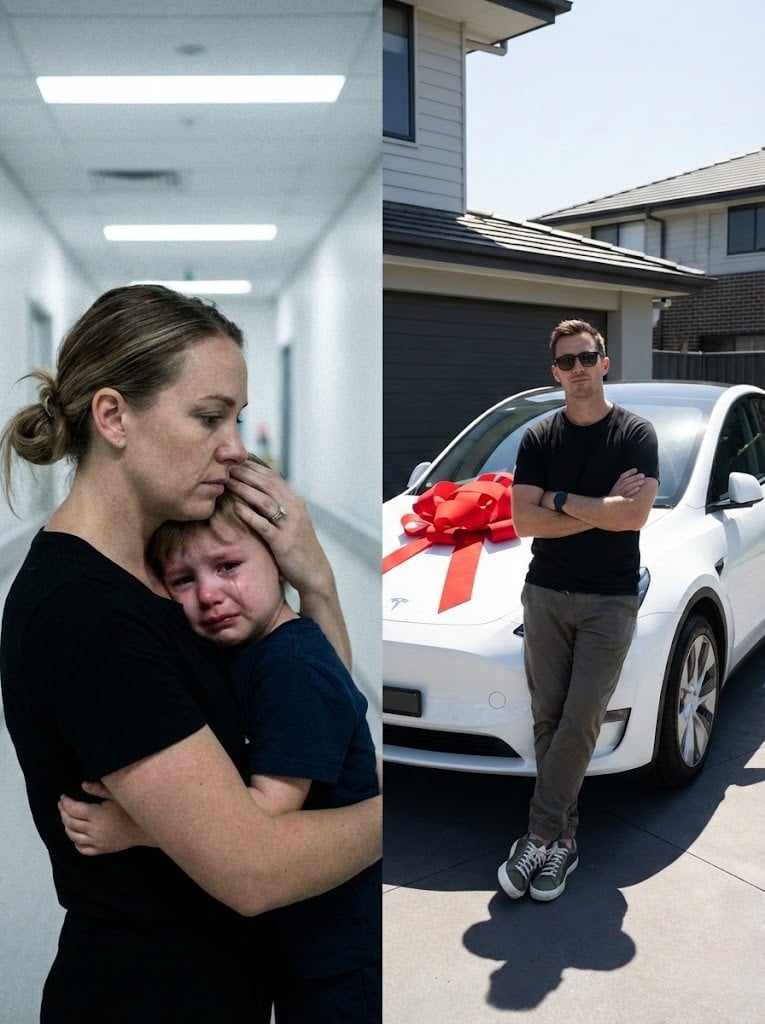
My name is Emily, and my daughter Molly is five years old.
A fall from her bicycle left her with a severe break in her leg — the kind that required immediate surgery and careful recovery. Sitting in the hospital room, listening to doctors explain procedures and costs, I felt the familiar fear that comes when you are the only adult standing between your child and the world’s problems.
After a hard divorce, I was managing on my own. But this was bigger than what I could carry alone.
I called my former husband, Derek, and asked for help covering the surgery.
He didn’t hesitate.
He said he couldn’t afford it.
I wanted to believe him. For a moment, I almost did.
A few days later, my friend Carla sent me a photo she’d seen online. Derek stood smiling beside his new wife, Tessa, as she leaned against a brand-new luxury car wrapped in a bow.
The contrast was quiet and clear.
My daughter in pain.
A new car in celebration.
In that moment, I understood something important: this was not about money. It was about choice.
I stopped asking for compassion and turned to clarity.
I found an old wedding invitation and contacted Tessa’s mother, Margaret. I didn’t accuse or raise my voice. I simply explained that Molly needed surgery, shared the medical estimates, and included the photo Derek had posted.
Margaret’s response wasn’t loud — it was disappointed.
She confronted him publicly, asking how a man could afford a luxury gift while refusing to help his injured child. Not with insults. With truth.
Accountability has a way of cutting through excuses.
The attention reached his workplace. Questions followed. The image he had built for himself began to crack.
Within days, Derek sold the car — at a loss — and transferred the full amount for Molly’s surgery, along with extra money for follow-up care.
Molly’s procedure went well. Pins were placed. Healing began.
She is recovering now — slowly, bravely, and with far more resilience than her years should require.
What I learned wasn’t about revenge or embarrassment.
It was about responsibility.
Some people respond to love.
Others respond only when truth becomes visible.
And when a parent refuses to step forward willingly, a mother finds another way to protect her child.
Not with anger —
but with resolve.
Molly didn’t need drama.
She needed care.
And that will always be my priority.