🇺🇸 When History Nearly Repeats Itself: What Happens If a U.S. President Is Killed in Office?
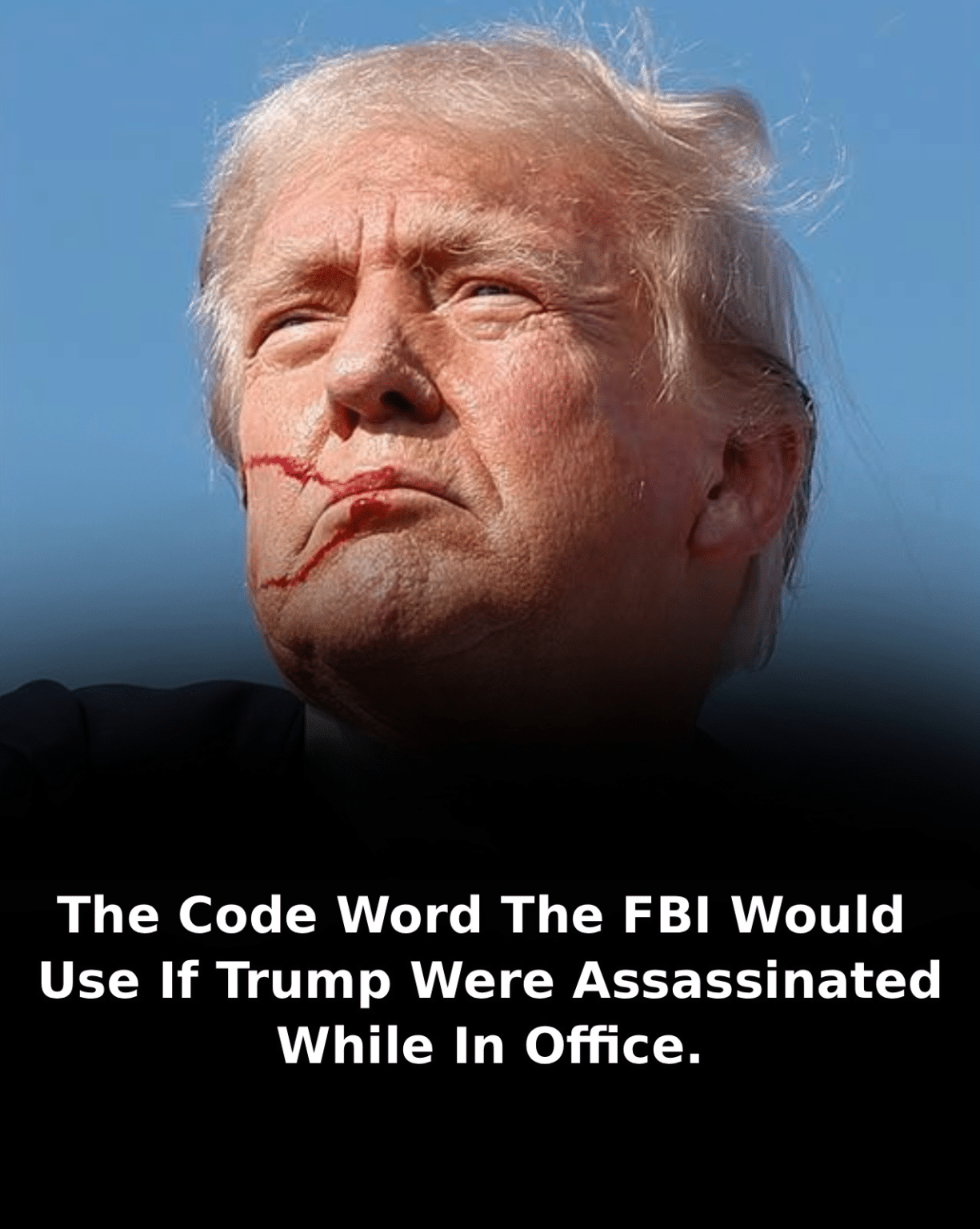
The United States has faced moments of political trauma before. In July 2024, when Donald Trump was wounded at a rally in Butler, Pennsylvania, many Americans were reminded how fragile public life can be.
He survived. But the incident reopened an unsettling question:
What would happen if a sitting president were assassinated?
Behind the scenes, the answer is not chaos — it is protocol, law, and decades of planning.
📜 A Painful Chapter in American History
The United States has lost four presidents to assassins.
Abraham Lincoln was shot in 1865 at Ford’s Theatre.
James A. Garfield died in 1881 after being shot.
William McKinley was assassinated in 1901.
John F. Kennedy was killed in Dallas in 1963.
Each event reshaped the nation and left lasting emotional scars.
Trump’s survival in 2024 prevented him from becoming the fifth.
🚨 The Attempt in Butler: A Close Call
During a campaign rally in July 2024, Trump was grazed by a bullet. The incident shocked supporters and critics alike and triggered immediate security lockdowns.
Within minutes, the country saw how quickly a political gathering could turn into a national emergency.
It was a reminder that presidential security failures have consequences far beyond one individual.
🕵️ Code Words and Emergency Signals
Every president and first lady has a Secret Service code name.
According to The Washington Post, Trump’s code name was “Mogul,” selected in coordination with the United States Secret Service.
In a worst-case scenario, agencies like the Federal Bureau of Investigation would immediately activate classified emergency communication protocols using such identifiers.
These systems exist to ensure instant coordination across law enforcement, intelligence, and military networks.
They are designed to prevent confusion when seconds matter.
⚖️ What the Constitution Requires
If a sitting president dies in office, the U.S. Constitution leaves no room for debate.
Power transfers immediately.
The Vice President becomes President.
In Trump’s case, that would mean J.D. Vance would be sworn in within hours.
No vote.
No delay.
No uncertainty.
This automatic succession exists to preserve national stability.
🏛️ Rebuilding the Leadership Team
Once the Vice President becomes President, the new administration must appoint a replacement Vice President.
That nominee must be approved by both the Senate and the House of Representatives.
This process, created after earlier crises, ensures democratic oversight even in emergencies.
It is designed to balance speed with legitimacy.
🌐 Political Shockwaves and Party Turmoil
An assassination would instantly destabilize American politics.
The Republican Party would face intense internal pressure. Figures such as Mike Pence, Ron DeSantis, Nikki Haley, and Ted Cruz could come under immediate public scrutiny.
Supporters might rally emotionally around Trump’s legacy.
Opponents might fear instability.
Social media would likely amplify rumors, anger, and conspiracy theories.
History shows that political violence often deepens division before healing begins.
🕊️ Public Mourning and National Rituals
If a president were killed, the country would enter an official mourning period.
Flags would be lowered to half-staff.
A state funeral would be held in Washington, D.C.
World leaders would attend.
Millions would watch.
These ceremonies are not just symbolic. They help societies process collective trauma.
They remind citizens that institutions endure even when individuals are lost.
🔥 Would Elections Be Delayed?
Some might call for postponing elections.
In reality, this would be extremely unlikely.
Delaying a national election requires broad bipartisan agreement and complex legal coordination. In today’s polarized environment, consensus would be difficult.
The system is designed to move forward — not pause — during crisis.
🌱 Why These Protocols Matter
The United States learned hard lessons from past assassinations.
Out of tragedy came structure.
Out of chaos came law.
Out of fear came preparation.
Succession rules, emergency agencies, and continuity plans exist to prevent the collapse of democracy when emotions run highest.
They are safeguards against panic.
📌 Conclusion: Stability in the Face of the Unthinkable
Donald Trump’s survival in 2024 spared the nation another historic tragedy. But the episode revealed how close America can come to political disaster.
If the unthinkable were to happen, the country would grieve.
There would be anger.
There would be confusion.
There would be unrest.
But there would also be order.
The Constitution would stand.
Leadership would continue.
Institutions would endure.
In a divided age, that continuity may be the most important protection of all.