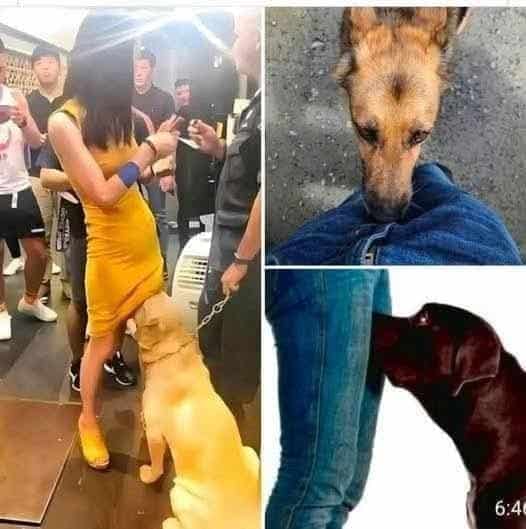
🐶 Why Dogs Sniff You — And What It Really Means
Dogs experience the world primarily through scent. While humans rely on sight and sound, dogs depend on their noses to understand people, places, and situations. So when a dog sniffs your private area, it is not being rude or inappropriate.
It is gathering information.
That part of the body contains a high concentration of sweat glands that release subtle chemical signals called pheromones. Dogs can detect these through a specialized organ in their nose, allowing them to “read” details about you that humans cannot sense.
To your dog, this is simply a way of saying hello.
👃 What Your Dog Is Learning From Your Scent
When your dog sniffs you, it may be picking up on changes in your body that you are not even aware of.
Dogs can detect:
-
Hormonal changes during menstruation, ovulation, or pregnancy
-
Shifts caused by stress, fear, or anxiety
-
Variations linked to illness or infection
-
Changes in blood sugar or metabolism
In some cases, dogs have been shown to recognize conditions such as diabetes or certain cancers before medical tests do. This is not because they “know” something is wrong, but because illness changes body chemistry in subtle ways.
Your scent tells a story. Your dog is simply reading it.
💭 Emotional Signals Matter Too
Smell is closely tied to emotion.
When you feel nervous, stressed, excited, or afraid, your body releases different chemicals through sweat. Dogs are extremely sensitive to these changes.
So if your dog focuses on sniffing you during emotional moments, it may be responding to:
-
Anxiety
-
Tension
-
Excitement
-
Uncertainty
To them, this is a way of checking in and understanding your mood.
😳 Why It Can Feel Awkward (And That’s Normal)
Even though the behavior is natural, it can feel uncomfortable — especially in public or when guests are around.
From a human perspective, it feels invasive.
From a dog’s perspective, it is completely normal.
They are not trying to embarrass you. They are doing what dogs have always done: gathering social information through scent.
🎯 How to Gently Redirect the Behavior
If the sniffing bothers you, it can be managed through calm training — without punishing your dog.
Helpful approaches include:
Using simple commands
Teach cues like “leave it” or “sit” and reward compliance.
Redirecting attention
Offer your hand, a toy, or a treat to shift focus.
Reinforcing polite greetings
Encourage your dog to sit or stay when meeting people.
Staying relaxed
Dogs pick up on tension. Calm greetings reduce fixation.
Consistency is key. Over time, your dog will learn more socially appropriate ways to interact.
⚠️ When Sniffing May Signal Something More
In most cases, this behavior is harmless and routine.
However, in rare situations, excessive or sudden fixation on one area could suggest that your dog is detecting a health-related change.
You may want to consult a doctor if:
-
The behavior is new and intense
-
It happens repeatedly in the same spot
-
It continues despite training
-
You also notice physical symptoms
This does not mean something is wrong — only that awareness is wise.
🌱 What This Says About Your Bond
At its core, sniffing is a sign of connection.
Your dog is interested in you.
Your dog is paying attention.
Your dog wants to understand you.
It is part of how dogs build relationships.
What feels awkward to humans is, to dogs, a form of trust.
📌 Conclusion: It’s Communication, Not Bad Manners
When your dog sniffs your private area, it is not being disrespectful. It is using its strongest sense to learn about you — your health, emotions, and state of being.
Most of the time, it is simply your dog’s way of saying:
“How are you today?”
With gentle guidance and understanding, the behavior can be managed — without harming the bond you share.
Because in the end, it is just another way your dog stays connected to you.